Somewhere between the sting of being overlooked and the quiet ache of wanting to matter, there’s a story that feels both achingly specific and painfully universal. That’s the space where A Smaller Sun lives - a compact, seven-minute gut punch that arrives today, August 9, 2026, with the weight of a much larger film. It’s not a blockbuster in scale, but in emotional resonance, it might just be the most important thing you watch this weekend.
For those who prefer their drama lean and their storytelling immediate, this is an easy add to the queue. The film’s brevity isn’t a limitation; it’s a dare. Can you make an audience care, break their hearts, and stitch them back together in the time it takes to brew a pot of coffee? Director Madison Sawyer answers with a resounding yes.
Release Date & Where to Watch
Mark your calendars - or more accurately, check your streaming apps right now. A Smaller Sun officially premieres today, August 9, 2026. As for where to catch it, the film is currently screening at a select number of independent theaters and film festivals, with a digital release expected to follow shortly after its festival run concludes. Given its runtime, it’s the perfect companion piece to a longer feature or a bold standalone pick for a curated shorts program.
If you’re not lucky enough to live near a festival city, keep an eye on major VOD platforms and niche streaming services that champion short-form cinema. The buzz around this one suggests it won’t stay hidden for long. It’s the kind of project that programmers love to pair with bigger titles, so don’t be surprised if you spot it as a pre-show gem before a more high-profile indie release later this fall. For now, the safest bet is to check the film’s official social channels for the latest screening schedule.
Cast & Crew
At the helm is Madison Sawyer, a director whose previous short work has been praised for its delicate handling of adolescent interiority. Sawyer doesn’t rush the emotion, even within a seven-minute frame, and that patience is on full display here. The script, tight and precise, gives her actors room to breathe.
Leading the charge is Max Blanc-Brude as Sam, the fourteen-year-old protagonist who feels like a ghost in his own home. Blanc-Brude delivers a performance that’s remarkably grounded for such a young actor - he captures the fidgety energy of a kid on the cusp of teenagehood, the slump of his shoulders telling as much of the story as his dialogue. His quiet desperation is palpable, and you can almost see the gears turning in his head as he retreats further into his imagination.
Opposite him, Phoebe Edwards plays Thea, a role that could easily slip into stereotype but instead feels refreshingly real. Edwards brings a warmth and a hint of weariness to Thea, hinting at a character who sees more than she lets on. And then there’s Phil Jackson as Lucas, the father figure who anchors the family unit. Jackson, known for his steady, grounded presence, plays the role with a subtle gravity that makes the film’s final moments land with real force. The chemistry between the three is palpable; they feel like a family, warts and all, and that’s no small feat in such a condensed runtime.
Story & What to Expect
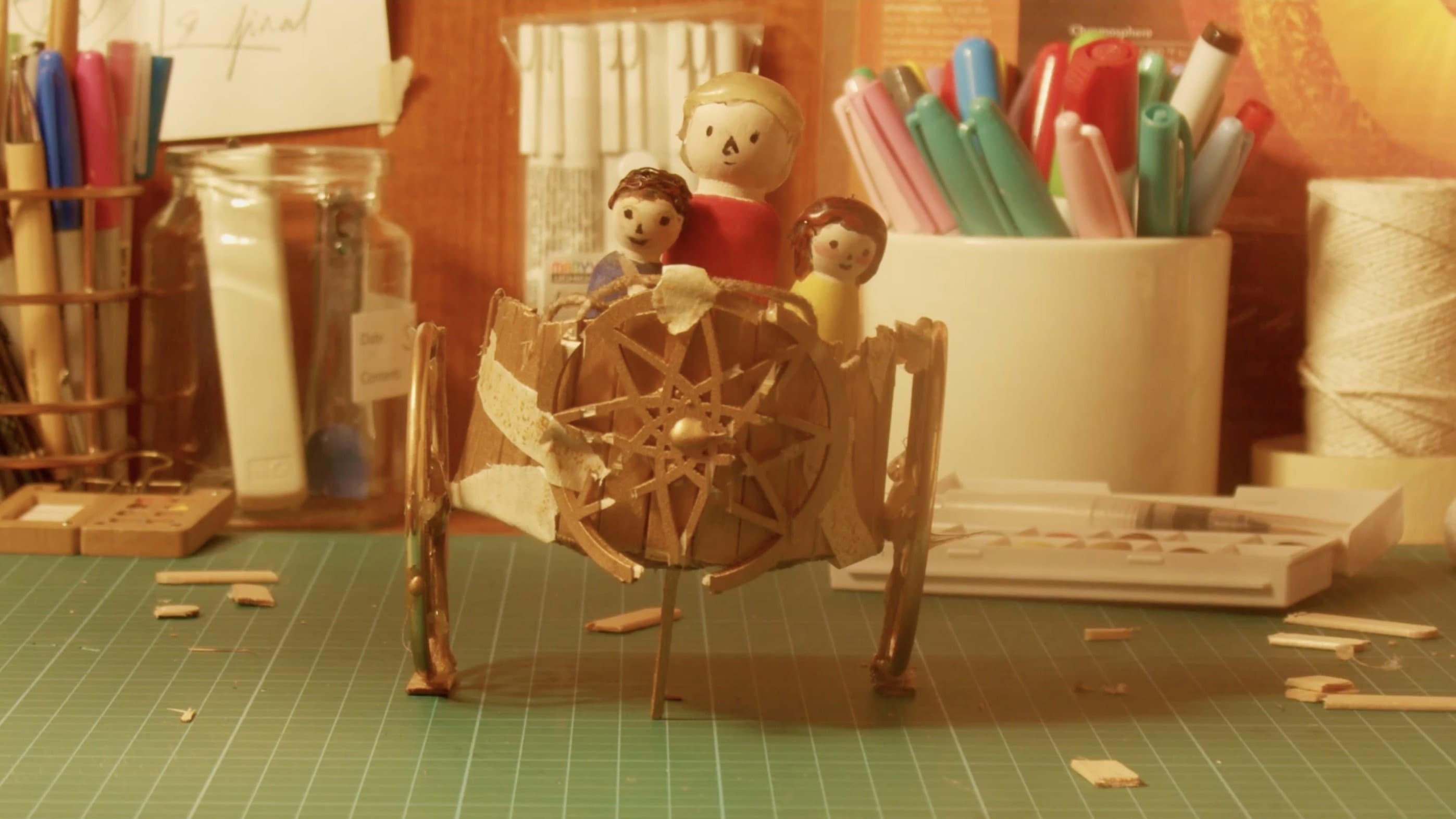
Sam is invisible. Not in a literal, comic-book way, but in the way that hurts the most - overlooked at the dinner table, talked over in the hallway, his small victories unacknowledged by parents consumed by their own quiet battles. Feeling invisible within his family, Sam escapes into his imagination in search of recognition, building a rich internal world where he’s the hero, the center of attention, the one who finally gets noticed.
That fantasy is his lifeline, but it’s also his undoing. The film’s synopsis teases a “painful mistake” that jolts Sam out of his reverie, and it’s that mistake that forces him to confront the reality he’s been avoiding. This isn’t a whimsical adventure through a fantasy realm; it’s a grounded, often painful look at how isolation can distort perception. Sawyer doesn’t give in to easy sentimentality. The mistake Sam makes isn’t a cartoonish act of rebellion; it’s something messier, more human - a desperate grab for attention that goes sideways in a way that will feel achingly familiar to anyone who’s ever felt unseen.
What unfolds isn’t a grand dramatic showdown but a quiet revelation. As Sam’s fantasy worlds collide with the reality of his family’s day-to-day struggles, he begins to see the quiet love holding his family together. The father who seems distracted is actually exhausted from holding things together. The sister who seems distant is dealing with her own burdens. The film’s genius is in how it never villainizes the family; instead, it shows the gaps in communication, the moments of missed connection that happen in every household.
Expect a slow-burn emotional build that pays off in a beautifully understated final act. The seven-minute runtime is used with surgical precision - every line, every glance, every small gesture matters. There are no wasted frames here. The cinematography, presumably working in close-quarters domestic spaces, makes the family home feel both claustrophobic and full of hidden warmth, just waiting to be uncovered.
Why It's Worth Watching
In an era of overstuffed, two-and-a-half-hour epics, A Smaller Sun is a reminder that sometimes less truly is more. It’s a masterclass in economy, proving that a complete, emotionally devastating narrative can be told in the time it takes to order a pizza. The film’s core theme - the desperate need for recognition and the quiet power of familial love - is timeless, but Sawyer’s approach feels fresh and contemporary.
Blanc-Brude’s lead performance is worth the price of admission alone. He carries the film with a heavy-lidded vulnerability that’s impossible to ignore. Watching him navigate the chasm between his internal world and his external reality is heart-wrenching, and his final scene with Jackson is a standout that’s bound to linger long after the credits roll.
The film also serves as a poignant reminder that the stories we tell ourselves to survive can sometimes blind us to the truths we need to see. Sam’s imagination is his refuge, but it’s also his prison. The moment he steps outside of it, he finally sees his family not as obstacles to his recognition, but as people with their own silent struggles.
Is A Smaller Sun a perfect film? It’s certainly near-flawless in its execution. The pacing, performances, and emotional arc all click into place with a satisfying, resonant click. It’s the kind of short that makes you wish it were longer, even as you appreciate the power of its brevity. If you’re looking for a movie that respects your intelligence and doesn’t overstay its welcome, this is it. Go in with an open heart, and leave with a renewed appreciation for the quiet loves that hold us all together. For a seven-minute investment, that’s a remarkable return.