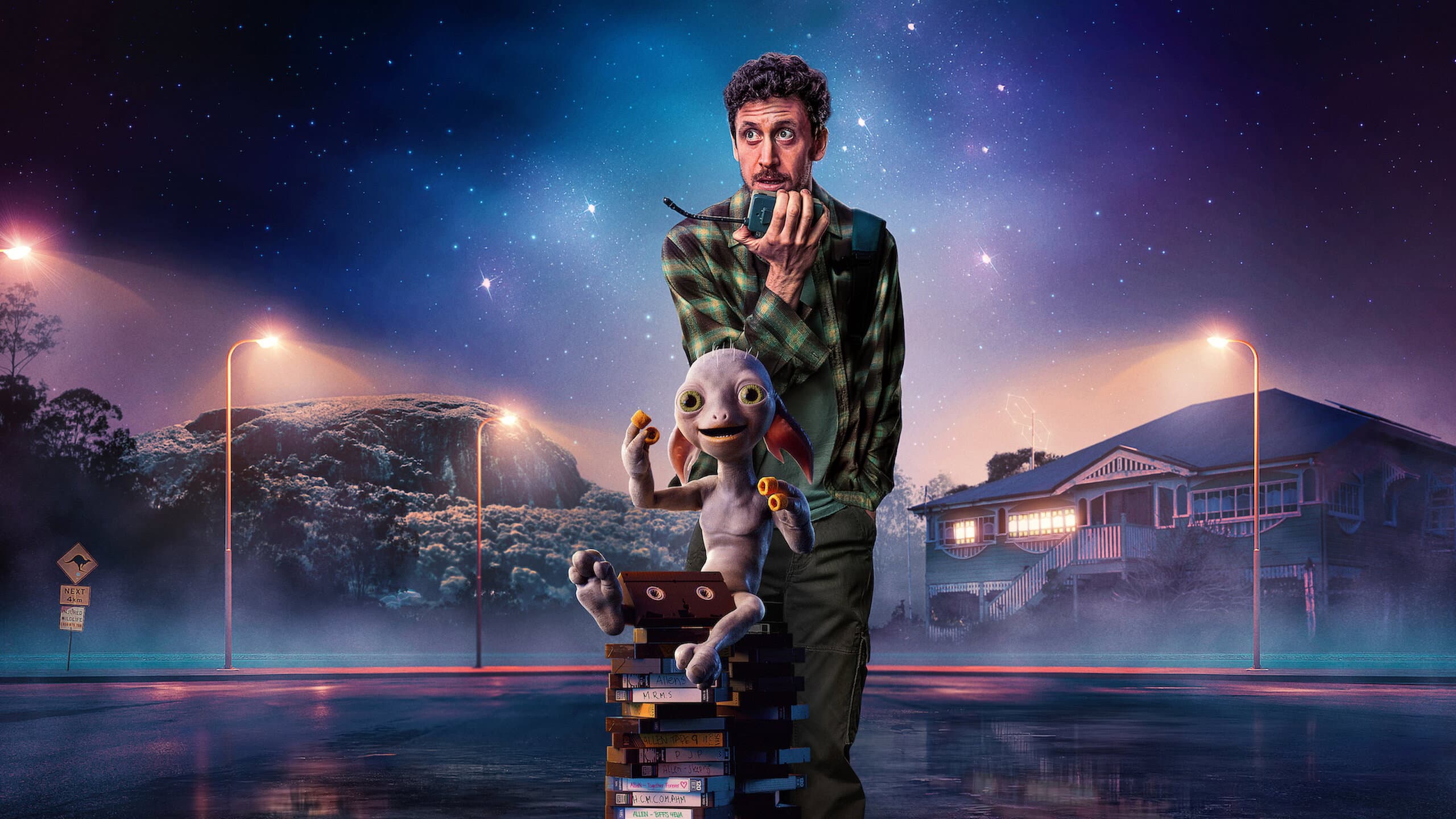
Two decades is a long time to hold onto a secret. For Petey, the protagonist of Daley Pearson’s new sci-fi adventure comedy Allen, it’s been twenty years of looking up at the stars and wondering if the universe had simply moved on. As the film opens in theaters this week, it asks a question that feels both intimate and cosmic: what happens when the most important moment of your life is also the one you can never explain to anyone else?
The premise is deceptively simple. Twenty years ago, Petey had an encounter with an alien. He never moved on. Now his old friend has returned, and the reason why is complicated - and unexpected. That logline is the engine of a story that Pearson, best known for his work in the Australian comedy scene, uses to explore the well-worn grooves of nostalgia, regret, and the strange ways we cling to the past. But Allen isn't content to be a mere genre exercise. It uses its extraterrestrial premise as a Trojan horse for something far more human.
T.J. Power, stepping into the role of the adult Petey, carries the weight of that two-decade gap with a performance that is all nervous energy and quiet desperation. He plays a man who has spent his life trying to recreate a moment of wonder, and Power captures the ache of someone who peaked at exactly the wrong time. Opposite him, Charlotte Nicdao brings a grounded warmth as Carly, a character whose presence suggests that the life Petey has been ignoring might be the one worth living. The two share a chemistry that feels lived-in, a history that exists off-screen as much as on.
But the real scene-stealer is the film's concept itself. Without spoiling the "complicated and unexpected" reason for the alien's return, Pearson uses the sci-fi framework to examine how we mythologize our own pasts. The alien - Allen - becomes less of a character and more of a mirror. What does it mean when the thing you've been waiting for finally arrives, and it's not what you thought? The film's comedy comes from the absurdity of that premise, but its heart comes from the recognition that we all have an Allen in our lives. A job we didn't get. A person we didn't call back. A version of ourselves we can't quite remember.
The supporting cast rounds out the world nicely. Josh Helman and Emily Barclay bring a sharp, adult texture to the proceedings, while Benedict Hardie and Elijah Tamati provide the kind of lived-in supporting turns that suggest a fully realized community. Edward A O'Sullivan and Caitlin Niemotko appear as the young Petey and Carly, and their scenes serve as a poignant contrast to the adults they become. The film's 107-minute runtime is lean, and Pearson knows how to pace a joke without letting it outstay its welcome.
Shot with the kind of bright, sun-dappled aesthetic that recalls the best of 1980s adventure films, Allen wears its influences on its sleeve. There's a bit of Spielberg in the wonder, a touch of Zemeckis in the comedic timing. But Pearson never lets the homage overwhelm the story. This is a film made by someone who loves the genre, but who is more interested in the people caught in its orbit. The visual effects, when they arrive, are used sparingly and effectively - the alien is a presence, not a spectacle.
What makes Allen worth talking about is its refusal to take the easy path. The film could have been a simple "alien returns to save the day" story. Instead, it's a meditation on what happens when the fantasy ends and the reality begins. It's about the messiness of adulthood, the ways we fail the people who love us, and the grace of second chances. The film's TMDb rating of 6.782 suggests a quiet, word-of-mouth appeal rather than a blockbuster roar, and that feels appropriate. This is a film that will find its audience in the conversations after the credits roll.
As the holiday season approaches, Allen offers something rare: a sci-fi comedy with a soul. It's a reminder that the biggest adventures aren't always in the stars. Sometimes, they're in the living room, with the people who never gave up on us. And sometimes, the most complicated reason of all is simply that we're not done yet.