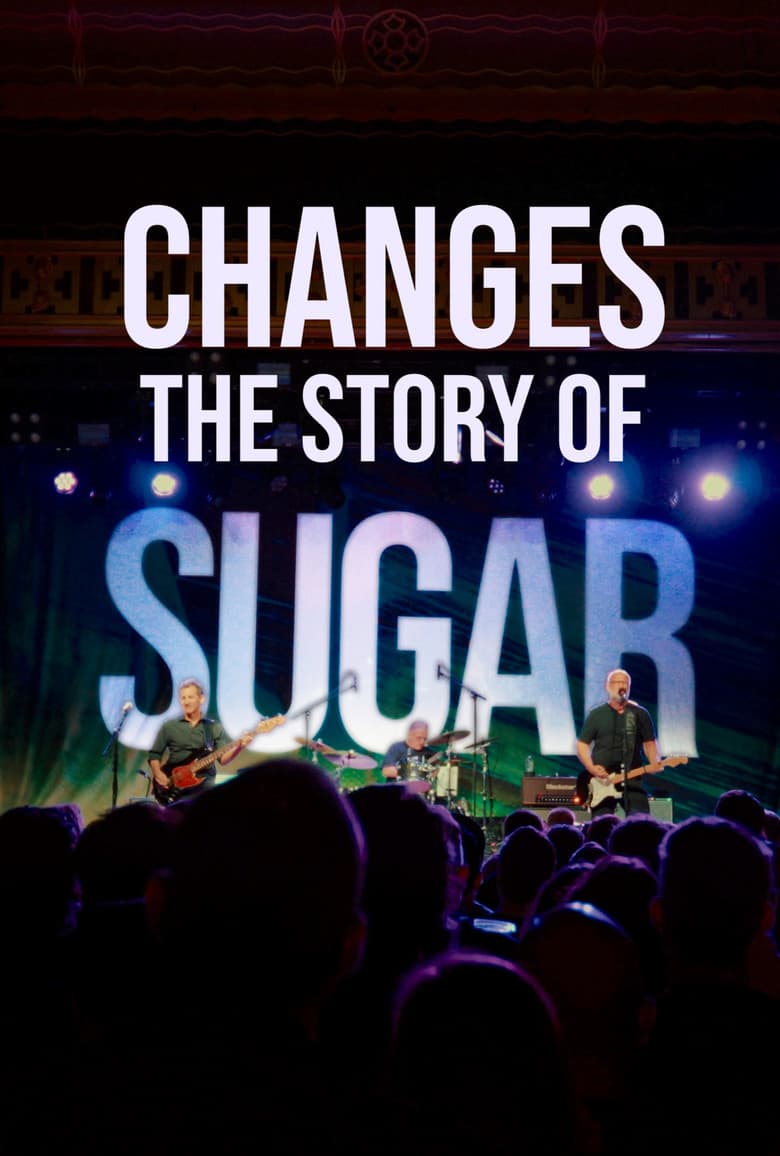
August 6, 2026. It’s a date that might not mean much to the casual Spotify scroller, but for a certain breed of alt-rock obsessive, it’s a minor holiday. Because today, Rob Hatch-Miller’s compact, electric documentary Changes: The Story Of Sugar hits screens, and it does so with the same ferocious brevity as its subject. This isn’t a three-hour, multi-part hagiography. It’s a 21-minute lightning bolt, a sharp, caffeinated jolt of nostalgia that understands punk rock doesn’t need padding. It needs volume, tension, and a couple of power-pop hooks. And it delivers all three, plus a reunion that nobody saw coming.
Release Date & Where to Watch
Mark your calendars for today, August 6, 2026. There’s no theatrical rollout to worry about, no staggered international release. This one is built for the streaming age, which feels appropriately DIY. You’ll find Changes: The Story Of Sugar on all major VOD platforms, including Apple TV, Amazon Prime Video, and Vudu, starting at 12:01 AM Eastern. For a film this tight, this singular in its focus, the on-demand model makes perfect sense. You can queue it up, press play, and have the whole thing - the rise, the crash, the awkward, beautiful reconciliation - finished before your coffee gets cold. That’s not a criticism. It’s a feature. Hatch-Miller has crafted a piece that demands to be consumed in one sitting, with the volume cranked, no interruptions. It’s the cinematic equivalent of a 7-inch single: immediate, visceral, and over before you’ve fully processed what hit you.
Cast & Crew
At the center of this whirlwind is the man himself, Bob Mould, credited simply as Self. That’s the crucial call here. This isn’t a documentary with talking-head historians or breathless music critics providing context. It’s Mould, alone with the camera for the most part, walking us through the two-year supernova that was Sugar. He’s a notoriously intense interviewee, and Hatch-Miller wisely doesn’t try to soften him. The director, known for his work on similarly intimate music projects, including the acclaimed Jason Isbell: Running With Our Eyes Closed, knows that the best rock docs are less about the timeline and more about the temperature. He lets Mould’s weathered voice and unflinching gaze carry the narrative.
The film doesn’t feature archival interviews with bassist David Barbe or drummer Malcolm Travis in the traditional sense, but their presence looms large. Their absence is, in itself, a statement. This is Mould’s story, told on his terms, a monologue about a band that was, for a brief, blinding moment, the most important thing in his life - and then nearly destroyed him. The production is lean, but Hatch-Miller’s editing is sharp, intercutting modern-day Mould with grainy, low-fi performance footage that looks like it was shot on a camcorder held too close to the PA speakers. It’s raw, messy, and gloriously authentic.
Story & What to Expect
The narrative arc is deceptively simple: the rise and fall and reunion of Sugar. Formed in 1992 from the ashes of Hüsker Dü, Sugar was Mould’s attempt to reconcile his abrasive punk roots with a newfound love for melody. The film charts the band’s meteoric ascent with 1992’s Copper Blue, an album that should have been a massive hit, and the subsequent pressure cooker of touring and the fragmented Beaster EP. Then comes the collapse. Mould doesn’t sugarcoat the grind - the internal friction, the label interference, and his own stubborn, often self-destructive perfectionism. The doc captures that specific burnout only a band leader can feel, the loneliness of being the primary songwriter while carrying the weight of everyone else’s expectations.
But the film’s final, thrilling act is the reunion. Filmed recently, it shows Mould and Travis - and a rotating cast of bassists, with Barbe’s blessing - revisiting the Copper Blue material live. This isn't a nostalgia cash grab; it’s a reckoning. Mould plays those songs with a ferocity that belies his years, his guitar still a weapon. The most moving segments are the quiet ones between songs, where he discusses the process of reclaiming these tracks. He admits that for years, he couldn’t listen to Sugar records. Now, he hears them differently. "It took me a long time to hear the joy in them, not just the pain of making them," he says in the film, his voice cracking slightly. "But now I can hear the band. I can hear us." Expect a lot of archival footage, but don't expect a standard behind-the-music nostalgia trip. There are no "where are they now" graphics, no scandalous gossip about who slept with whom. It’s a meditation on second acts, on the act of returning to a fire you thought had burned you beyond recognition, just to see if you can still feel its heat.
Why It's Worth Watching
Because 21 minutes is all it takes to tell a story that matters. In an era of bloated, four-hour epics about every minor label, Changes: The Story Of Sugar is a masterclass in restraint. It respects your time while treating the subject with immense gravity. It’s also, frankly, a relief to see a music documentary that focuses on the art and the internal conflict rather than the tragedy. No overdoses, no lawsuits - just the messy, human process of making loud, beautiful noise with other people and then trying to figure out why it fell apart.
For the uninitiated, it’s a brisk, accessible entry point into Mould’s post-Hüsker Dü career, a primer that will send you straight to your streaming service to queue up Copper Blue in its entirety. For the diehards, it’s a gift - a chance to see a hero not as a saint or a monster, but as an artist who has finally made peace with his ghost. The TMDb rating is a blank slate, a zero, but this feels like the kind of film that will be re-evaluated for years. It’s honest, it’s lean, and it rocks. In a summer of endless sequels and CGI spectacle, a 21-minute punk documentary hitting with the force of a two-minute song is a welcome relief. It’s a reminder that sometimes, the shortest distance between two points - despair and clarity, breakup and reconciliation - is a straight line, played at maximum volume. Go watch it. You’ll be done before you know it, and you’ll feel its impact long after.