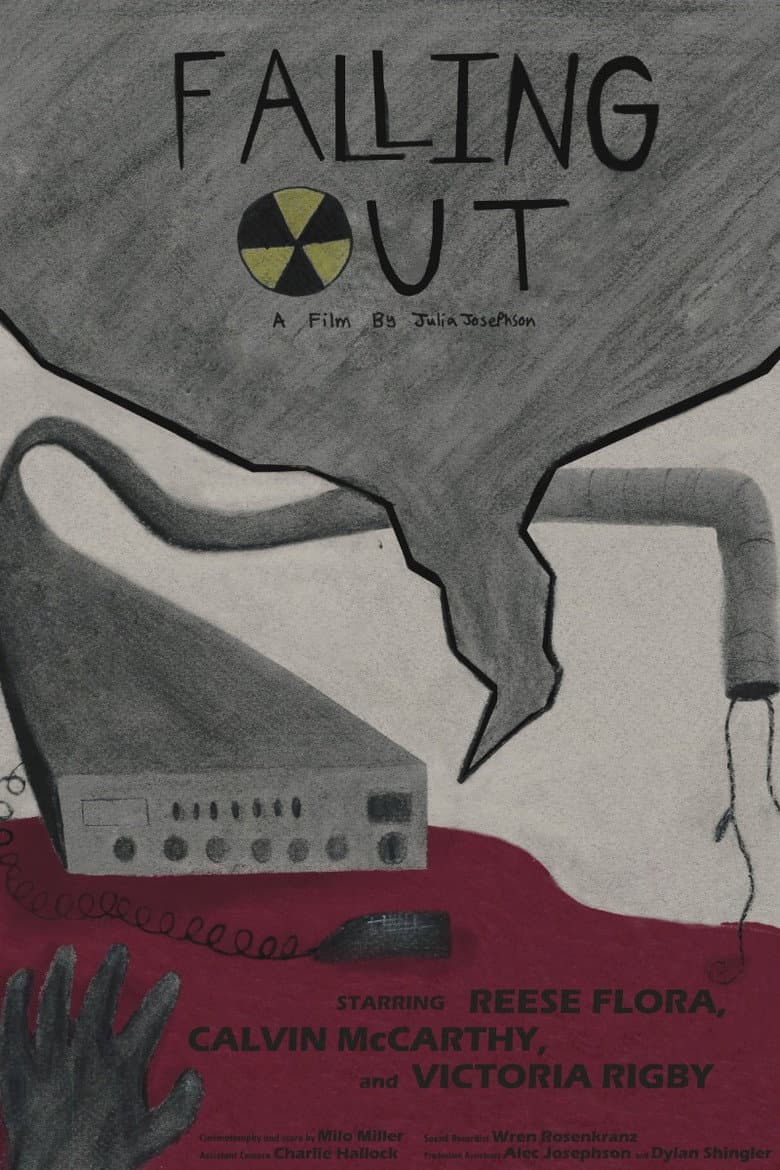
The calendar flips to August 15, 2026, and with it arrives a film that couldn’t feel more urgent, more claustrophobic, or more devastatingly intimate. While the summer blockbuster season has been defined by spectacle and escapism, indie cinema offers a counter-programming gut punch in the form of Falling Out, a 9-minute science fiction drama that asks a terrifying question: what happens when the end of the world isn’t the worst part? This isn’t a film about the bombs; it’s about the silence after them. It’s about the walls that close in, the rations that run low, and the voice on the radio that might be salvation - or might be madness. As Hollywood chases bigger universes, director Julia Josephson has crafted a microcosm of human collapse that feels vast precisely because it’s so small. For those craving something intellectually and emotionally charged, this is the film to seek out this weekend.
Release Date & Where to Watch
Falling Out officially premieres today, August 15, 2026, and it’s arriving with the quiet confidence of a festival favorite making its wider theatrical push. Given its concise 9-minute runtime, this is not a standalone feature engagement; instead, it’s a potent short film that will be screening as part of curated indie showcases and select repertory theaters across the country. For those outside major metropolitan areas, the film will also be available on major VOD platforms and streaming rental services beginning today, allowing audiences to experience its intensity from the comfort of their own increasingly precarious living rooms. Check your local independent cinema listings for midnight screenings or short-film blocks, as the immersive, low-light cinematography is best experienced on a big screen with pristine sound. But don’t let the short runtime fool you - this is a dense, complete narrative that delivers a full emotional arc in less time than it takes to order coffee. It’s a perfect encapsulation of the short-form renaissance in genre filmmaking.
Cast & Crew
At the helm is director Julia Josephson, a filmmaker whose previous work has been characterized by psychological tension and a keen eye for spatial dynamics. With Falling Out, she demonstrates a masterful control of tone, turning a single, bombed-out shelter into a vast psychological landscape. The script, sharp and unrelenting, is brought to life by a compact but formidable ensemble. Reese Flora leads as Maxine, the elder sibling whose pragmatism has curdled into a brittle authority. Flora delivers a performance that is all sharp angles and withheld emotion, capturing the exhaustion of someone forced to be a leader without any of the tools. Opposite her is Calvin McCarthy as Adam, who embodies the fraying patience of a younger brother questioning every decision. Their chemistry is volatile and believable, a slow-burn combustion of resentment and desperation.
The dynamic is further complicated by the arrival of Victoria Rigby as Danielle, a third survivor whose presence upends the precarious balance of the sibling relationship. Rigby brings a haunting ambiguity to the role, making Danielle feel both like a lifeline and a threat. And then there’s Alec Josephson as Dead Benji, a role that, while brief, serves as the film’s chilling moral anchor - a constant reminder of the cost of survival. The sound design, particularly the titular "mysterious voice on the radio," is a character in itself, expertly engineered to blur the line between hope and hallucination. Josephson has assembled a cast that understands the power of restraint; every glance and pause carries the weight of a thousand unspoken arguments.
Story & What to Expect
Falling Out drops us into hell with no preamble. There is no mushroom cloud, no shaking ground - just the after. Maxine and Adam are already in the shelter when we meet them, their world reduced to the grim concrete box that is now their home and, likely, their tomb. The premise is brutally simple: two siblings, a dwindling supply of canned goods, and a radio that crackles with a voice promising rescue. But as the days blur together, the food runs scarce, and the space begins to feel like it’s shrinking. The voice on the radio becomes a point of contention - is it a genuine beacon of hope, a government broadcast, or simply the product of starvation-induced psychosis? This central ambiguity drives a wedge between Maxine and Adam, transforming their survival pact into a psychological battlefield.
What to expect is a masterclass in tension-building. In just nine minutes, Josephson manages to establish a believable history between the siblings, their old grievances resurfacing under the harsh, flickering light of the shelter’s failing power. The film doesn’t rely on jump scares or gore; instead, it finds horror in the mundane. The scrape of a spoon against an empty can, the sound of breathing in a confined space, the static hiss of the radio - all become instruments of dread. It’s a two-hander (with a crucial third-act intrusion) that plays like a stage play, but Josephson’s camera work prevents any sense of stagnation. Tight close-ups capture the sweat on brows and the involuntary twitch of a hand, while occasional wide shots emphasize the crushing emptiness of their surroundings. This is a slow-burn psychological thriller where the real enemy isn’t radiation, but the creeping distrust between blood relatives. Expect an ending that doesn't offer easy answers, but rather lingers in the mind like the last echo of that mysterious radio signal.
Why It's Worth Watching
In an era of bloated runtimes and overstuffed narratives, Falling Out is a bracing shot of pure cinematic adrenaline. Its 9-minute length is not a limitation but a strength, forcing the filmmakers to distill the essence of apocalyptic dread into its most potent form. This is a movie that respects your time while demanding your full attention. It’s a perfect entry point for science fiction fans who are tired of laser battles and are interested in the genre’s philosophical core - what does it mean to be human when the structures of society are gone? The performances from Flora and McCarthy are award-worthy in their subtlety, and Josephson’s direction announces her as a talent to watch. The film’s exploration of isolation, scarcity, and the fragility of family bonds resonates deeply with our contemporary anxieties, making it feel less like a speculative fiction and more like a cautionary document. It is a compact, pressure-cooker of a film that delivers more emotional impact than many features twice its length. If you’re looking for a conversation starter, a film that you’ll be thinking about long after the credits roll - and possibly arguing about with friends - Falling Out is an absolute must-see. It’s not an easy watch, but then again, the end of the world never is. It’s a haunting, beautifully crafted piece of work that proves that the biggest stories can indeed be told in the smallest of spaces.