4 Films About Music: Silent Jazz, Orchestra, Pause, Interi
Explore four cinematic works that delve into music's essence: silent jazz, orchestral sound, pauses, and interior compositions. A review of experimental
Opening paragraph
There’s something quietly revolutionary about a filmmaker pulling a mobile phone from his pocket and treating it like a jazz musician’s horn. On a sweltering July morning in 2026, British avant-garde filmmaker Guy Sherwin unveils his latest project - not a single feature, but a quartet of short films bundled together under the deceptively simple title Four Films about Music (Silent Jazz / Orchestra / Pause / Interior Music). Premiering today, the 28-minute program lands at a moment when audiences are hungry for work that feels handmade, improvised, even fragile. Sherwin, a veteran of the experimental film scene since the 1970s, has built his career on capturing fleeting moments and turning them into something meditative. This new collection, which had its international debut earlier this year at the EXiS Experimental Film and Video Festival in Seoul, continues that tradition with a digital twist: nearly every shot was recorded on a smartphone, then shaped in the editing room through a painstaking process of trial and error. The result is a cycle of studies that blur the line between documentary instinct and musical composition - proof, if any were needed, that the most profound filmmaking can emerge from the most mundane tools.
Release Date & Where to Watch
July 26, 2026 marks the official release date for Four Films about Music across multiple platforms. The program is currently screening at select independent and arthouse cinemas in the United States, including New York’s Anthology Film Archives and Los Angeles’ Acropolis Cinema, with additional venues to be announced through the fall. For those unable to attend in person, a digital release is available via the streaming service MUBI, which has increasingly championed experimental works alongside its curated classics. European audiences can catch the short-film collection at the Goethe-Institut’s online cinema beginning August 2, and a limited physical Blu‑ray edition - complete with a booklet featuring Sherwin’s production notes - arrives on September 15 from the boutique label Second Run. Given the program’s modest runtime (barely longer than a typical television episode), it’s also being programmed as a standalone showcase at several regional film festivals, including the International Film Festival Rotterdam and the Viennale, later in the year. Sherwin himself noted that the mobile-phone aesthetic was partly a practical decision: “I often sense immediately that something might be made from the situation I find myself in, but only after studying the shots on my computer do I discover the direction they might take.” That handheld, rough‑edged quality should be preserved even on digital platforms, though the filmmaker encourages a cinema viewing for full immersion in the sound design.
Cast & Crew
The cast for Four Films about Music is listed as “unknown,” which is less a lapse in records and more a statement of intent. Sherwin’s subjects are not actors but real people caught in real moments - street musicians, street corners, the accidental choreography of everyday life. The only credited presence behind the camera is Guy Sherwin, who serves as director, cinematographer, editor, and sound recordist. Sherwin, a central figure in the London Film‑Makers’ Co‑operative and a longtime lecturer at the University of the Arts London, has been making short films since the early 1970s. His work often pairs rigorous structuralism with a loose, observational eye; titles such as Railings (1974) and Horse & Tower (2004) have been exhibited at the Tate Modern and the Centre Pompidou. Here, his sole collaborator is the technology in his pocket. “Many of my films evolve from a single shot, and quite often that shot is an immediate response to a situation unfolding in front of me,” Sherwin explained during the Seoul festival. “This is about the closest I get to improvising, a musical form I sometimes aspire to, but is difficult to attain as a filmmaker.” The lack of a traditional cast frees the viewer from narrative expectations, allowing each frame to function like a note in a larger composition.
Story & What to Expect
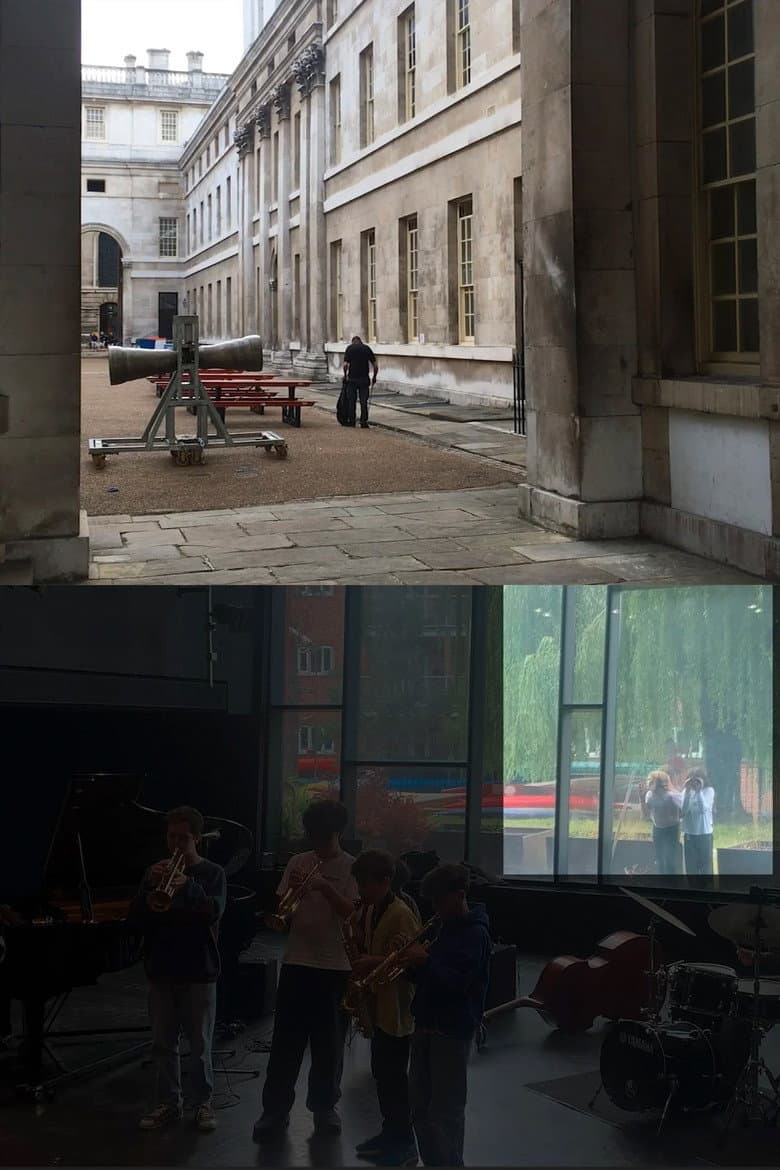
Do not expect a plot - there isn’t one. Instead, Four Films about Music offers four discrete movements, each anchored to a specific sonic or visual spark. The first, Silent Jazz, opens with a grainy, wordless clip of a saxophonist playing alone in a tunnel, the camera held at chest level as if Sherwin were simply passing by. The title is ironic: there is no silence here, only the raw, unembellished sound of the instrument reverberating against concrete. Orchestra shifts to a more crowded scene - a street band performing in a sunlit square, the phone’s lens sweeping across faces and brass instruments. Sherwin uses the phone’s limitations to his advantage: the shallow depth of field isolates individual musicians, creating sudden close‑ups that feel almost intrusive. Then comes Pause, the outlier. Sherwin admits this third film “clearly involved some planning,” and it shows. The screen goes black for nearly a minute before a single, sustained piano note rings out, matched with a static shot of a clock’s second hand. Time itself becomes the subject. Finally, Interior Music returns to spontaneity: Sherwin stands outside the Trinity Conservatoire in Greenwich, filming the building’s facade while music from a rehearsal inside leaks through the walls. The camera sways, zooms erratically, and occasionally loses focus, as if responding directly to the rhythm of an unseen cellist. The entire runtime is 28 minutes, with each segment running anywhere from four to nine minutes. There are no interludes, no explanatory text - just the interplay of image and sound, building and dissipating like a free‑jazz set.
Why It’s Worth Watching
In a film culture increasingly dominated by algorithmic efficiency, Sherwin’s Four Films about Music feels like a radical act of patience. Every shot was born from the director’s immediate, almost instinctual reaction to a scene that caught his eye - and ear - and then reshaped through weeks of trial and error in the editing suite. That combination of raw capture and meticulous craft gives the program a peculiar, uncanny resonance. You sense the weight of each decision, the thousands of discarded frames that led to these final four. For admirers of structuralist cinema, the piece offers a rare glimpse of a master working with the humblest possible instrument: a phone that fits in a pocket. For newcomers, it’s a gentle, 28‑minute introduction to a mode of filmmaking that values observation over exposition, and texture over narrative. Sherwin himself has said that he “aspires to” musical improvisation, and this program may be his closest approximation yet. The result is not always smooth; some shots linger a beat too long, others feel frustratingly incomplete. But that, perhaps, is the point. Like a jazz musician stretching a phrase beyond its expected length, Sherwin trusts that the audience will find meaning in the gaps. At a time when so much cinema shouts, this quiet, fragmented collection listens.