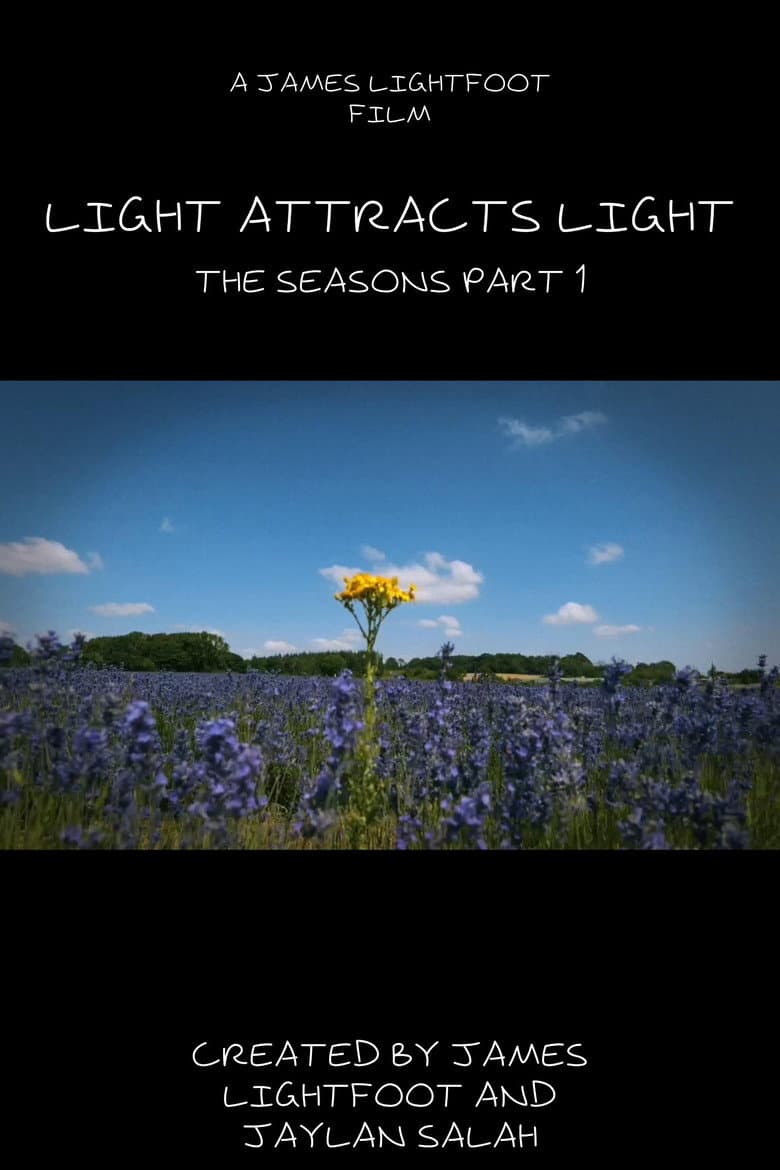
It’s a strange, beautiful thing when a film feels less like a story and more like a fever dream you’re lucky to have caught on camera. That’s the exact sensation promised by Light Attracts Light, the intriguing new short film that’s quietly generating whispers in avant-garde circles. Directed by the enigmatic James Lightfoot, this seven-minute piece serves as the inaugural chapter of a projected surrealist series titled The Seasons. If this first installment is any indication, we’re in for a wild, poetic ride through the cyclical madness of the human condition.
Inspired directly by the poem Light Attracts Light by Jaylan Salah - who also stars in the film - this project feels deeply personal and fiercely experimental. It’s not the kind of thing you’ll stumble upon in a multiplex, but for those who seek cinema that challenges, provokes, and bewitches, this is essential viewing.
Release Date & Where to Watch
Here’s where things get delightfully mysterious: the release date is currently unknown. As of today, August 9, 2026, Light Attracts Light exists in that liminal space between festival submission and public unveiling. Given its runtime of just seven minutes, the smart money is on a festival circuit premiere - think Fantasia, Fantastic Fest, or Rotterdam - where micro-budget surrealism finds its most fervent audience.
For those who can’t wait, keep an eye on James Lightfoot’s social channels and the project’s TMDb page, which is currently tracking a placeholder rating of 0/10 (meaning nobody’s scored it yet, not that it’s bad). It’s also plausible that the film will eventually land on a platform like Vimeo on Demand or MUBI, where short-form art films often find their permanent home. Until an official acquisition is announced, the best way to watch it is likely to be at a curated screening or an indie showcase. Stay patient; this kind of work rarely arrives on a schedule.
Cast & Crew
The creative pairing at the heart of this project is what makes it so tantalizing. On one side, you have Jaylan Salah, a multidisciplinary artist and poet whose original work provides the film’s spiritual backbone. Salah steps into the dual role of Narrator and "The Smoking Woman," suggesting a voice that guides the viewer while simultaneously inhabiting the frame. That duality - speaking from outside while acting from within - is a classic surrealist trick, and Salah’s background in performance art makes her the perfect vessel.
Opposite her is James Lightfoot, who not only directs but also takes on the role of "The Insane Man." Lightfoot is clearly a filmmaker who believes in total immersion. By casting himself in the most volatile role, he risks a lot, but that self-imposed vulnerability often yields the most electrifying performances. The dynamic between The Smoking Woman and The Insane Man promises a kinetic push-pull, a dialogue between chaos and calm, or perhaps between the conscious and the subconscious. The entire film rests on their shoulders, and with a seven-minute runtime, every glance and gesture carries immense weight. There’s no bloated crew to pad the credits; this is lean, intimate filmmaking.
Story & What to Expect
Plot details are scarce by design, but the foundation is clear: Light Attracts Light is an adaptation of Salah’s poem of the same name. The narrative, such as it is, will likely follow the interplay between the Narrator’s lyrical observations and the physical actions of The Insane Man. Expect a visual tone poem rather than a standard three-act structure.
The title itself suggests a philosophical core - the idea that positivity, or perhaps awareness, draws more of its kind into existence. But in the hands of a surrealist, that concept might be twisted into something darker: maybe the light that attracts is blinding, or the attraction is an obsession. The presence of a smoking woman as an archetype hearkens to classic film noir and the French New Wave - figures who are at once composed and deeply restless.
The Insane Man is likely the subject of her scrutiny, or perhaps her companion in a shared hallucination. Given the overarching series title, The Seasons, this first short will probably establish a thematic climate - cold and isolating, or perhaps blooming with dangerous vitality. Expect nonlinear editing, stark black-and-white or hyper-saturated color, and a sound design that prioritizes ambient texture over dialogue. This is cinema as a sensory experience, a dream you’re meant to feel rather than decipher. Don’t go in expecting answers; go in expecting a mood that lingers long after the final frame.
Why It's Worth Watching
In a cinematic landscape dominated by franchises and algorithm-driven content, Light Attracts Light is a defiant gasp of fresh air. Its seven-minute runtime is a commitment-free invitation to step outside your comfort zone. You can afford to be confused; you can afford to be enchanted. The collaboration between Salah and Lightfoot is the kind of artist-to-artist synergy that produces genuine unpredictability.
For fans of experimental cinema, this is a no-brainer. It hearkens back to the works of Maya Deren, Stan Brakhage, and more recent boundary-pushers like Quentin Dupieux. The fact that it’s the first chapter of a larger series means you’re getting in on the ground floor of something potentially substantial. Watching Light Attracts Light isn’t just about ticking off a short film; it’s about witnessing the birth of a new visual language.
Moreover, the film’s thematic ambition - exploring how light and madness attract one another - is a deeply human concern wrapped in an alien shell. It asks us to consider our own internal seasons, the cycles of clarity and chaos that define our lives. It may only be seven minutes, but those minutes might just rearrange a few things in your head. For those willing to surrender to its strange, smoky logic, this is the most exciting unknown date on the indie calendar. Keep your eyes open; when the light finally appears, you’ll want to be looking.