The calendar has flipped to August 15, 2026, and while the summer blockbuster season usually winds down with a whimper, this year it’s going out with a jagged, neon-lit scream. Dropping into select theaters and on streaming platforms today is Midnight Neon, a 9-minute fever dream of a thriller that doesn’t just ask questions about reality - it strangles them in a dark alley. Directed by the enigmatic Charlie Milne, this compact piece of psychological dread is already the talk of festival circuit insiders, and now it’s here for the rest of us. Don’t let the brief runtime fool you; this thing is dense, disorienting, and designed to linger long after the credits crawl.
Release Date & Where to Watch
The wait is officially over. Midnight Neon hits limited theatrical screens and major VOD platforms today, August 15, 2026. If you’re in a major metropolitan area, catching it on the big screen is the way to go - Milne’s visual language demands a dark room and a massive canvas. For everyone else, the film will be available on all the usual digital storefronts, including Apple TV, Amazon Prime Video, and Vudu, starting at 12:01 AM EST. Given its micro-runtime, it’s the perfect palate cleanser between popcorn flicks, but don’t treat it as a throwaway. This is a precise, surgical piece of cinema that rewards a dedicated watch - ideally with the lights off and your phone in another room. It’s also premiering as part of a midnight shorts program at several indie cinemas, which feels thematically appropriate for a film this soaked in shadow.
Cast & Crew
At the helm is Charlie Milne, a director who has built a cult following for his ability to create maximum unease with minimal resources. Milne operates less like a traditional filmmaker and more like a puppeteer of paranoia, and Midnight Neon is his most concentrated dose of that talent yet. He’s assembled a small but formidable ensemble to bring his dark vision to life. Leading the charge is Vincent Aydon as The Protagonist, a role that requires him to deconstruct his own sanity in real-time. Aydon, known for his intense method preparations, delivers a performance that feels uncomfortably raw - watching him unravel is like witnessing a car crash in slow motion, but you can’t look away.
He’s anchored by the always-magnetic Merista Quetzal as Eve, a figure who drifts in and out of the narrative like a ghost with an agenda. Quetzal brings a serpentine grace to the role, making Eve simultaneously a lifeline and a threat. The supporting cast is just as crucial. Ryan Johnson appears briefly but memorably as a Studio executive, representing the cold, corporate machinery that grinds creative souls into paste. Then there’s Stephen Longley as a Cult member, a performance that is brief yet deeply unsettling - he embodies the silent, organized darkness that the title hints at. Together, they form a constellation of troubled stars, each pulling the protagonist - and the audience - into deeper, murkier waters.
Story & What to Expect
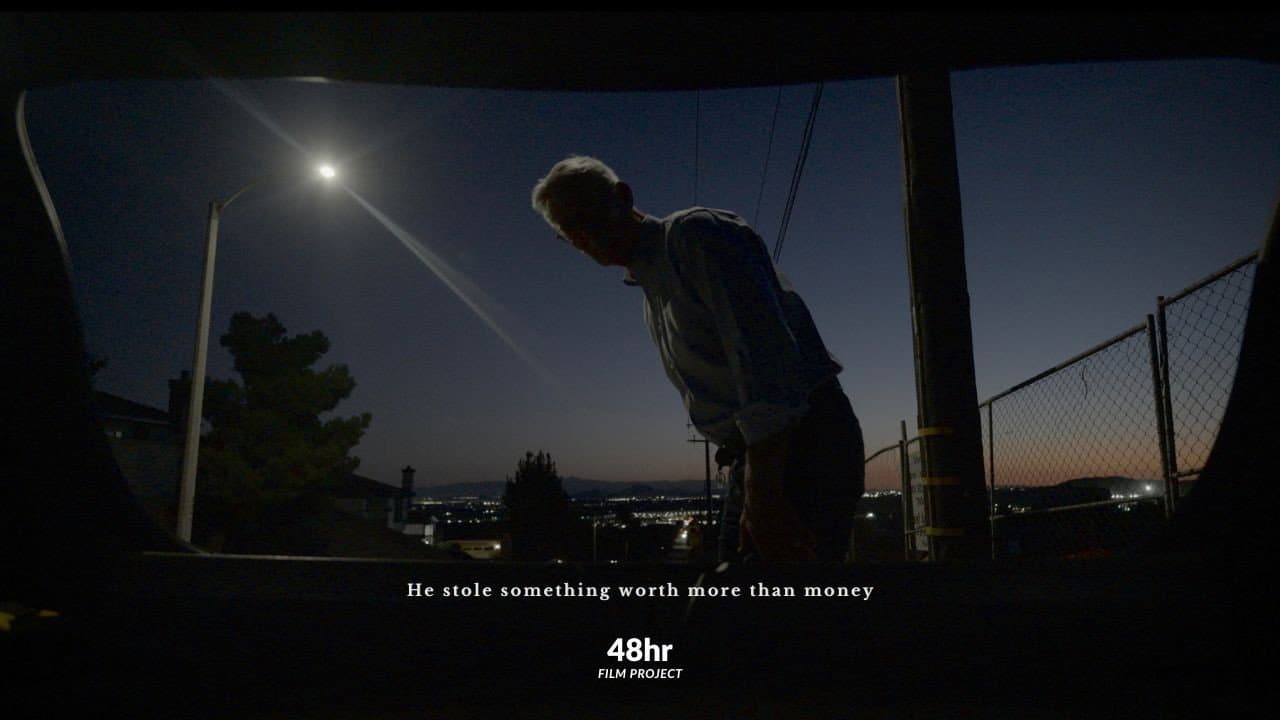
The logline is simple: A writer searching for purpose and direction falls into a world of organised darkness. But the execution is anything but simple. We meet The Protagonist in a sterile, dimly lit apartment, staring at a blinking cursor on an empty page. He’s blocked, disillusioned, and haunted by the choices that led him to this creative and emotional dead end. When he encounters Eve, she offers him a doorway out - but it’s a trapdoor. He descends into a subterranean society where creativity is commodified, drained, and discarded. This isn’t a literal cult with robes and candles; it’s a sleek, modern network of predators who feed on ambition.
What follows is a descent that blurs the line between hallucination and harsh reality. Milne’s direction uses the neon aesthetic not for stylish flair, but as a weapon - the artificial glow illuminates the cracks in the protagonist’s mind, making everything feel both hyper-real and hopelessly fake. Expect a non-linear narrative that jumps between memory and present-tense terror. The 9-minute runtime is a masterclass in economy; there’s no fat, no wasted dialogue. Each scene is a puzzle piece that clicks into place with a sinister finality. As his reality begins to deteriorate, the writer is forced to confront a haunting question: Was he ever in control, or was he always just a pawn in someone else’s dark design? The film doesn’t hand you answers easily, and the final 30 seconds will have you scrambling to re-watch the beginning.
Why It's Worth Watching
In an era where streaming services churn out bloated, overlong thrillers that overstay their welcome, Midnight Neon is a sharp jab to the senses. It respects your time while thoroughly messing with your mind. This is a film that understands the power of brevity; it doesn’t need 2 hours to unsettle you when 9 minutes will do the job twice as effectively. Milne has crafted a short that feels like a complete, satisfying narrative arc, yet leaves enough ambiguity to fuel hours of post-viewing debate. Is Eve a metaphor? Is the cult a manifestation of the writer’s own self-doubt? The film refuses to condescend to its audience with easy resolutions.
For fans of filmmakers like David Lynch or early Christopher Nolan, this is a must-watch. It’s a calling card for a director working at the peak of his powers, and a showcase for Aydon’s fearless commitment to portraying psychological collapse. There’s a raw, kinetic energy to Midnight Neon that big-budget spectacles often lose in the polish. It feels dangerous. It feels alive. In a cinematic landscape that often plays it safe, this little film takes a big, reckless gamble - and it pays off. Whether you catch it on the big screen or on your couch, strap in. Just don’t watch it alone with the lights off, unless you’re ready to question everything you thought you knew about your own choices.