The neon glow of a marquee has a language all its own, and in the heart of Manaus, two of them are still speaking. While global cinema chains consolidate and streaming algorithms decide what we watch from our couches, a quiet, powerful documentary is turning its lens on the last surviving street-level movie houses in the Brazilian Amazonian metropolis. O Cinema e o Centro, a 32-minute meditation on memory, urban decay, and the stubborn magic of the shared viewing experience, arrives today, August 27, 2026, and it feels less like a film and more like a eulogy that refuses to be read.
Release Date & Where to Watch
Available starting today, August 27, 2026, O Cinema e o Centro is not headed to a multiplex near you - which is entirely the point. The documentary is currently slated for a limited theatrical run in independent art-house venues across Brazil, with a focus on cultural centers and film clubs in the northern states. For those outside the Amazon region, a VOD release is expected to follow in the coming weeks, though the production team has made it clear that the initial exhibition window is designed to honor the very spaces the film celebrates. There is no word yet on a major streaming platform pickup, and honestly, that feels intentional. This is a film about physical places, and its distribution strategy mirrors its thesis: some stories are best told within four walls, shared with strangers.
Cast & Crew
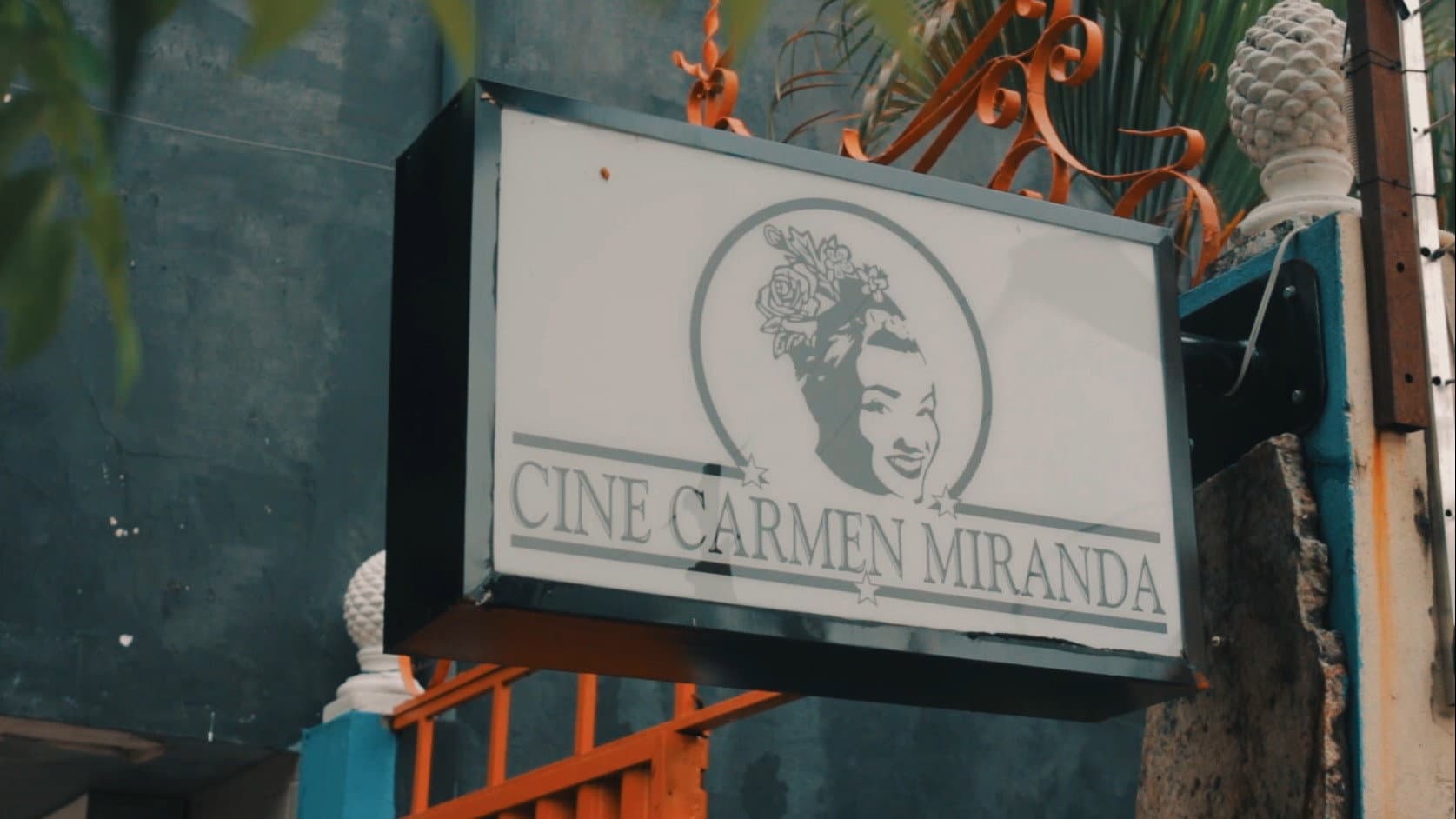
At the helm is director Thallys Neutron, a filmmaker whose previous shorts have circled themes of peripheral identity and urban resistance. Neutron’s approach here is observational yet intimate, avoiding the talking-head overload that plagues many documentaries of this length. Instead, he lets the architecture and the ambient hum of the theaters do the heavy lifting. The film’s central figures are not actors but custodians of memory. Rejane Brito, a longtime projectionist at the Cine Carmen Miranda, emerges as the de facto heart of the piece - her hands, calloused and precise, are shown threading 35mm film stock with the reverence of a priest handling scripture. Alongside her, Michel Guerrero, a cultural programmer at the Casarão de Ideias, offers a younger, more pragmatic perspective on how to drag legacy institutions into a digital age without losing their soul. Joaquim Loureiro, a retired cinema doorman with over four decades of stories, provides the connective tissue, spinning yarns of sold-out premieres and the shifting demographics of a city in flux. The trio never feels like talking points; they are flesh-and-blood archives, and Neutron wisely gives them space to breathe.
Story & What to Expect
The narrative is deceptively simple: a side-by-side portrait of two venues. The Cine Carmen Miranda, named after the iconic singer, is a relic of the mid-20th century, with its art-deco facade crumbling under tropical humidity yet still proudly holding its ground. The Casarão de Ideias, meanwhile, is a more recent conversion - a sprawling old mansion turned into a hybrid space that screens films in its courtyard, hosts debates, and functions as a community kitchen for artists. The documentary weaves their histories together, showing how both have survived economic crises, the arrival of shopping mall cinemas in the 1990s, and the existential threat of pandemic-era closures.
But O Cinema e o Centro is less concerned with chronology than with atmosphere. Expect long, unhurried shots of empty seats as sunlight streams through slatted windows, dust motes dancing in the beams. Expect the rumble of a projector starting up, a sound that is almost extinct. Neutron is not shy about the melancholy of his subject matter; at times, the film feels like a requiem for a lost public sphere. Yet, he also captures moments of surprising vitality. A packed Saturday morning screening for children, where the laughter drowns out the street noise. A neighborhood assembly held in the lobby of the Carmen Miranda, where locals debate the future of the block. The title, translated as The Cinema and the Center, carries a double meaning - referring both to the physical downtown district and to the idea that cinema itself is, or should be, at the center of civic life. The film argues that these theaters are not just venues but bulwarks against the isolation of hyper-connectivity. In an era of curated feeds and echo chambers, they remain rare sites where a heterogeneous public gathers to feel something together, in real time.
There is no archival footage of Manaus’s cinematic golden age, which is a deliberate stylistic choice. Neutron relies instead on the weathered faces of his interviewees and the scratches on old posters to evoke nostalgia. The 32-minute runtime is brisk, almost a perfect short feature - enough to make its point without overstaying its welcome. The pacing is contemplative, but the emotional arc is sharp. By the end, you are not left with despair but with a kind of defiant hope. The final sequence, a night screening during a heavy rainstorm that leaks through the Casarão’s ceiling, is both absurd and transcendent, capturing the precariousness and the beauty of these spaces with a single, unflinching shot.
Why It's Worth Watching
In a cultural landscape saturated with 10-episode series and three-hour superhero epics, O Cinema e o Centro is a refreshingly small, focused object. It will not tell you anything you don’t already know about the decline of physical media or the dominance of streaming platforms. What it does instead is make you feel the weight of what is lost when a cinema shuts its doors. It is a film about the value of friction - the friction of commuting downtown, of sitting next to a stranger, of watching a film that might have a scratchy print or a blown speaker, and loving it anyway.
For documentarians and cinephiles, this is essential viewing; it is a masterclass in using limited resources to create immense emotional texture. For the general audience, it is a human story, not a tech lament. Rejane Brito’s quiet dignity as she cleans a lens for the thousandth time is worth the price of admission alone. The TMDb rating of zero is simply a placeholder for a film too new to have been scored, but do not let that fool you. This is a passionate, uncynical work from a director who believes that a movie theater is never just a building. It is a promise that, for a couple of hours, you are not alone with your thoughts. In an age of infinite content, O Cinema e o Centro reminds us why we ever fell in love with the screen in the first place - and why some places refuse to dim their lights, no matter the storm outside.