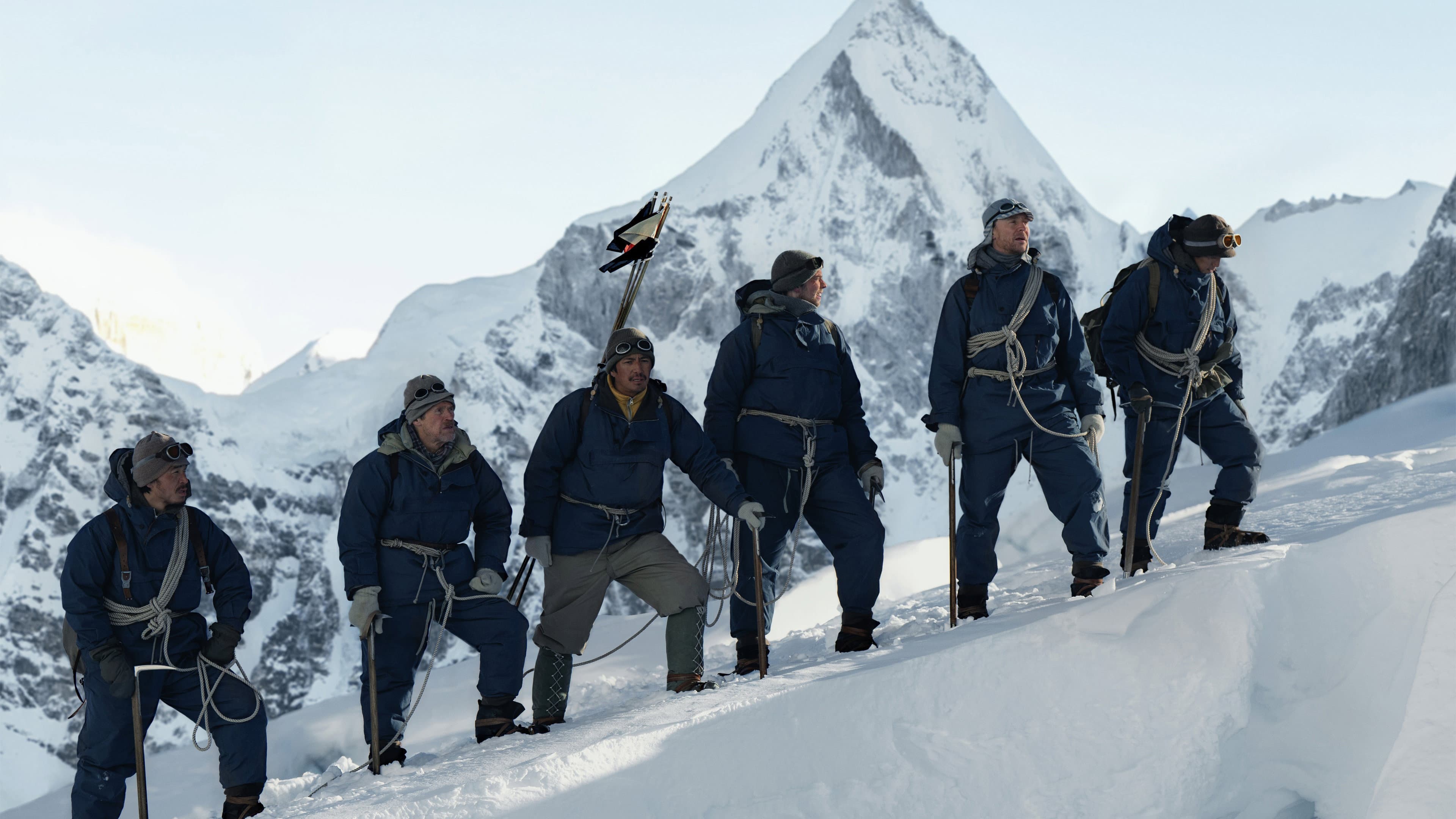
The first thing Jennifer Peedom does is strip away the postcard. In Tenzing, her narrative debut, Everest is not a triumph waiting to be claimed but a living, breathing antagonist - a wall of wind and ice that has already swallowed better men than the ones queuing at its base. The film, released on October 9, arrives with the kind of quiet prestige that Hollywood reserves for stories it believes are important, and for once the marketing may be underselling it. This is a drama about ambition, yes, but also about who gets remembered and who gets folded into the margins of someone else's legend.
At its center is Genden Phuntsok as Tenzing Norgay, a performance of remarkable stillness. Phuntsok - largely unknown to Western audiences before this - carries the film's emotional weight in his eyes and the set of his jaw rather than in speeches. His Tenzing is a man who has spent a lifetime being told where he belongs by people who have never set foot above base camp, and the film's engine is the slow, deliberate refusal of that instruction. He has dreamed of the summit since boyhood; Samdrup Dorje Lama appears in brief, piercing flashbacks as the nine-year-old Tenzing, and those sequences do a lot of heavy lifting in establishing a dream that predates any expedition.
Then there is Tom Hiddleston's Ed Hillary, and the film is smart enough to make him neither villain nor savior. Hiddleston plays Hillary as a man of genuine decency and unchecked ego in roughly equal measure, a combination that generates the film's most interesting friction. The partnership at the heart of Tenzing is not a simple bromance; it is a negotiation. Willem Dafoe's John Hunt, the expedition's organizer, rounds out the trio with a performance of bureaucratic tension - a man managing reputations and geopolitics as carefully as he manages oxygen supplies. Johnny Flynn's George Mallory appears as a ghost of Everest's earlier failures, and the film uses him sparingly but effectively, a reminder of what the mountain costs.
Peedom, best known for her documentaries about mountaineering, brings a documentarian's patience and a dramatist's eye for a held breath. At 126 minutes, the film takes its time, but it rarely drags; Peedom understands that the real suspense isn't in the summit push but in the kitchen-table negotiations and the camps where hierarchies calcify. The screenplay, which focuses on the interpersonal rather than the purely physical, wisely avoids turning the film into a survival thriller. When the storm does come, it is brutal and brief, and Peedom refuses to linger on spectacle for its own sake.
The supporting cast gives the film its texture. Lhakpa Tsamchoe as Kinzom, Tenzing's wife, delivers a handful of scenes that quietly reframe the entire endeavor as a family's sacrifice rather than an individual's glory. Bhuchung Kata and Jampa Kalsang Tamang, as Sherpa and Mingma, bring a grounded camaraderie to the base-camp sequences, and the film is at its best when it pauses to observe the labor and expertise that the history books have so often skimmed past.
The early reception suggests audiences are responding to exactly this. A TMDb rating of 8.237 out of 10 and an IMDb score of 7.7 point to a film that has landed with both general audiences and more demanding viewers, which is no small feat for a historical drama with a relatively restrained marketing push. That the film has found this traction without a conventional action framework is a testament to how well the emotional beats land.
Tenzing is not interested in settling the historical debate about who reached the summit first. Instead, it asks a more resonant question: who gets to be the author of a dream? In giving Tenzing Norgay's inner life the center of the frame - and in casting a relatively fresh face to carry it - Peedom has made a film that feels both overdue and perfectly timed. The mountain, as ever, remains indifferent. The man, at last, gets to speak.