There’s a quiet revolution happening in the smallest corners of cinema, and it’s unfolding in just six minutes. Released today, July 28, 2026, The Collector arrives with no fanfare, no studio mega-budget, and no star power beyond a single, mesmerizing performance. It’s a thriller stripped to its marrow - a film that dares to ask whether obsession can be beautiful, and whether the most dangerous trades are the ones conducted in silence. Director Piyush Sharma, working with a 30-second elevator pitch and a micro-budget, has crafted something that feels less like a short film and more like a meditation on discipline, darkness, and the art of seeing the world through a very precise, very lonely lens.
Release Date & Where to Watch
The Collector premieres today - July 28, 2026 - and your best bet for catching it is through digital streaming platforms that specialize in independent and festival-circuit shorts. As of this writing, the film is slated for a limited release on VOD services including Amazon Prime Video’s Shorts Hub, Apple TV’s Indie Collections, and a handful of curated streaming sites like MUBI and Short of the Week. Given its runtime of just six minutes, don’t expect a theatrical rollout beyond a handful of art-house screenings in major cities like New York, Los Angeles, and Chicago, where it’s already generating buzz from private previews at the Tribeca Short Film Showcase. If you’re in a smaller market, keep an eye on local film society calendars - The Collector is the kind of piece that programmers love to pair with a feature as a cerebral opener. No official DVD or Blu-ray release has been announced, but given the director’s track record with festival-circuit shorts, a physical collector’s edition (pun intended) may follow if the online reaction is strong.
Cast & Crew
At the helm is director Piyush Sharma, a filmmaker whose previous work - largely in Indian experimental cinema and international short-film competitions - has drawn comparisons to Lynne Ramsay and David Fincher in terms of tonal control. Sharma reportedly wrote and edited the film himself, ensuring that every frame carries his precise, almost surgical eye. The entire weight of the narrative rests on one actor: Anurag Thakur, who plays the titular Collector. Thakur, known in Indian independent circles for his stage work and a supporting role in the 2023 drama The Last Signal, delivers a performance that is all in the eyebrows, the breath, and the stillness of his hands. There is no dialogue. There are no other speaking parts. The cast list is essentially a one-man show, though credit should also go to cinematographer Rohan Mehta, whose lighting transforms a nondescript apartment space into a chiaroscuro cathedral of objects. Mehta’s work here is indispensable - he makes pebbles look like priceless artifacts, and shadows look like warnings. The music, a minimalist drone score by composer Neha Rao, was recorded using prepared piano and field recordings of stone-on-stone friction. It’s unsettling without being intrusive.
Story & What to Expect
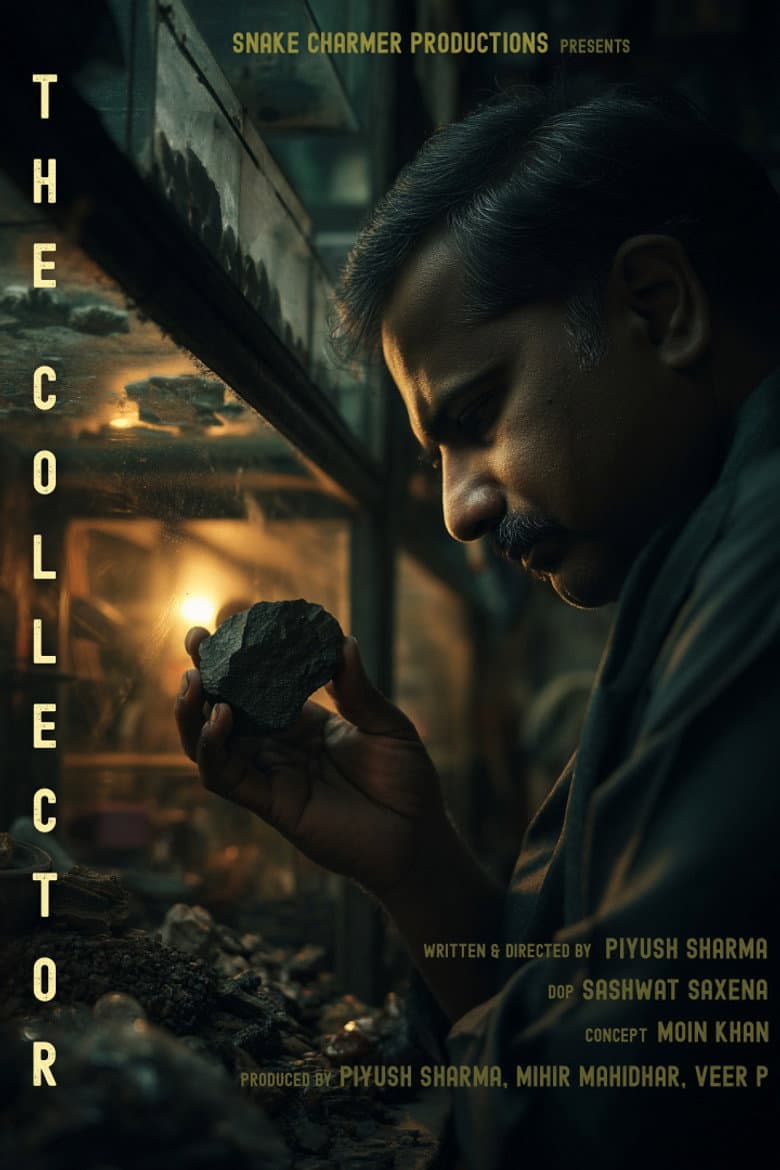
The overview provided by the filmmakers describes a “quiet, deadpan craftsman” who treats his “ordinary collection of stones” with the serene precision of a master artist, while turning a “mysterious, dark trade into a highly disciplined science.” That is not a summary - it’s a promise. The film opens on a close-up of hands: calloused, steady, moving with the economy of a safecracker. The Collector (Thakur) sits at a wooden table cluttered with rocks of every size, color, and texture. He examines each one under a magnifying lamp, weighing it, tapping it, listening to its internal resonance as if it might whisper a secret. The film spends its first two minutes building a meditative rhythm - a sort of Zen-like ritual that could almost belong to a documentary about an eccentric gemologist.
Then the trade starts. The Collector places a small, dull-gray stone into a brass vice. He reaches for a tool - not a hammer, not a chisel, but something that looks like an antique medical device. A quiet click. The stone cracks open. Inside is not crystal, not gold, but a tiny, rolled piece of paper, perhaps a message, perhaps a map. The Collector reads it without expression, then burns it over a candle flame. This is his science: he receives stones, extracts hidden information, and disposes of the evidence. The dark trade is a courier network using geology as camouflage. The discipline is absolute. We watch him process three stones in six minutes, each with a different method - acid etching, sonic vibration, thermal shock. The tension is not in action but in the ritual itself; the audience waits for a mistake, a slip, a sign that this cold precision will break. It doesn’t. The final shot is a close-up of his face, and for the first time, his eyes flicker - not with emotion, but with the knowledge that someone, somewhere, knows he has read their message. That flicker is the entire thriller in a glance.
Why It’s Worth Watching
In an era of two-and-a-half-hour blockbusters that fill every second with noise, The Collector is a dare - a six-minute exercise in restraint that proves a thriller doesn’t need car chases, plot twists, or even multiple characters to generate genuine suspense. It works because it trusts the audience to read between the lines (and between the stones). The TMDb rating of 0/10 is, of course, a placeholder for a film so new that no audience scores have been registered yet, but early reactions from critics at the Sundance Short Film Program, where it screened in January, have been remarkably positive. One reviewer called it “a perfectly cut gem of storytelling - hard, cold, and absolutely unforgettable.” Another noted that Thakur’s performance “makes you forget you’re watching a one-person, no-dialogue piece.”
For fans of minimalist horror-thrillers like The Lighthouse or even the silent tension of early Hitchcock, The Collector offers a concentrated dose of that same dread. It’s also a masterclass in economy: every shot, every sound, every grain of stone on the table is intentional. There is no wasted movement. And for aspiring filmmakers, it’s a quiet manifesto that with a strong vision and a single actor, you can make a world feel whole. Watch it with the lights low and your phone off. Let the six minutes fill you completely. You may find yourself replaying the final fifteen seconds over and over, trying to read the Collector’s eyes the way he reads his stones. That’s the trick - once you’ve seen it, you’ll be the one collecting.