Photo: TMDb
Fantastic 4: First Steps (2025) - Marvel's New Origin
There’s a specific kind of magic that happens when a film understands its own aesthetic so completely that the setting becomes a character in its own right. That is the singular triumph of The Fantastic 4: First Steps, the latest - and long-awaited - incarnation of Marvel’s First Family, which crashed into theaters on July 23, 2025, and is still generating heated conversation a year later. Director Matt Shakman hasn't just made a superhero movie; he’s crafted a gorgeous, anxiety-tinged time capsule that asks a deceptively simple question: What does it mean to be a family when the end of the world is knocking?
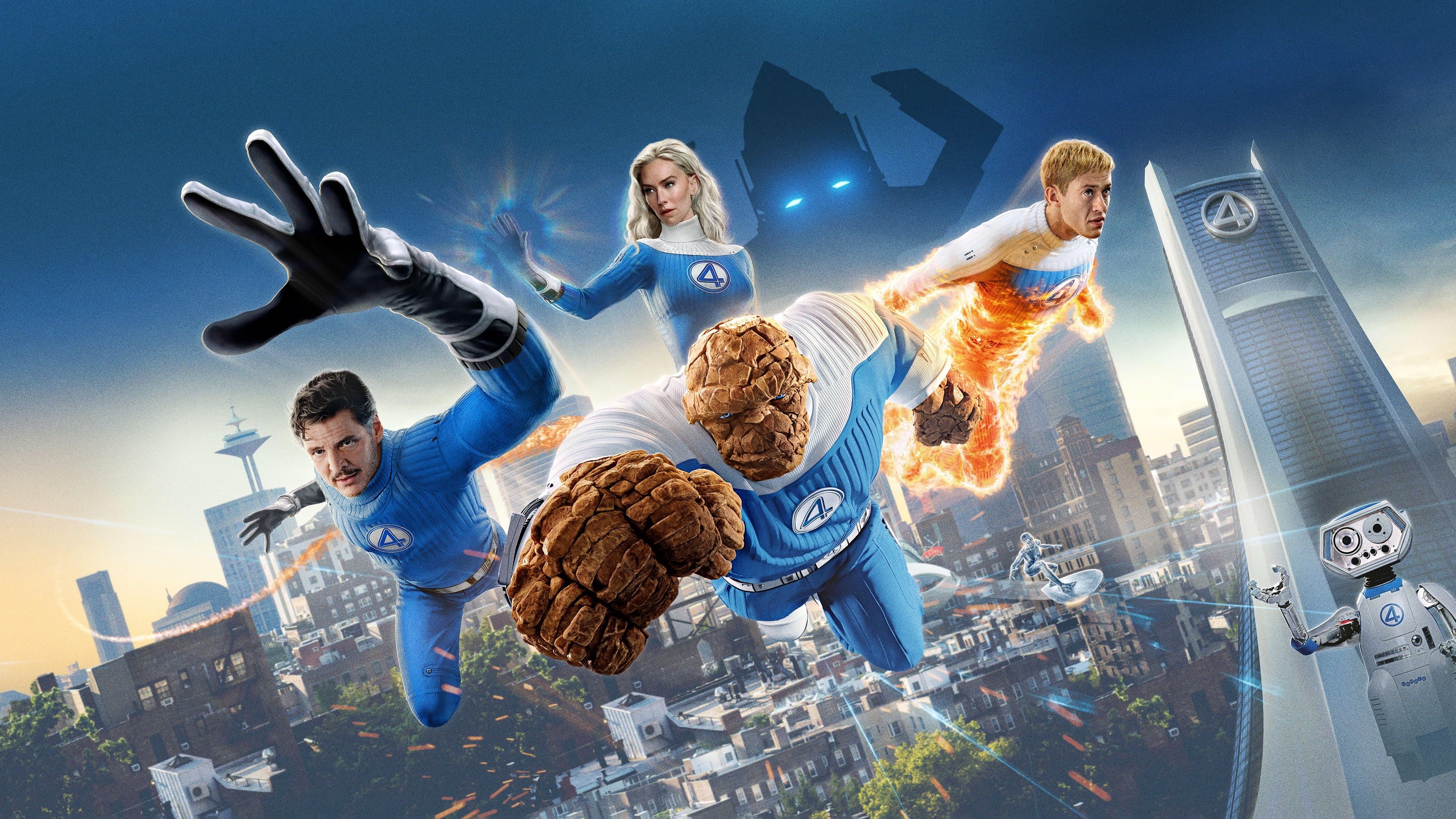
The answer, delivered over a brisk and refreshingly lean 115-minute runtime, is a resounding and complicated “everything.” From the opening frame, Shakman plunges us into a vibrant, retro-futuristic 1960s that feels like a fever dream of Mad Men and The Jetsons. This isn’t the cynical, bleak past of our own history; it’s the future as envisioned by a decade obsessed with chrome, optimism, and the atomic age. It’s a world of swooping cityscapes, gleaming laboratories, and a palpable sense of wonder - which makes the arrival of a planet-devouring cosmic entity all the more jarring.
At the heart of this beautifully rendered world is a family in crisis. Pedro Pascal delivers a nuanced, weary performance as Reed Richards, a genius who is less concerned with stretching his body than he is with stretching the limits of physics to save his loved ones. Pascal plays Reed with a quiet, paternal anxiety, a man who carries the weight of the entire world on his shoulders while trying to keep his own household from collapsing. Opposite him, Vanessa Kirby’s Sue Storm is the true anchor of the film. She is fierce, emotionally intelligent, and commanding; her Invisible Woman isn’t just a power set, but a metaphor for the unacknowledged labor that holds a family together. Their chemistry is the film’s gravitational center.
But the breakout energy comes from the younger generation. Joseph Quinn’s Johnny Storm is a perfect cocktail of swagger and insecurity, a hot-headed hot rod of a man who wields his flame with the reckless abandon of youth. His banter with the hulking, tragic figure of Ben Grimm - played with profound soul and gravelly pathos by Ebon Moss-Bachrach - provides the film’s emotional and comedic backbone. Moss-Bachrach is a revelation; his Ben is a man trapped in a rocky prison of his own making, his eyes conveying a lifetime of pain and resilience. The interplay between these two is where the script finds its truest voice: equal parts brotherly ribbing and unconditional support.
Then, of course, there’s the big, purple elephant in the room. Ralph Ineson’s Galactus is not merely a cloud or a caricature; he is a force of nature, voiced with a deep, resonant, and terrifying calm that suggests a being beyond our mortal comprehension. He is the embodiment of inevitability, and his presence looms over the film like a biblical plague. His arrival is heralded by Julia Garner’s Shalla-Bal, a Silver Surfer who is less a gleaming herald and more a melancholic, tragic figure. Garner brings a quiet, sorrowful intensity to the role; she is a reflection of the family’s own dilemma - a being forced to sacrifice her identity for a cause she barely understands.
Shakman, known for his work on WandaVision, uses his television-honed skill for deep-cut character work within a grander spectacle. He populates the margins of this world with memorable oddities, from Paul Walter Hauser’s scheming and delightfully creepy Harvey Elder (Mole Man) to Natasha Lyonne’s scene-stealing turn as Rachel Rozman, a character who injects a dose of grounded, sarcastic humanity into the high-concept drama. These supporting players make the world feel lived-in, ensuring that the cosmic stakes never feel detached from the human element.
If there is a weakness, it’s that the plot sometimes feels like a series of spectacular set-pieces in search of a stronger connective tissue. The film’s pacing is brisk, perhaps too brisk, with the emotional beats of the family’s fractured dynamic sometimes getting subsumed by the sheer scale of the cosmic threat. Viewers looking for a deep dive into the physics of the Negative Zone might be left wanting, but those seeking a character-driven drama about a dysfunctional, loving family will be swept away.
The Fantastic 4: First Steps isn’t a flawless film - its TMDb rating of 6.948 out of 10 reflects a divided audience, some of whom may have hoped for a more traditional Marvel spectacle. But to focus on its imperfections is to miss the forest for the trees. This is a film of immense heart, stunning visual design, and genuine performances that elevate the material beyond its genre trappings. It’s a bold, weird, and wonderfully human story about a family that just happens to hold the fate of the Earth in their hands. In a cinematic landscape often plagued by franchise fatigue, this is a first step that lands with confidence, grace, and a whole lot of fire.