Photo: TMDb
The Last House (2026) - Louis Leterrier's Thriller
It’s been exactly one day since Universal dropped The Last House into theaters, and the conversation surrounding Louis Leterrier’s latest genre gambit is already split down the middle. On paper, the premise is a stripped-down survivalist nightmare: a family, sealed inside their suburban home by an unseen, ominous force, must ration food, water, and their own sanity as the walls literally close in. On screen, it’s a film that can’t decide if it wants to be a creeping psychological thriller, a hard sci-fi mystery, or a home-invasion allegory - and that indecision is both its most frustrating flaw and its only real source of tension.
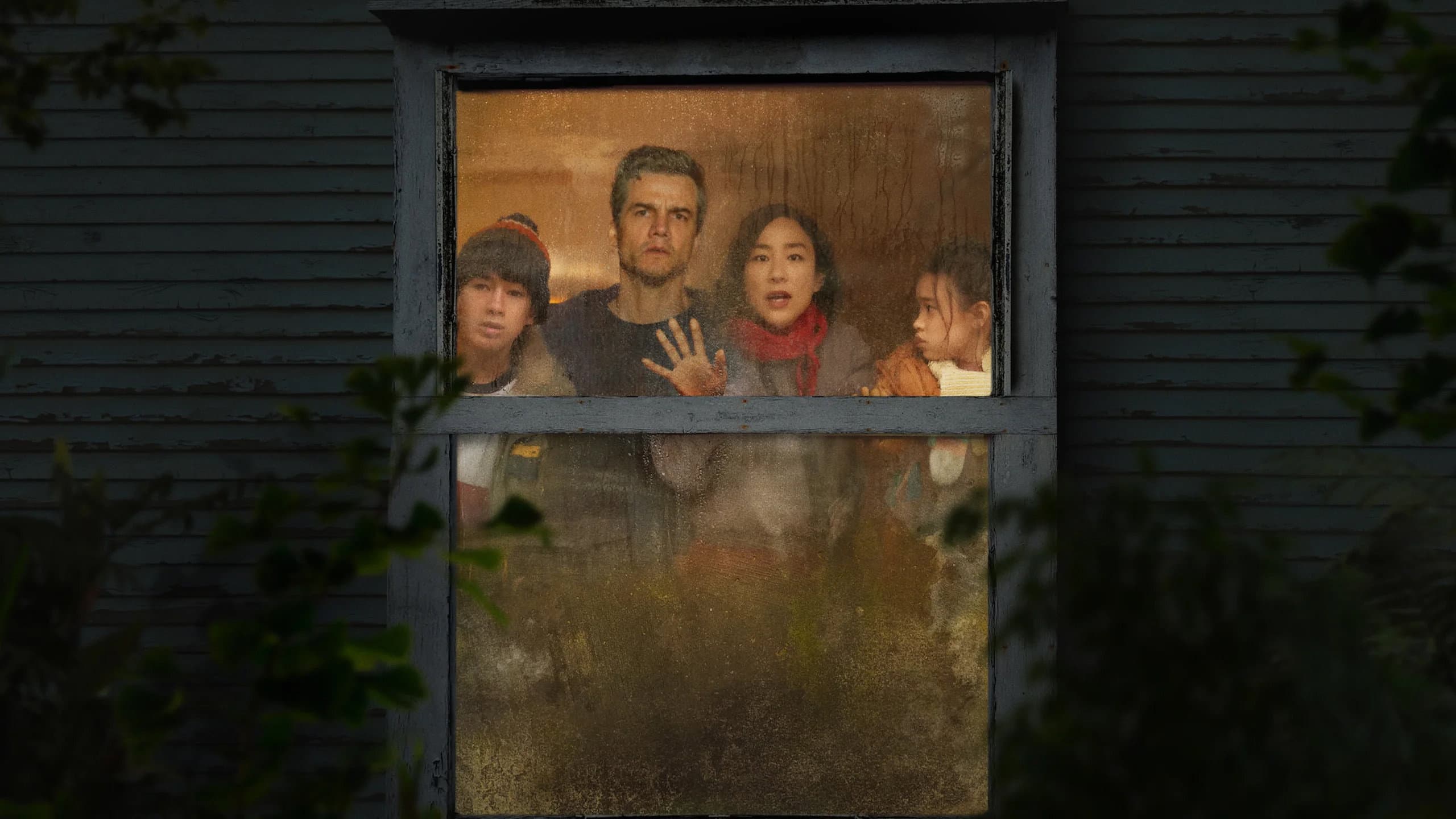
The film opens with a moment of almost mundane domesticity. Ann (Greta Lee) and Jason (Wagner Moura) are mid-argument about school pickups and a leaking faucet when the air outside suddenly goes thick and wrong. A low hum, a shimmer of heat, and then - nothing. The front door won’t budge. The windows don’t break. The phone is dead, and the television screen is static that occasionally flickers into a shape that might be a tree line or might be a face. From there, the clock starts ticking.
Leterrier, best known for high-octane set pieces (Clash of the Titans, the Transporter series), approaches this claustrophobic setup with a surprisingly steady hand. The early stretch is genuinely unnerving, relying on production design that makes the house feel both familiar and alien. The camera lingers on pantry shelves emptying, on the condensation forming on windows that won’t crack, on the children’s faces as their games turn grim. This is where the film’s real horror lives: not in monsters, but in the slow arithmetic of how many days two adults can stretch out six cans of soup and a bag of dried pasta.
The cast is uniformly committed, which makes the script’s lapses harder to forgive. Greta Lee brings a razor-sharp edge to Ann, a woman who refuses to spiral into panic even as she does the terrifying math of her family’s survival. Wagner Moura’s Jason is her counterweight - impatient, impulsive, and desperate to break through the barrier with brute force. Their chemistry feels lived-in, and the film earns its emotional beats when the couple argues over whether to ration the last chocolate bar or save the generator fuel for another night.
The children are where the film takes its boldest, and riskiest, swing. Riley Chung (8-year-old Ruth) and Noah Alexander Sosnowski (12-year-old Graham) carry the early scenes with an eerie, quiet competence. But as the confinement stretches into months - and then years - the role of each child is recast with older actors: Emma Ho and Gabriel Barbosa, then finally Arden Cho as Adult Ruth. It’s a clever narrative device, showing how the house becomes a time machine that denies them any future, but the execution is uneven. The aging is jarring, and the film never fully explains the rules of its own universe. Why do the children grow while the parents seem frozen? Is the threat malevolent or indifferent? The script gestures at answers but then retreats into mood and shadow.
Here’s the crux of The Last House’s problem: its TMDb rating sits at a middling 4/10, and you can feel why. The film has a magnificent premise and a suffocating atmosphere, but it lacks a third act. The climax, when it finally arrives, resolves the central mystery with a visual flourish that leans heavily into science-fiction bafflement rather than emotional catharsis. There’s a sequence involving a mirror, a wall of static, and a character’s memory that feels pulled from a more ambitious film - one willing to let its themes coalesce. Instead, Leterrier cuts away at the last moment, leaving the audience with more questions than chills.
That said, there’s something stubbornly admirable about The Last House’s refusal to be a conventional scare machine. It’s not a film about jump scares or gore; it’s about the low-grade panic of a broken furnace in winter, the slow rot of a pantry, the way a family can love each other and still snap over a stale cracker. It’s about how the threat outside is less terrifying than the one creeping inside - resentment, fear, and the quiet erosion of hope.
Audrey Anderson’s Susan, a neighbor who appears only in a brief but searing cameo, delivers the film’s most devastating line: “You don’t get to choose what you survive.” It lands with a weight the rest of the movie struggles to maintain.
Ultimately, The Last House is a thought experiment that’s more interesting to discuss than to watch. It’s a film for audiences who appreciate ambition over polish, mood over logic. You’ll leave the theater debating what it meant - and that’s not the worst fate for a late-summer horror entry. But as a cohesive narrative, it’s a beautiful house with a cracked foundation. Worth a visit, but don’t plan to move in.