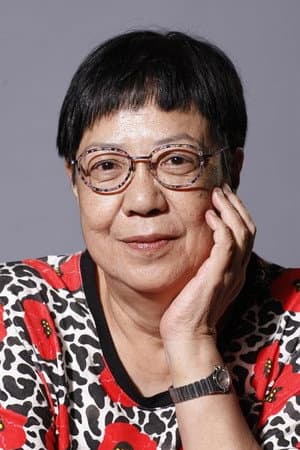
Ann Hui Camellia Award at Busan Film Festival
Director
Ann Hui
Advertisement
Acclaimed director Ann Hui to be honored with Busan's Camellia Award; a tribute to her impactful cinematic legacy.
Ann Hui, the celebrated Hong Kong filmmaker behind A Simple Life, will be honored with the Camellia Award at this year’s Busan International Film Festival, organizers confirmed on Tuesday. The prize, which recognizes established Asian directors for their lifetime contributions to cinema, will be presented to Hui during the festival’s opening ceremonies in October.
Hui, who has spent more than four decades shaping the landscape of Hong Kong and Asian cinema, is widely regarded as a pioneer of the Hong Kong New Wave movement. Her films, which often blend intimate human drama with acute social observation, have earned her a devoted following among critics and audiences alike. The Camellia Award, named after the flower that symbolizes Busan, is given to filmmakers whose body of work embodies the spirit of independent and art-house cinema across the region. Past recipients include Taiwanese director Hou Hsiao-hsien and Japanese auteur Kore-eda Hirokazu.
The announcement was made at a press conference in Seoul, where festival director Lee Yong-kwan praised Hui as “a storyteller of profound empathy and quiet power.” Lee noted that her career, which began in the late 1970s, has consistently challenged conventional narratives surrounding family, migration, and aging. “Ann Hui has never chased trends. She has instead spent her life illuminating the lives of people who are often overlooked,” Lee said in a statement. “Her work is a bridge between generations and cultures.”
Hui, 78, is best known internationally for A Simple Life (2011), a tender drama about the relationship between a wealthy film producer and his elderly family servant, played by Deanie Ip. The film earned Hui the Best Director award at the Asia Pacific Film Festival and won multiple honors at the Hong Kong Film Awards, including Best Film and Best Director. It also premiered in competition at the Venice International Film Festival and was selected as Hong Kong’s entry for the Academy Awards that year.
But her career extends far beyond that single feature. Hui began her directorial work in the late 1970s with a series of television films for RTHK, the public broadcaster in Hong Kong, and moved to the big screen with The Secret in 1979. Over the following decades, she directed more than 30 films, spanning genres from thrillers to romantic comedies, though her signature remained a humanistic focus on marginalized figures - single mothers, refugees, the elderly, and working-class women. Notable works include Boat People (1982), Summer Snow (1995), Ordinary Heroes (1999), and A Simple Life’s spiritual follow-up, Love After Love (2020), which explored the life of writer Eileen Chang.
Hui’s style is often described as unadorned yet deeply affecting. She favors long takes, naturalistic performances, and a restrained emotional palette, allowing the underlying tensions of her stories to surface slowly. Critics have frequently compared her to European humanists like Ken Loach, though her sensibilities are firmly rooted in the specific textures of Hong Kong life - its crowded apartments, street markets, and complicated family hierarchies.
The Camellia Award is usually presented alongside the festival’s main slate, and Hui will also take part in a public talk and a retrospective screening of several of her films. Organizers did not confirm which titles would be screened but noted that the selection would span her early and later work. The festival, which runs from October 7 to 16 in Busan, South Korea, is the largest film event in Asia and has long served as a platform for exchange between Eastern and Western cinema.
Hui’s recognition arrives during a particularly active period for Hong Kong filmmakers on the international festival circuit. With the global interest in Asian cinema growing, her work has found new audiences on streaming platforms and through university film programs. This award, industry observers note, cements her standing not merely as a national treasure but as a central figure in world cinema.
In receiving the Camellia, Hui joins a distinguished list of filmmakers who have been honored for their artistic vision rather than commercial appeal. The award comes with no cash prize but carries significant prestige within the international art-house community. Festival organizers emphasized that the selection is based on a filmmaker’s overall oeuvre and their influence on emerging directors across Asia.
The filmmaker herself has not yet issued a public statement, but her frequent collaborators expressed delight at the news. In a brief comment to a local outlet, producer and longtime associate Roger Lee said that Hui “has always been more interested in telling stories than in receiving awards,” and that the honor felt particularly meaningful because it comes from a festival in a country that has historically supported her work. “She has screened in Busan many times over the years, and the audiences there have always received her films with extraordinary warmth,” Lee said.
Hui is expected to travel to Busan for the award presentation and will participate in a press conference prior to the festival’s opening night. No additional biographical details or career retrospectives were shared in the announcement, but festival programmers said they are planning a comprehensive tribute section in the festival’s program booklet.
The news adds significant buzz to this year’s festival lineup, which has not yet been fully announced. As with previous editions, the Camellia Award is often one of the most anticipated announcements of the festival season, and Hui’s induction is seen by many as a fitting tribute to a director whose work has never wavered in its commitment to emotional truth.
Source: Hollywood Reporter
Advertisement
Advertisement