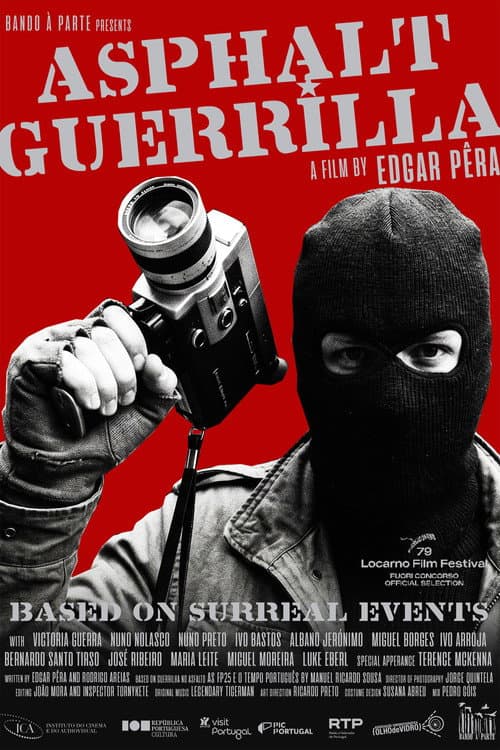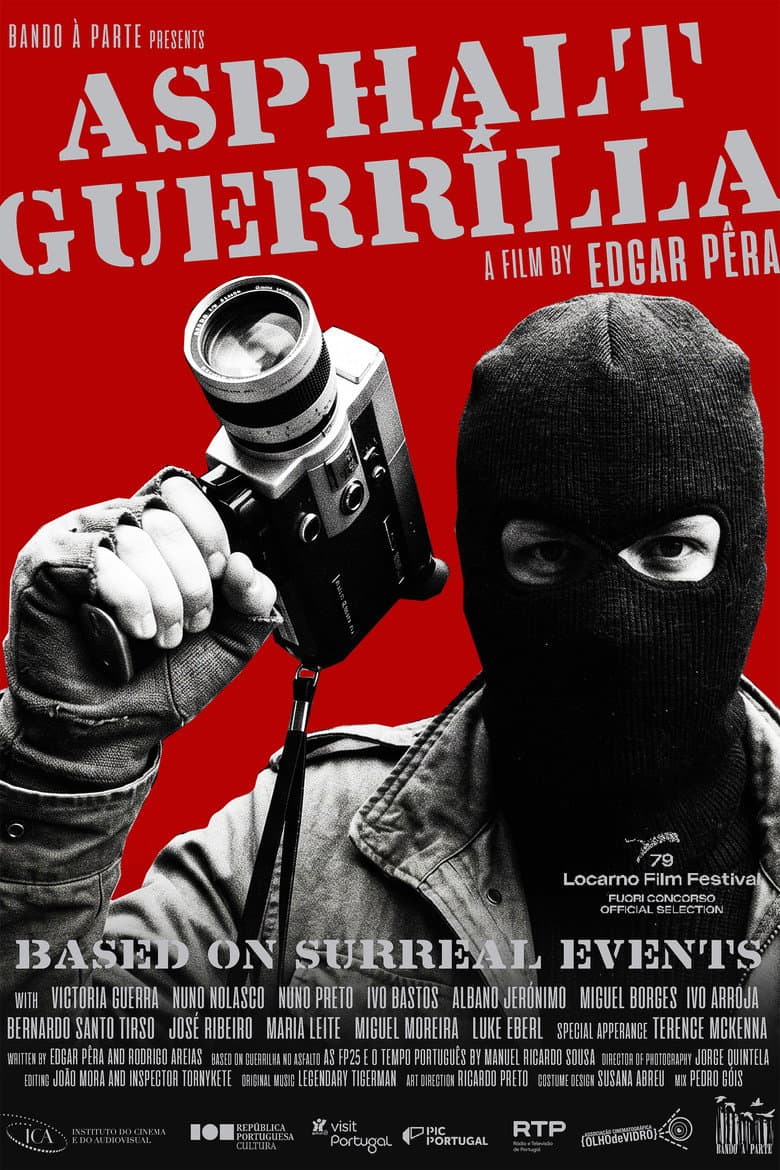
LOS ANGELES - A new thriller hitting theaters Monday is aiming to do more than just tell a story about a botched bank heist. “Asphalt Guerrilla,” the latest feature from Portuguese director Edgar Pêra, is a deliberately disorienting blend of fact and fiction, live-action and AI-generated imagery, wrapped around a meta-narrative about the very act of making movies.
The film, which clocks in at a tight 77 minutes, follows a member of a guerrilla political organization who, in the immediate aftermath of a robbery, finds himself face-to-face with an unpredictable mob. What sounds like a straightforward genre setup quickly unravels into something far more complex, as Pêra layers in documentary-style elements and artificial intelligence to question how we process truth in an era of digital manipulation.
According to the director’s production notes, the project was conceived as a "mirror held up to our time," using the language of cinema to interrogate the slippery slope between real events and their mediated representations. In an age where deepfakes and algorithmically generated content blur the line between what happened and what was never real, “Asphalt Guerrilla” refuses to offer easy answers.
The cast is led by Miguel Moreira and Maria Leite, with supporting turns from Ivo Arroja, Albano Jerónimo, and Bernardo Santo Tirso. Moreira, who has built a reputation in Portuguese independent cinema for playing volatile outsiders, reportedly took on the role after a single conversation with Pêra about the philosophical underpinnings of the piece. Leite, meanwhile, anchors the film’s more grounded, human moments against the visual chaos that surrounds her.
Pêra, known for his experimental approach and willingness to push formal boundaries, has described the film as a "collision" - between genres, between technologies, and between the filmmaker's intent and the audience's interpretation. In a statement released ahead of the premiere, he noted that the story itself is less about the specifics of the robbery and more about what happens when individuals are forced to confront an angry, unpredictable collective. "The mob is not just a crowd in the street," he said. "It is the online mob, the mob of algorithms, the mob of history."
Those who have seen early screenings note that the film’s use of AI is not a gimmick but a structural device. Certain sequences are deliberately rendered with a synthetic, uncanny quality, making the viewer question whether what they are watching actually happened or was generated from a data set of prior heist films and political manifestos. It is a risky move, but one that aligns with Pêra’s stated mission to make films that "do not simply tell a story but investigate the condition of storytelling itself."
The film's title, “Asphalt Guerrilla,” evokes a sense of urban warfare and underground resistance - themes that run through the narrative like a live wire. The guerrilla member at the center is not a cartoonish revolutionary but a conflicted figure whose ideals have been compromised by the reality of violence. The encounter with the mob becomes a pressure test, forcing him to confront not only his pursuers but also the erosion of his own convictions.
Given the film's brief runtime, Pêra keeps the pacing relentless, with little time for exposition or contemplative pauses. Every frame is packed with intent, and the result is a dense, sometimes exhausting, but never dull viewing experience. The cinematic influences range from 1970s political thrillers to the fractured digital experiments of contemporary art cinema, yet “Asphalt Guerrilla” carves out its own distinct identity.
Thematically, the film is very much of its moment. With global political movements increasingly organized through social media, and with public trust in visual evidence at an all-time low, Pêra’s meditation on the fragility of reality feels both urgent and prophetic. The mob in the film is not simply a physical presence; it is an idea, a feedback loop of rage that grows as it is fed by misinformation and fear.
Critics who have weighed in ahead of the release are split, with some praising the film's ambition and others finding its fragmented structure alienating. But few would argue that it is a safe or conventional work. “Asphalt Guerrilla” demands active engagement from its audience, rewarding those willing to meet it on its own terms.
For Hollywood observers, the film also represents a notable experiment in how AI can be integrated into narrative filmmaking without overwhelming the human element. While major studios have largely used the technology for visual effects and behind-the-scenes efficiency, Pêra has placed it front and center as a philosophical tool, forcing the medium to confront its own future.
As the release date of August 10, 2026 approaches, the film is poised to generate significant conversation - both for what it says and for how it says it. It may not be an easy watch, but “Asphalt Guerrilla” seems destined to leave a mark on anyone who experiences it, holding up that mirror with both hands and refusing to look away.
Source: Hollywood Reporter