It’s a Friday, and most studios are praying their $200-million superhero epics can hold onto IMAX screens. But on August 7, 2026, the most audacious release of the week lasts just five minutes, has no spoken dialogue, and counts Plato as a screenwriter. That’s “Atopia,” a new animated short from director Leonardo Carrano that redefines what animation can be - not by drawing characters or worlds, but by physically assaulting the film stock itself. This isn’t a movie you watch; it’s a movie you experience, a cinematic fever dream that premieres today in select theaters and on streaming platforms.
Release Date & Where to Watch
“Atopia” hits the world today, August 7, 2026. Given its experimental nature and brief runtime, don’t expect a wide multiplex rollout. The short is slated for a curated release - think art-house cinemas, film festivals, and museum screenings - where audiences are willing to lean in rather than lean back. For those not near a repertory theater, the film will also be available on major VOD platforms and specialty streaming services that cater to avant-garde and animated works. Check your local indie theater listings, as many are expected to pair “Atopia” with a feature-length documentary on experimental filmmaking or a program of other short works to justify the ticket price. It’s a tight window, but that’s part of the charm: this is a piece of art meant to be caught, not recorded.
Cast & Crew
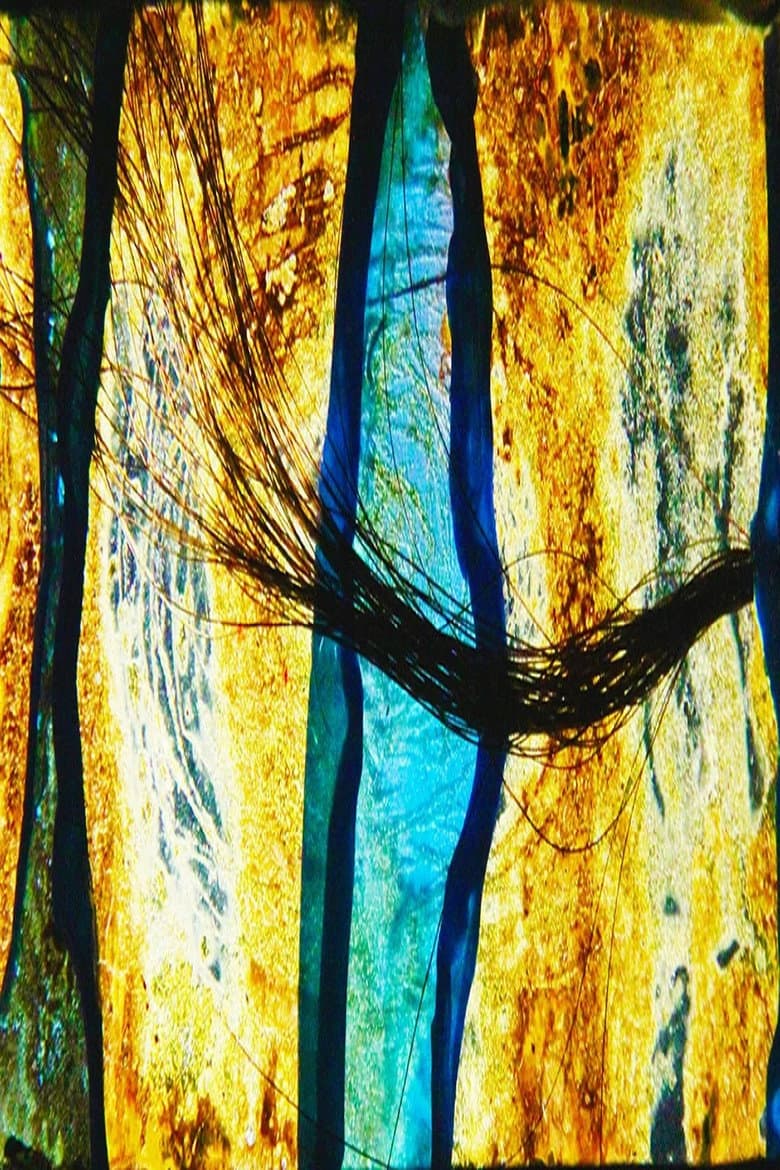
The cast list is officially empty - or rather, the only performer is not an actor but a musician. Italian cellist Giovanni Sollima provides the film’s entire sonic and physical presence, his image woven into the celluloid itself. Sollima, known internationally for his virtuosic and genre-defying performances, is the beating heart of “Atopia.” He doesn’t appear as a character; he appears as a source. Behind the camera, director Leonardo Carrano acts as a mad scientist, taking raw 35mm film and subjecting it to a chemical and physical gauntlet. Carrano, an artist whose previous work has blurred lines between installation art and cinema, uses acid etching, harsh pigments, scratches, and abrasive friction to create the film’s visual palette. There is no traditional animation team here - no keyframes, no CGI renders. The "animation" is the manipulation of the film strip itself, a tactile, brutalist approach that makes every frame a unique, hand-crafted artifact. The “crew” is essentially Carrano and Sollima, locked in a duet across mediums.
Story & What to Expect
Don’t come looking for a plot. “Atopia” is an essay in sensation, built on a philosophical foundation. The title references a state described in Plato’s Symposium - the concept of “atopia,” a condition that afflicts Socrates. In classical Greek philosophy, atopia is a strange displacement, a stepping outside of one’s own self, a foreignness that makes the person experiencing it seem uncanny, even unsettling to others. It’s an aesthetic vertigo, a moment where the familiar self dissolves into something else entirely.
Carrano translates this concept into a five-minute, non-verbal dialogue between sound and image. We see Sollima in the midst of a musical improvisation, his bow scraping against strings in what appears to be a trance-like state. But as he plays, the screen around him begins to warp. Carrano does not just film the performance; he physically integrates Sollima’s music into the celluloid. The acid eats away at the emulsion in patterns that seem to respond to the cellist’s bow strokes. Colors bleed and bloom, scratches streak across the frame like the raw bow hairs, and abrasions create flickering, stroboscopic textures. The secret relationship between the musician and his instrument - that intimate, almost telepathic connection - is transposed onto the film medium. The projector becomes the cello, and the film strip becomes the bow, vibrating with energy.
The result is synaesthetic: you don’t just hear the music, you see it scoring the film. You don’t just watch the image, you feel it scraping across your senses. Expect a dense, overwhelming immersive experience. The film operates on a primal level, bypassing narrative logic to trigger a direct emotional response. It’s intended to reproduce the feeling of being Socrates - of being so moved by beauty or truth that you are momentarily unmoored, floating outside your body. The abstract images are not mere decoration; they are the visual equivalent of the music’s physical pressure. This is cinema as pure phenomenon, not storytelling.
Why It's Worth Watching
In an era of algorithmic content and franchise fatigue, “Atopia” is a radical act of rebellion. It is a reminder that film, at its most basic level, is a physical object - a strip of light-sensitive plastic that can be burned, torn, and painted. Carrano’s technique demands to be seen on the big screen, where the grain and the scratches become monumental. It’s a tactile experience that streaming on a laptop simply cannot reproduce. And for those willing to surrender, the payoff is a genuine, goosebump-inducing moment of artistic transcendence.
Sollima’s music is a tour de force, all on its own - unrehearsed, raw, and deeply soulful. But combined with Carrano’s acid-etched visuals, it forms a new language. This is a film that respects its audience's intelligence, trusting that viewers can derive meaning from sensation alone. It’s a work of pure aesthetic theory put into practice, asking you to feel a philosophical idea rather than understand it intellectually.
There’s a reason TMDb’s rating sits at a blank 0/10. It’s not a snub; it’s a blank slate. “Atopia” will not be for everyone. Some will see pretension; others will see a disjointed mess. But those who click with it will be shaken. It dares to ask whether you can step outside yourself for five minutes and, more importantly, whether you’d want to return. In a summer of predictable sequels, that’s a question worth sitting with - preferably in a dark room, with the bass turned up.