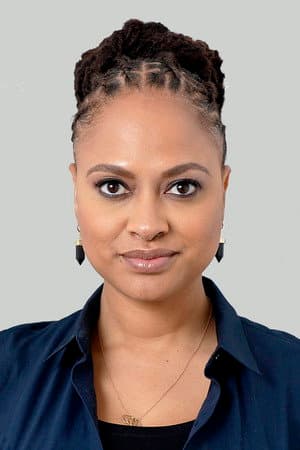
Ava DuVernay is crediting her documentary "13th" with doing more than changing the conversation about mass incarceration - she says it saved her. The filmmaker made the remark during a candid public appearance this week, pairing her personal reflection with a blunt assessment of the industry that made her: in her view, Hollywood is over.
DuVernay did not soften the claim or frame it as a rhetorical flourish. She described an entertainment landscape that no longer resembles the one she entered, and spoke about her own work as a lifeline rather than a career milestone. The headline-grabbing phrase - that Hollywood is finished - arrives at a moment when the business is already gripped by anxiety over shrinking production, consolidation and the uncertain future of theatrical releases.
Her relationship with "13th," the Oscar-nominated documentary she directed for Netflix, is well documented. The film examined the racial history of the American criminal justice system and the constitutional loophole that allowed mass incarceration to flourish after the Civil War. It earned widespread acclaim and cemented DuVernay's reputation as one of the most politically engaged filmmakers working today. What is new is the personal weight she now attaches to it.
A Career Built on Refusing the Easy Path
DuVernay's résumé reads like a deliberate rejection of the conventional Hollywood ladder. She built her early career as a publicist and distributor before moving into directing, and she broke through with "Middle of Nowhere," a drama about a woman navigating her husband's incarceration. That film won her the directing prize at the Sundance Film Festival and made her the first Black woman to take that honor.
She followed it with "Selma," a chronicle of the 1965 voting rights marches that became a major awards contender and a cultural flashpoint. Then came "13th," followed by the big-budget fantasy adaptation "A Wrinkle in Time," which made her the first Black woman to direct a live-action film with a production budget of $100 million. More recently she created and directed the limited series "When They See Us," about the Central Park Five case, and "Origin," a drama exploring the global roots of caste and injustice. Across these projects, a consistent thread runs: stories about systems of power and the people crushed or transformed by them.
Why "Over" Lands Differently From Her Mouth
When a filmmaker of DuVernay's stature says an era has ended, the remark carries more than shock value. She has worked inside the studio system, inside the streaming ecosystem and on the independent circuit. She has seen the doors that opened in the mid-2010s, when platforms and studios competed for Black audiences and creators, and she has watched many of those doors narrow as budgets tightened and corporate priorities shifted.
The phrase also lands as a statement about representation. The period when DuVernay's rise felt emblematic of a broader opening - a wave of Black-led projects greenlit and marketed with real ambition - has given way to retrenchment. Her comment can be read as a warning that the progress many assumed was permanent was in fact fragile.
That is likely why she tied the moment back to "13th." A film made for a streaming service, released in 2016 and nominated for an Academy Award, functioning as a source of personal rescue is a potent image. It suggests that whatever the industry offers or withholds, the work itself can still provide meaning and endurance.
What She Is Signaling
DuVernay has never been content to simply make films and stay quiet. She has used her platform to push for diversity in critics' circles, to fund other filmmakers and to argue that art carries civic responsibility. Saying Hollywood is over is not a retirement announcement; it reads more like a declaration of independence from an institution she no longer believes will protect the kind of cinema she wants to make.
For the industry, the message is uncomfortable but timely. Audiences have fragmented, production has slowed and studios are leaning harder on established franchises. In that climate, the filmmaker who once represented the promise of a more inclusive mainstream is now saying that promise has been exhausted - and that her most important work may have been the thing that kept her going when the business no longer did.
Whether or not Hollywood is truly finished, DuVernay's framing puts the question squarely to the people who run it. She has made clear where she stands.
Source: Hollywood Reporter