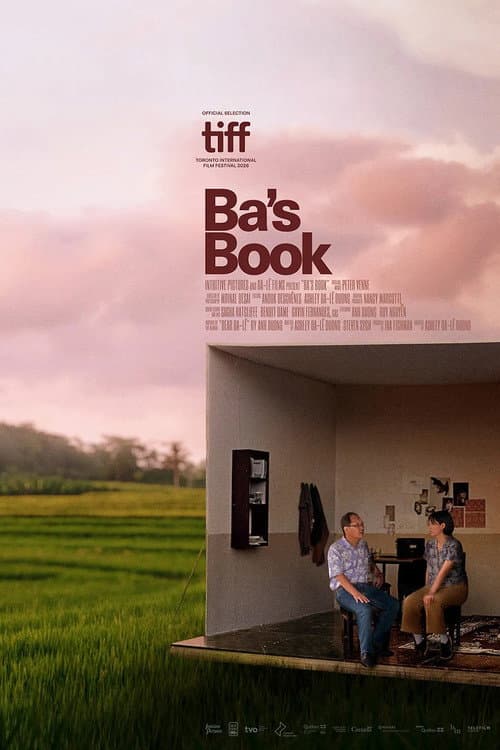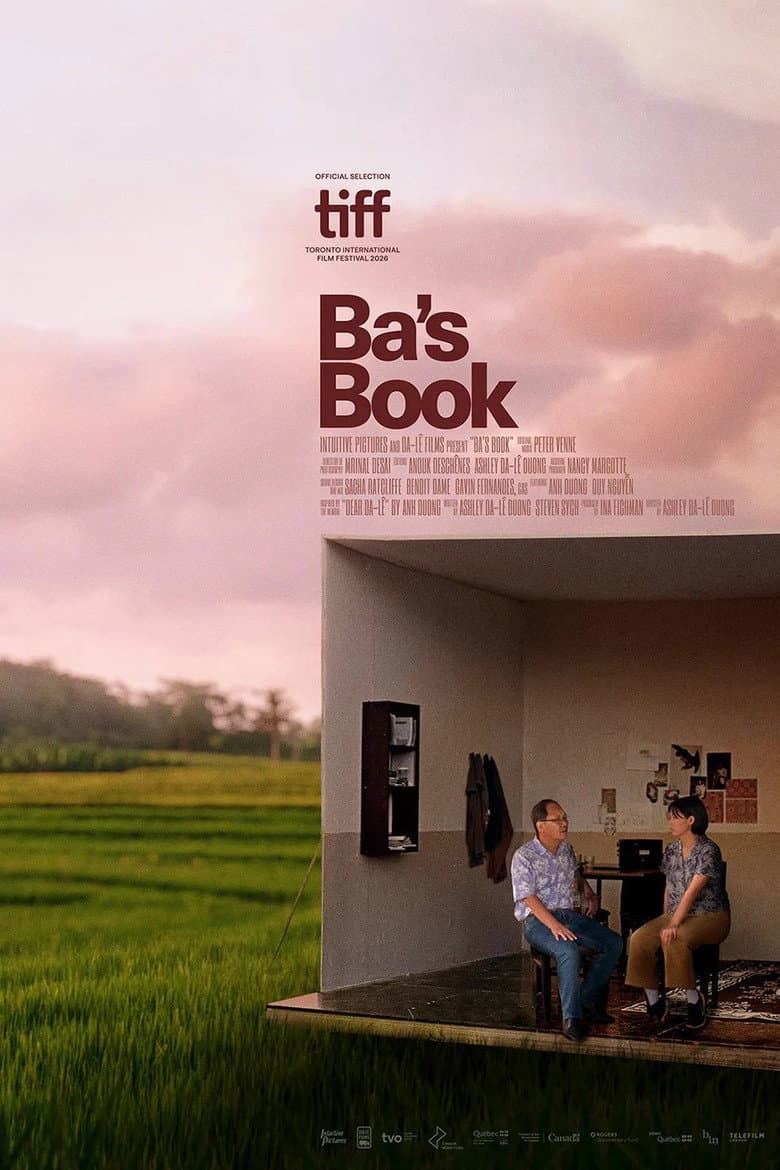
Ashley Duong was not trying to make a movie. She was trying to answer her father.
That answer arrives in theaters this fall as Ba's Book, a 103-minute documentary that director Ashley Duong built from a memoir her father wrote in the form of letters to her - a manuscript that moves from his experiences in the Vietnam War to his life during the Iranian Revolution. The film opened on September 15, 2026, and stars Anh Duong, Ashley Duong and Duy Nguyen.
The project, which the director has described as a hybrid of documentary and personal essay, began when her father handed over a manuscript he had never intended to publish. What he expected was a reader. What he got was a film crew.
"The book was his way of telling me things he couldn't say out loud," Ashley Duong said in an interview ahead of the release. "So I answered in the only language I really know, which is images."
That exchange is the engine of the film. Ba's Book intercuts her father's letters - read aloud, sometimes in fragments - with present-day scenes of the family navigating ordinary life: meals, phone calls, silences that stretch a beat too long. The result is less a conventional war documentary than a portrait of what happens when a family decides to stop protecting each other from the past.
Anh Duong, who appears in the film alongside the director, said the experience of being filmed while hearing her husband's letters read back was unlike anything she had done in her career. "I thought I knew the story," she said. "Then I heard it in his voice, and I realized I had only ever known the summary."
Duy Nguyen rounds out the cast, appearing in sequences that the director said were shot over the course of two years, mostly in small rooms with natural light and no script. The production deliberately kept its footprint small. According to the filmmakers, the crew rarely exceeded four people, a choice Ashley Duong said was necessary to keep her father comfortable enough to stay in the room.
That decision shapes the film's visual grammar. Ba's Book favors long takes and tight framing, and it resists the archival shorthand that often defines documentaries about the Vietnam War era. The historical material arrives through the letters themselves - through a father's handwriting, through the pauses he takes before describing a particular night - rather than through newsreel footage.
The Iranian Revolution enters the film's second half, when the family's story shifts geography and the letters turn toward a different kind of dislocation. Ashley Duong said she initially worried the two historical threads would feel disconnected. "Then I understood they're the same story," she said. "It's about a man trying to keep his family intact while the world keeps changing the rules."
The film's title refers to the manuscript itself, which the family calls simply "Ba's book." In the documentary, the object becomes a character: a physical thing that gets carried between rooms, argued over, and eventually returned to.
Critically, Ba's Book arrives without the usual awards-season buildup, and its TMDb rating currently sits at 0/10, reflecting a user base that has not yet logged enough votes to register a score. The film's release pattern has been similarly quiet, with the distributor leaning on word of mouth rather than a wide opening.
Ashley Duong said the most difficult part of the process was not the editing. It was the moment she showed her father the first cut.
"He watched it in complete silence," she said. "And then he asked me if I understood him now. I said yes. He said, 'Good. Now I understand you.'"
That reciprocity is what the director hopes audiences take from the film. Ba's Book does not resolve its family's history so much as sit with it, and the final scenes suggest a household that has learned to talk about difficult things without needing to finish the conversation.
The film is now playing in limited release. For Ashley Duong, the project has already accomplished what she set out to do.
"I didn't make this to explain my father," she said. "I made it so we could be in the same room with the whole thing. That's it. That's the movie."
Source: Hollywood Reporter