Filmmaker Sahra Mani never expected a stack of her late father's audio cassettes to become the emotional spine of her most personal documentary to date. But that is precisely what happened when she began sifting through the belongings of her father, a former Iranian revolutionary who later built a quiet life in Southern California far from the political firestorms of his youth. The result is "Ba's Book," a film that has been quietly generating buzz on the festival circuit for its unflinching portrait of a man who carried two wars in his memory and shared almost none of them with his daughter.
The documentary takes its title from a handwritten journal Mani discovered among her father's effects - a volume he had kept for decades but never mentioned to anyone in the family. Within its pages and the accompanying cassette recordings, Mani found accounts of her father's time as a young man navigating the upheaval of revolutionary Iran, followed by his later encounter with the Vietnam War era from an unexpected vantage point. The film moves between archival material, intimate interviews with family members, and Mani's own on-camera reckoning with the realization that she had known only a fraction of who her father was.
A Daughter's Investigation Becomes a Historical Document
What distinguishes "Ba's Book" from the crowded field of personal documentaries is the way Mani refuses to let her father's story remain merely domestic. She situates his private recollections within the broader sweep of twentieth-century history, showing how the political convulsions of Iran in the late 1970s and the American war in Vietnam shaped the choices of an entire generation of displaced intellectuals and activists. Her father's trajectory - from revolutionary idealism to reluctant exile to suburban anonymity - becomes a lens for examining how political trauma is transmitted, or deliberately withheld, across generational lines.
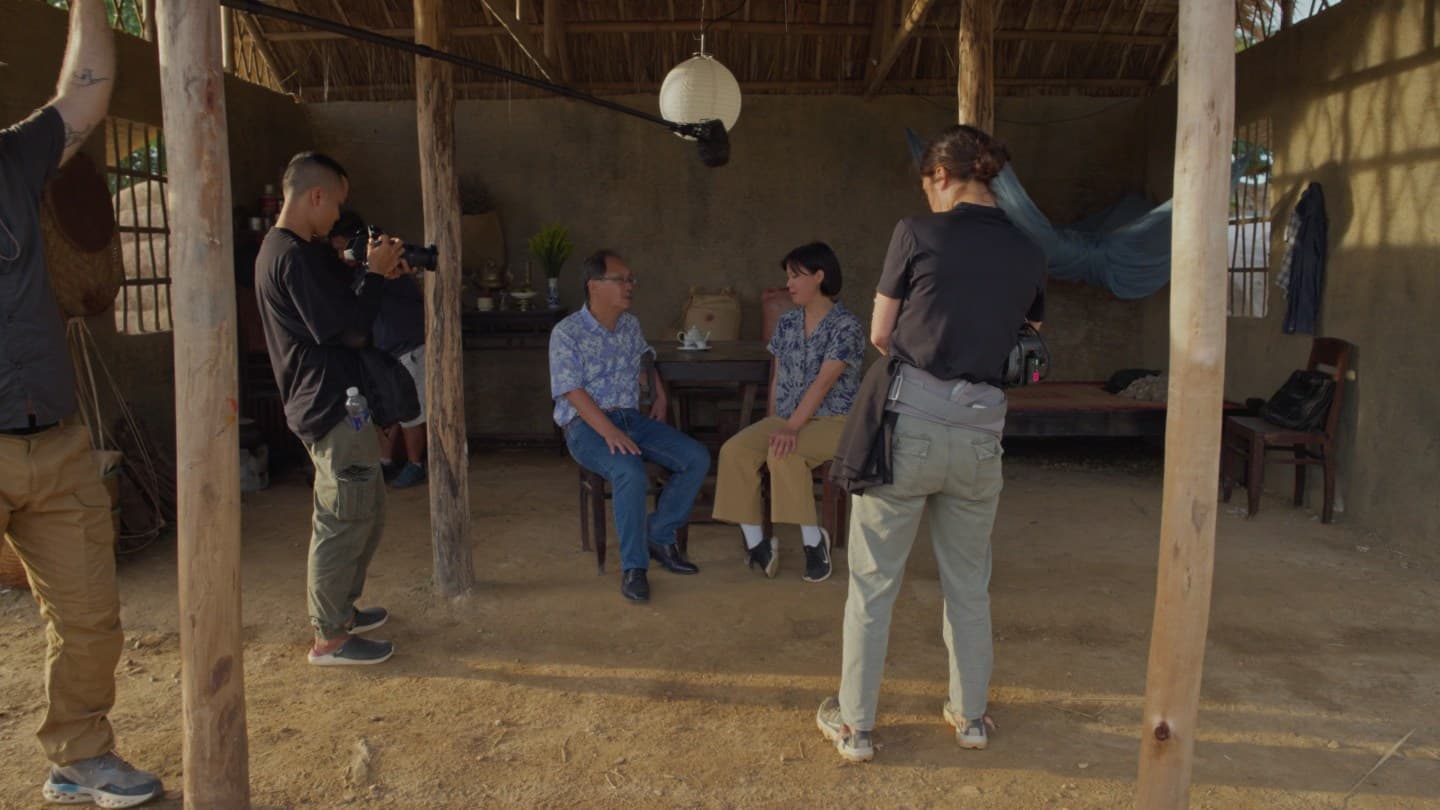
Mani has said in festival Q&A sessions that the project began as a simple act of grief processing and morphed into something closer to an investigative journalism assignment. She tracked down former comrades of her father, some of whom had not spoken to anyone about those years in decades. She cross-referenced his journal entries against historical records, finding moments where his memory diverged from documented events - divergences she chose to include rather than smooth over, treating them as evidence of how trauma reshapes recollection.
Festival Response and Thematic Resonance
Audiences at recent screenings have responded most strongly to the film's central tension: the gap between a parent's public ordinariness and private history. That gap, Mani suggests, is not unique to her family. Immigrant households across the world contain similar unopened archives - stories deemed too heavy to burden children with, or too painful to revisit. By opening her father's archive, Mani invites viewers to consider what might be waiting in their own family's silence.
Critics who have seen the film have praised its restraint. Mani does not manufacture dramatic confrontations or force reconciliations that never happened. Her father died before she found the tapes, which means the film's emotional work happens entirely in retrospect - a daughter assembling a portrait of a man she can no longer question directly. That structural limitation becomes, in the film's best moments, its greatest strength.
The Larger Conversation
"Ba's Book" arrives at a moment when documentaries about inherited trauma and family secrets are finding unusually receptive audiences. The film joins a growing body of work by filmmakers from immigrant backgrounds who are turning their cameras inward, using personal archives to interrogate larger historical forces. Mani's particular contribution is her refusal to separate the political from the intimate - she shows how a man's revolutionary commitments in one country followed him into a quiet life in another, shaping the father his daughter knew without her ever understanding why.
The director has hinted that "Ba's Book" may not be her final word on her family's history, though she has declined to specify what might come next. For now, the film stands as a completed act of reconstruction - a daughter's attempt to give her father's silenced years a hearing they never received in his lifetime. In doing so, she has produced something that transcends one family's story, offering a template for how the children of exiles might begin to read the archives their parents left behind.
"Ba's Book" continues its festival run with additional screenings planned in the coming months, and a wider distribution deal is reportedly in discussion, though no details have been confirmed.
Source: Hollywood Reporter