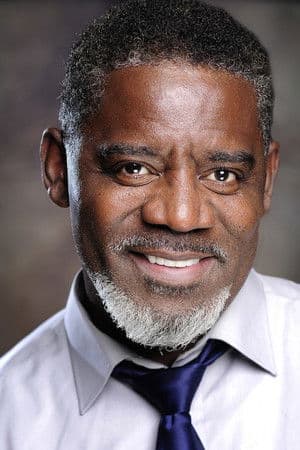
Bruce Davis, who steered the Academy of Motion Picture Arts and Sciences through more than two decades of change as its chief executive, has died. He was 83.
Davis passed away over the weekend, according to the Academy, which confirmed the news but did not disclose a cause of death. A statement from the organization praised him as a “steady and wise leader” whose influence on the modern Oscars remains deeply felt.
A Quiet Force Behind the Oscars
Davis joined the Academy in 1981 as its administrator, a behind-the-scenes role that put him in charge of day-to-day operations. He was promoted to executive director in 1991, a title later adjusted to CEO, and held the position until his retirement in 2011. For two decades, he was the institutional memory of the organization, the man who knew every rule, every protocol, and every corner of the Oscar telecast.
Unlike the celebrity presidents who often serve in ceremonial capacities, Davis was the operational backbone. He oversaw the governance of the Academy, managed its finances, and guided the complex machinery of awards voting. He was known for a dry wit and an encyclopedic command of film history, traits that made him a favorite among staff and board members alike.
During his tenure, the Academy weathered both critical and commercial shifts in Hollywood. Davis was instrumental in navigating the early years of the organization’s move to its permanent home on Wilshire Boulevard - long before the current Academy Museum became a landmark on Miracle Mile. He also helped modernize the voting process, transitioning from paper ballots to digital systems long before the broader public paid attention to such mechanics.
His most public-facing moment came each year on Oscar night, when the broadcast’s precision owed much to his obsessive preparation. Davis was not a man who sought the spotlight, but he was fiercely protective of the ceremony’s integrity. Colleagues remembered him as someone who could recite the exact year and category of any past winner and who took the secrecy of the envelopes with near-religious seriousness.
An Era of Transition
Davis’s reign as CEO spanned a period when the Academy was still overwhelmingly dominated by older, white male members - a demographic reality that would become a major controversy years after he left. But he was also present for the early stirrings of change. He oversaw the Academy’s first significant international expansion, adding members from beyond Hollywood’s traditional borders. He championed the restoration of classic films and pushed for the creation of the Academy Film Archive as a serious preservation arm.
One of his quieter but lasting achievements was the establishment of the Academy’s internal grievance procedures, a system meant to handle disputes over credits, eligibility, and campaigning. It was unglamorous work, but Davis believed that fairness behind the scenes determined the credibility of the trophy onstage.
His relationship with the film community was not without friction. Davis was a traditionalist at heart, and some younger filmmakers found him out of step with a changing industry. He was known to joke that the Academy moved at “the speed of a glacier with a lawyer attached.” But even his detractors acknowledged his absolute devotion to the institution.
A Life in Letters and Film
Before joining the Academy, Davis had a varied career. He worked as a journalist and as a publicist, and he spent several years in the film industry’s legal and administrative trenches. Born in rural Kansas, he carried a Midwestern plainspokenness into the executive suites of Los Angeles. Friends said he never lost his sense of wonder at the movies themselves, even as he spent decades counting ballots and enforcing copyright law.
After retiring in 2011, Davis remained a respected elder statesman, occasionally consulted by Academy leadership during moments of crisis. He was succeeded by Dawn Hudson, who faced the #OscarsSoWhite backlash and the pandemic-era telecast challenges - both problems that Davis, with his gift for quiet process, never had to confront on such a public scale.
In recent years, Davis had largely withdrawn from public view, though he still attended the occasional screening at the Academy’s Samuel Goldwyn Theater. His death marks the end of an era for an organization that has since morphed into a global entertainment conglomerate, with thousands of members and a sprawling museum complex. Those who knew Davis said he would have viewed that transformation with a mixture of pride and bemusement.
Legacy of Stewardship
The Academy has announced no immediate plans for a public memorial, though a private service for family and close colleagues is expected in the coming weeks. In its statement, the organization noted that Davis’s “handwriting can still be found in the margins of the Academy’s rulebooks,” a detail that speaks to his meticulous nature.
Davis is survived by his wife of over 50 years, a daughter, and two grandchildren. The family has asked that any donations in his memory be directed to film preservation charities, a cause he championed long before it was fashionable.
For those who watched the Oscars for decades, Davis was an invisible presence - the man who made sure the telecast started on time, that the thank-you speeches were capped, and that the right envelope reached the right presenter. But his true legacy is less visible: a framework of governance that allowed the Academy to survive technological disruption, demographic shifts, and its own occasional disasters.
Hollywood often lionizes directors and stars, but institutions are built by people like Bruce Davis - patient, precise, and relentlessly focused on the long game. His passing leaves a void not easily filled, but the system he helped build is designed to endure. That, perhaps, was his greatest achievement.
Source: Hollywood Reporter