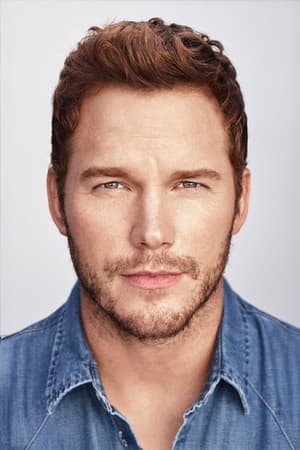
Chris Pratt has publicly credited Kevin Feige with seeing something in him that few others in Hollywood did at the time. In remarks shared with the press, the actor thanked the Marvel Studios president for casting him in the Marvel Cinematic Universe back when his physique did not exactly scream superhero. Pratt recalled that during that period he was, in his own words, "kind of fat," and he noted that nobody at the time was looking at him and thinking, "Now there's an action star."
The comment lands with a certain irony today, given how thoroughly Pratt's career has been reshaped by the role that followed. When Feige and the Marvel team tapped him to lead Guardians of the Galaxy, Pratt was best known to audiences as the lovable, schlubby Andy Dwyer on the NBC sitcom Parks and Recreation. The idea of that actor anchoring a cosmic franchise was widely treated as a gamble, if not an outright head-scratcher, in the months before the film's 2014 release.
A Casting Bet That Rewrote a Career
Pratt's acknowledgment of Feige is notable because it underscores a broader pattern in how the Marvel machinery has operated under its longtime creative chief. Feige has repeatedly shown a willingness to look past conventional leading-man metrics, favoring screen presence, comedic timing, and audience goodwill over a résumé filled with action credits. Pratt fit that mold precisely, and the results validated the approach.
What followed for Pratt was nothing short of a transformation. He underwent a rigorous training and diet regimen to play Peter Quill, the wisecracking human abducted into a galaxy-spanning conflict. The physical change drew nearly as much media attention as the performance itself, and it became a staple of the press tour. But the more durable shift was professional: within a few years, Pratt was headlining major studio projects across multiple genres, from the Jurassic World series to science-fiction dramas and animated features.
Still, it is the Marvel role that Pratt consistently returns to as the pivot point. His gratitude toward Feige is not a one-off sentiment. In past interviews he has described the casting decision as life-altering, noting that it arrived at a moment when his feature career had not yet taken off in the way his television work suggested it might.
The Timing Was Never Guaranteed
It is worth remembering how uncertain the whole endeavor looked in the early 2010s. Guardians of the Galaxy was, at that point, a deep-cut property with no built-in mainstream recognition, far removed from the established brand equity of Iron Man or Captain America. Pairing an obscure cosmic team with a lead actor whose defining role involved mumbling comic asides on a workplace sitcom struck many observers as an odd combination.
Pratt's own framing of the moment captures why. He has essentially said that he was not the obvious candidate, and that Feige deserves credit for not requiring him to be. The quote about being "kind of fat" and the absence of any "action star" narrative is less self-deprecation than a statement about how narrow casting instincts can be, and how one executive's willingness to ignore them changed everything.
The actor has since become one of the most bankable names in the industry, and he has remained a fixture in the MCU across multiple films and an eventual shift into the franchise's cosmic leadership role. None of that was preordained by his appearance or his prior filmography.
Pratt's remarks also serve as a reminder that superhero casting decisions are frequently second-guessed and rarely judged accurately in advance. The history of the genre is littered with choices that were mocked at announcement and celebrated after release, and Pratt's case sits near the top of that list.
Whether he intended it or not, the actor's thanks to Feige functions as both a personal tribute and a quiet argument about how Hollywood evaluates talent. The leading man was there the whole time. Someone simply had to say yes.
Source: Hollywood Reporter