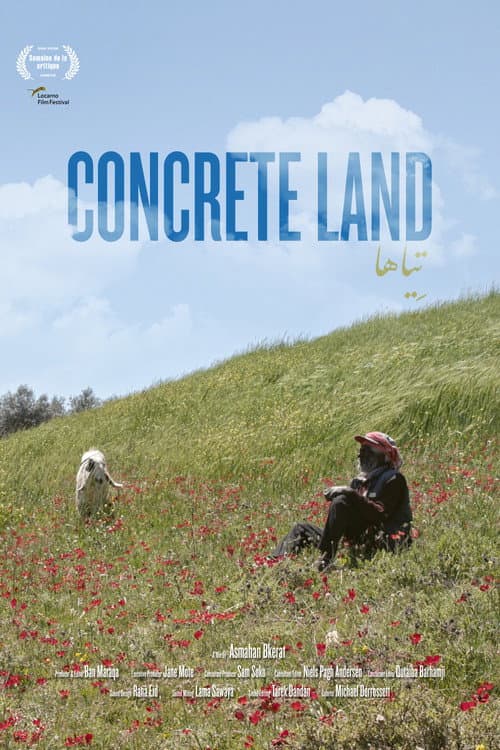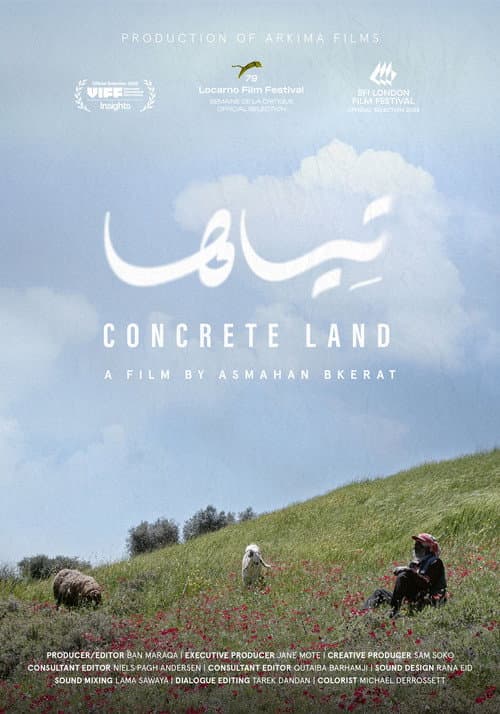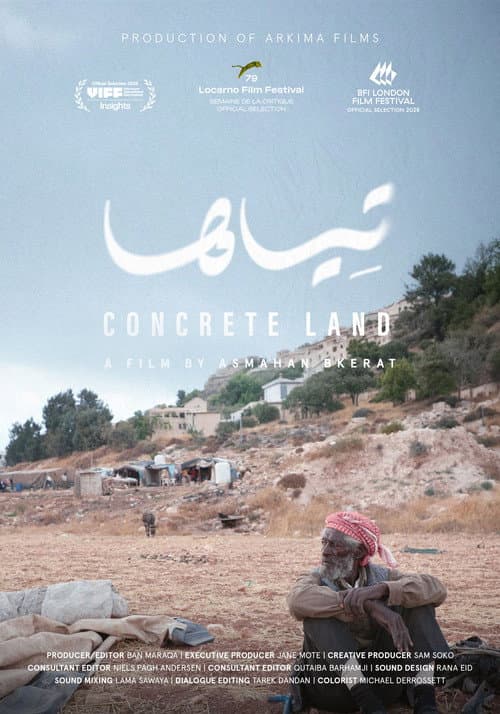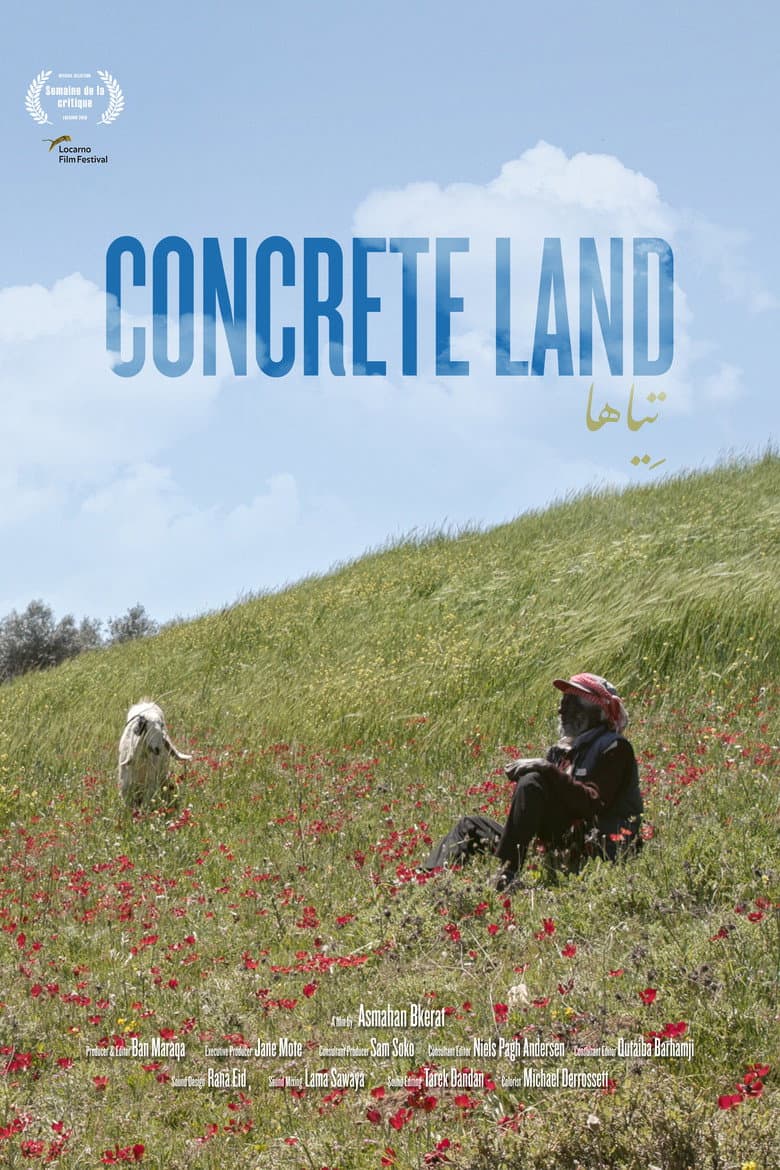
Asmahan Bkerat's "Concrete Land" arrives in the world carrying a particular kind of weight - the kind that comes from a first-time filmmaker turning the camera on her own blood. Released on August 13, 2026, the 101-minute documentary follows three generations of a Palestinian Bedouin family living in Jordan, tracing how displacement, racism, and the family's own internal fractures press against their capacity for love, humor, and survival. It is a portrait built from the inside out, and Bkerat's decision to stay intimate rather than panoramic is the film's defining choice.
"Concrete Land" is classified across three genres - documentary, family, and drama - a combination that speaks to how slippery the material can be. This is not a talking-heads survey or a geopolitical explainer. It is a household story. The drama is the kind that emerges when people who love each other are forced to live inside circumstances that were not of their making, and the family label is earned rather than marketing shorthand: three generations under one narrative roof, their affection and their friction given equal screen time.
A Story of Displacement Told Through One Household
The film's overview is blunt about what its subjects face: displacement, racism, and internal conflict. Those three pressures do not sit in separate compartments in Bkerat's telling. They bleed into one another, which is what makes the documentary's framework of resilience complicated rather than triumphant. Resilience, here, is not a slogan. It is a daily negotiation.
The setting matters. A Bedouin family living in Jordan while carrying Palestinian identity exists at the intersection of multiple transits - a community that has been moved, and moved again, and whose sense of place is both inherited and contested. Bkerat's camera stays with the family's texture rather than their statistics. Humor runs alongside the hardship; the film's own synopsis places love and comedy on the same footing as the forces testing them. That tonal balance is difficult to achieve and even harder to sustain across a feature runtime.
The title itself carries a plain, unromantic charge. Concrete is what gets poured over land, what hardens, what separates one space from the next. It is also, in much of the region, the material of the camps and the housing blocks and the walls. Bkerat's title does not explain itself, and the film does not appear interested in doing so on its behalf.
A First Feature With an Unusual Position in the Market
"Concrete Land" is a debut feature, which puts Bkerat in a category that festival programmers and distributors have increasingly courted: the first-time documentarian arriving with a finished, personally invested work rather than a calling card. The film's behind-the-camera credits list only the director; no cast is publicly credited, which is consistent with a documentary where the participants are not performers. The industry tag on the film is Hollywood, though its original language is Arabic - a combination that reflects the globalized production and distribution reality of contemporary non-fiction rather than any confusion about where the story lives.
At 101 minutes, the runtime is substantial for a debut but not unusual for an intimate family chronicle. That length suggests Bkerat is willing to let scenes breathe - to allow arguments to run their course, meals to be finished, silences to sit. Documentaries built on three generations require that patience, because the story is not a single event but an accumulation.
One data point worth noting without overreading: the film's TMDb rating currently sits at 0 out of 10, which is the platform's default placeholder for a title that has not yet accumulated sufficient user votes. It reflects the film's early position in the ratings pipeline, not audience rejection. Early-stage titles routinely show this figure before reviews and viewership data accumulate.
Why This One May Outlast Its Release Window
The documentary landscape in 2026 has been crowded with large-scale, issue-driven non-fiction - films that take a subject and expand it into a thesis. "Concrete Land" appears to move in the opposite direction, compressing a broad historical condition into a single family's rooms, conversations, and unresolved grievances. That approach does not always travel easily, because it asks viewers to infer the political from the personal rather than being told.
But it is also the approach that tends to endure. A documentary that ignores its subjects' humor, as so much displacement-focused filmmaking does, can flatten the people it means to honor. Bkerat's stated interest in placing love and laughter under the same pressure as racism and dispossession is a corrective to that tendency - and a reminder that a family under strain is still a family, with all the ordinary noise that entails.
For now, "Concrete Land" is a debut that has made its way into the world without the scaffolding of a known name or a recognizable cast. What it has instead is a director's direct access to her own family's history, a runtime that allows contradiction to remain visible, and a premise that refuses to resolve neatly. Whether audiences find it will depend on how far distributors are willing to carry a film that insists on intimacy over argument.
Source: Hollywood Reporter