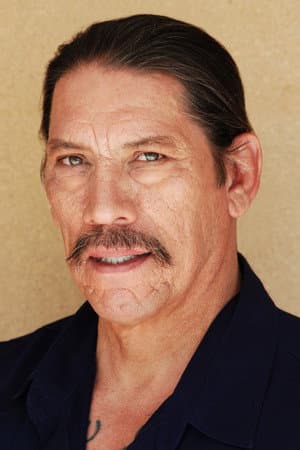
Danny Trejo has spent decades playing hard men on both sides of the law, but the veteran character actor now finds himself at the center of an unlikely political firestorm - not for anything he said, but for a film whose message landed almost exactly opposite to the one he intended. The irony, as Trejo himself has framed it in recent remarks, is that a project meant to dramatize the cruelty of immigration enforcement has been embraced by some viewers as a full-throated endorsement of it.
A Story That Read One Way in the Script and Another on the Screen
Trejo's career has been built on men who are feared before they are understood, and he has spoken often about wanting to use that dynamic to humanize people who rarely get a sympathetic close-up. Immigration enforcement is one such subject. The intent behind his involvement, as he has described it, was to put a human face on the fear and dislocation that deportation raids create in immigrant communities - to show agents as instruments of policy and families as its collateral.
What happened instead is a cautionary tale about how images can escape the control of the people who make them. Critics and online commentators who watched the material latched onto its most visceral elements - the authority of the enforcement officers, the tension of the raids, the sheer physical presence of Trejo in a role that could be read as either victim or enforcer depending on which frame the viewer froze. Stripped of context, those frames read to some audiences as a tribute rather than a warning.
When a Villain Is Played Too Well
Trejo has never hidden his own history. He has spent years talking about his time in prison and the road that led him from it to a career in film, and he has consistently cast his roles as a form of repayment - a way of showing young people that the man society writes off is still a man. That biography gives him unusual credibility when he plays someone caught in the machinery of the state. It also creates a trap. An audience primed to see Trejo as the tough guy who survives will root for the tough guy who survives, even when the story is supposed to be about the system that put him there.
The accidental pro-enforcement reading is not the first time a work of art has been received against its maker's wishes, and it will not be the last. What makes this case notable is the speed and confidence with which the misreading took hold. Within days, clips were circulating without the surrounding scenes that established the characters' fear, and commentary describing the project as a celebration of border authority began to outpace any discussion of what Trejo says he actually set out to make.
The Broader Problem of Intent Versus Reception
There is a long tradition of filmmakers discovering that audiences bring their own politics to the theater. A film that dramatizes violence to condemn it can be watched by people who simply enjoy the violence. A story about a corrupt institution can be read as a story about a few bad apples, or as a story about why the institution is necessary. Trejo's project has run straight into that wall, and the collision has been loud enough to become a news story in its own right.
For Trejo, the episode is particularly awkward because his public identity is so tightly bound to ideas of loyalty and community. He has long been a fixture at events supporting incarcerated and formerly incarcerated people, and he has spoken about the responsibility that comes with being a visible Latino actor in an industry that has rarely given his community nuanced roles. Having a film he made with that responsibility in mind recast as propaganda for the other side is the kind of professional embarrassment that is hard to walk back, precisely because there is no villain to blame - just an audience that saw something different from what he meant.
What Happens Next
Trejo has not signaled any retreat from the project, and there is no indication that he intends to disown it. Instead, his response has been to keep explaining: to describe the fear he wanted to capture, the families he wanted to show, the reasons he thought the material mattered. Whether that explanation can catch up with the clips already in circulation is an open question. In an attention economy that rewards the most shareable frame, the maker's account of his own work is often the last thing anyone reads.
The larger lesson may be one that Hollywood keeps relearning. Casting a beloved tough guy to indict a system only works if the audience is willing to see him as a victim of that system rather than its hero - and once a movie is loose in the world, the filmmaker's intentions are just one interpretation among millions. For Danny Trejo, the accidental pro-enforcement reading of his film is a reminder that in American politics, even a story about the harm done to immigrants can be repackaged as a story about why the raids were necessary.
Source: Hollywood Reporter