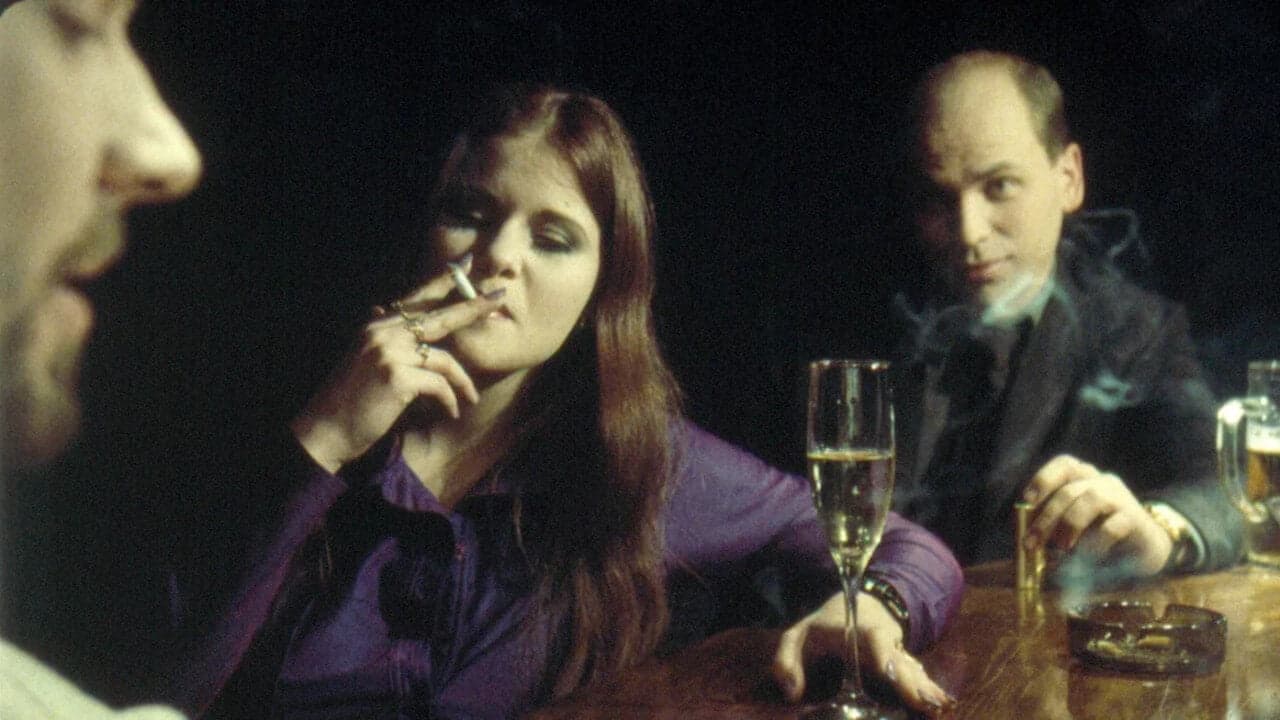
'DAU' Director Defends Film Amid Ukraine Backlash
Advertisement
Ilya Khrzhanovsky responds to criticism over the 'DAU' project's Russian funding and portrayal of Ukraine, defending artistic intent amid growing
The director of the ambitious and controversial "DAU" film project has broken his silence following intense criticism from Ukrainian officials and cultural figures, defending the work as a profound artistic exploration rather than a politically charged statement. The filmmaker, Ilya Khrzhanovsky, addressed the backlash in a new interview, pushing back against claims that the project misrepresents or exploits the ongoing conflict in the region.
The response comes days after the Ukrainian Ministry of Culture formally condemned the project, citing concerns that its narrative and promotional materials have been manipulated to serve a pro-Moscow agenda. The ministry’s statement, which stopped short of an official ban, urged international audiences to view the film with skepticism, describing it as a "distorting mirror" of historical and current events. Khrzhanovsky, however, rejected this interpretation with characteristic bluntness, arguing that the film’s purpose is to confront universal human truths, not to recount specific political realities.
A Monumental and Divisive Undertaking
At its core, "DAU" is not a single film but an enormous multimedia experiment that has been in development for over a decade. It began as a recreation of a Soviet-era scientific institute in Kharkiv, Ukraine, where hundreds of actors lived for years under simulated totalitarian conditions. The resulting footage, which has been edited into a series of feature films, including "DAU. Degeneration" and "DAU. Natasha," premiered to a mix of awe and outrage at major European festivals. While some critics hail it as a groundbreaking piece of immersive cinema, others have accused it of being a voyeuristic and ethically dubious endurance test for its participants.
The current controversy, however, is less about the art form and more about the context of its release. With the war in Ukraine now in its third year, any cultural production that touches on the former Soviet Union is immediately viewed through the lens of Kremlin propaganda. The film’s decision to include scenes shot prominently in Kharkiv, a city heavily damaged by Russian strikes, has been seen by many as an insensitive gesture, especially since the film’s world premiere in Berlin was met with protests from Ukrainian diaspora groups.
The Director’s Counterargument
In his recent remarks, Khrzhanovsky did not directly address the specific complaints about his nationality or the film’s financing, which remains a murky point of contention. Instead, he framed the criticism as a failure to separate art from politics. He insisted that the project’s core is not about Russia or Ukraine, but about the nature of power and the human capacity for both brutality and resilience. He asked viewers to consider the film’s decades-long production timeline, noting that the project was conceived long before the 2022 invasion, making any claim of current propaganda "absurd."
He also criticized what he calls a "cancel culture" mentality within the international film community, suggesting that many critics are too eager to dismiss challenging work based on the identity of its creators rather than its content. The director argued that by focusing on the geopolitical implications, detractors are ignoring the emotional and psychological depth of the story, which he believes transcends modern borders.
Deeper Questions of Funding and Ethics
The rejoinder, however, has done little to quell the furor, particularly regarding the project’s funding sources. While Khrzhanovsky has never publicly revealed a complete financial breakdown, investigative journalists have linked parts of the budget to wealthy Russian oligarchs with ties to the Kremlin. This link is the primary driver of the backlash, as many argue that even if the film’s intent is neutral, its money comes from a system that actively funds the war. The director has a difficult task convincing the public that he is an independent artist when his backers are under international sanctions.
Moreover, the ethical questions that have dogged the project since its inception have resurfaced. Former participants have come forward with allegations of psychological manipulation and coercive working conditions, claims the director has consistently denied. The combination of these old wounds with the new political realities makes "DAU" a uniquely volatile work. It exists in a space where the artistic merit is impossible to separate from the moral and political circumstances of its creation.
For the international film distribution community, the situation presents a conundrum. Major streaming platforms and theatrical chains have largely avoided picking up the "DAU" films due to the risk of protest. The director’s defense is likely to rally his core supporters but will probably not persuade his critics. As he gears up for potential screenings in other European capitals, the question remains whether cinema can ever be truly apolitical, or if, in this case, the art itself has become collateral damage in a larger, more brutal conflict.
Source: Hollywood Reporter
Advertisement
Advertisement