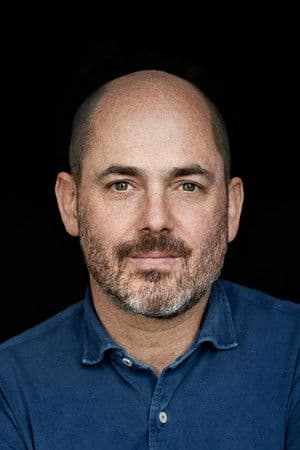
Edward Berger has never been shy about where he thinks the film business went wrong, and this week he trained his sights on the industry's long resistance to streaming. In a wide-ranging conversation about craft and commerce, the filmmaker argued that Hollywood's established players spent years treating the rise of streaming as an inconvenience rather than a reckoning - and that the shake-up was long overdue.
"The movie industry needed Netflix to wake up," Berger said, framing the disruption as a necessary corrective rather than a threat. His point was less about any single platform than about complacency: an industry that had grown comfortable with its own rhythms, its own release patterns, and its own assumptions about what audiences wanted. Streaming, in his view, forced a conversation that should have happened years earlier.
The remarks land at an awkward but useful moment. The relationship between theatrical exhibition and streaming has rarely been more contested, with studios recalibrating release strategies, cinema operators insisting on exclusivity windows, and creators caught in the middle trying to figure out where their work will actually be seen. Berger's stance puts him on the side of those who see the streaming era as an expansion of the medium rather than a dilution of it - a position that still draws suspicion in parts of the traditional film community.
A Filmmaker's Case for Disruption
Berger's argument is rooted less in corporate strategy than in creative restlessness. For him, the entry of deep-pocketed streamers into original filmmaking opened doors that the legacy studios had quietly let close: mid-budget dramas, director-driven projects, and stories that didn't fit neatly into a franchise template.
That perspective carries weight coming from a director whose own career has straddled the line between prestige cinema and mass-audience streaming. Berger has worked within the awards-season ecosystem while also delivering films directly to global platforms, giving him an unusually clear view of both worlds. He has spoken before about the value of that dual experience, and his latest comments extend the theme: competition, he suggests, is healthier for filmmakers than a settled order in which a handful of gatekeepers decide what gets made.
He was careful, however, not to cast streaming as a savior. The wake-up call, as he describes it, was for everyone - including the platforms themselves, which face their own pressures around budgets, volume, and the temptation to chase algorithms rather than audiences. The point is not that one model defeats the other, but that the friction between them has forced the industry to justify its choices again.
What It Means for Theaters and Streamers
Berger's intervention arrives as the theatrical-versus-streaming debate has settled into an uneasy truce. Most major studios now favor a period of cinema exclusivity before films move to home viewing, a compromise that has stabilized the box office without resolving the underlying tension. Directors remain divided: some regard a big-screen release as non-negotiable, while others embrace the reach that a global streaming launch can provide.
Berger appears to sit in the pragmatist camp. His comments imply that the industry's health depends less on defending a single distribution model than on ensuring that ambitious filmmaking survives wherever it is shown. That view aligns him with a growing cohort of filmmakers who treat platforms as part of the ecosystem rather than an enemy of it - even as they continue to lobby for the theatrical experience they grew up with.
His remarks also carry an implicit critique of how slowly the established studios responded to change. Rather than innovating, he suggests, much of the industry spent its energy litigating the terms of its own disruption. The result was a period of confusion in which release strategies shifted repeatedly and filmmakers were left guessing how their work would reach audiences.
A Debate That Isn't Over
What Berger offers is less a verdict than a provocation. By crediting Netflix with jolting the industry awake, he is asking his peers to consider what that jolt made possible - and what might have been lost if it had never come. It is a characteristically candid take from a director known for preferring substance over sentiment, and it is likely to keep the conversation going well beyond this week.
For now, Berger's message is simple: the industry needed to be shaken, and it was. Whether it has fully woken up is another question - and one he seems content to leave hanging.
Source: Hollywood Reporter