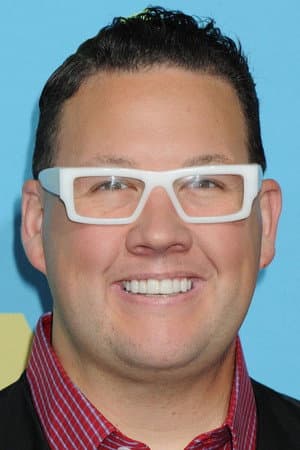
Elliot Graham, the film editor whose precise, emotionally resonant cutting on Gus Van Sant’s “Milk” earned him an Academy Award nomination, has died. He was 50. News of his death was confirmed by representatives for his family, who did not immediately provide a cause or the location. Graham’s passing removes from the profession one of its most quietly influential craftsmen, a editor whose best work was often felt rather than noticed - the mark of a career built on instinct, restraint, and an almost musical sense of rhythm.
Graham was nominated for the Best Film Editing Oscar for “Milk,” the 2008 biographical drama starring Sean Penn as Harvey Milk, the first openly gay elected official in California. The film was a critical and commercial success, and its editing was widely praised for weaving together archival footage, intimate character moments, and the sprawling political movement of 1970s San Francisco into a single, urgent narrative. Graham did not win the Oscar, but the nomination cemented his reputation as a editor capable of handling both delicate human drama and large-scale historical sweep.
A career built on collaboration
Though “Milk” remains the credit most closely associated with his name, Graham’s filmography reveals a editor who moved fluidly between genres and budget levels. He worked steadily in independent film and studio projects alike, often collaborating with directors who valued a editing room that could find the story in the footage rather than impose one upon it. Colleagues described him as a patient and generous presence - someone who preferred to let a scene breathe rather than cut it to ribbons.
His approach reflected an older, almost classical sensibility. Graham believed that editing was not about speed or flash but about serving the emotional truth of a moment. That philosophy made him a natural fit for “Milk,” which required a delicate balance between public triumph and private tragedy. The film’s final act, in particular, is a masterclass in building dread without manipulation, and Graham’s work there is often cited by editors as a model of restraint.
A quiet force in the editing room
Graham came up through the industry at a time when film editors were increasingly recognized as authors in their own right, yet he rarely sought the spotlight. He gave few interviews, preferred to let his work speak, and was known for mentoring younger editors who sought his advice. His death has prompted an outpouring of tributes from directors, producers, and fellow editors who remembered him not only for his talent but for his kindness.
One longtime collaborator, speaking on condition of anonymity, said Graham had an uncanny ability to watch a rough cut and identify exactly which three frames needed to go. “He never made it about himself,” the collaborator said. “He made it about the film. That’s rarer than you’d think.”
That sentiment was echoed across social media, where filmmakers posted remembrances of Graham’s calm demeanor and his willingness to sit with a scene for hours until it clicked. Several noted that his Oscar nomination for “Milk” was as much a recognition of his career as it was of a single film.
An industry in mourning
Graham’s death comes at a moment when the craft of editing is undergoing significant change, with streaming platforms demanding faster turnarounds and directors increasingly cutting their own footage. His career stands as a reminder of what a dedicated editor can bring: perspective, patience, and a willingness to challenge a director’s assumptions.
He is survived by his family and a body of work that includes some of the most respected independent films of the past two decades. Details regarding memorial services have not been announced.
For those who worked alongside him, Graham’s legacy is less about awards or box office than about the quiet, cumulative effect of a thousand small decisions - each one made in service of the story. In an industry that often rewards noise, he was a master of silence. And in “Milk,” that silence spoke volumes.
Source: Hollywood Reporter