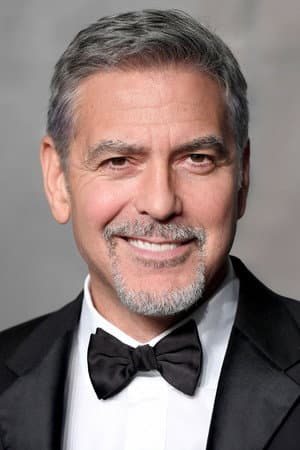
George Clooney has spent much of his public life navigating the space between celebrity and advocacy, and his latest effort sits squarely in that territory. The actor and humanitarian is once again drawing attention to the Albie Awards, the honors launched by the Clooney Foundation for Justice, and his rationale for the project is as blunt as it is personal. Justice, he suggests, is a commodity the world is running dangerously low on.
Speaking about why the Albies exist and why they matter, Clooney framed the awards not as a glittering add-on to awards season but as a deliberate spotlight directed at people who risk everything to defend the rule of law. "It feels like it's in short supply," he said of justice, a line that captures the frustration behind the foundation's work and the reason the ceremony was created in the first place.
The Albies, named for Justice Albie Sachs, the South African jurist who devoted his life to fighting apartheid and later helped shape his country's constitutional court, were established to honor individuals around the world who pursue accountability in the face of intimidation, imprisonment or worse. That legacy is central to Clooney's pitch. Rather than rewarding star power or box office, the event turns its attention to lawyers, journalists, activists and judges whose work rarely attracts cameras until it lands them in danger.
A Platform Built to Redirect Attention
Clooney's instinct here is familiar to anyone who has tracked his career off-screen. Between his work with the foundation he co-founded with his wife, Amal Clooney, and his long record of raising money and awareness for humanitarian causes, he has consistently used his visibility as leverage rather than ornament. The Albies fit that pattern precisely: they borrow the trappings of a glamorous New York gala in order to direct cameras toward people who would otherwise go unnoticed.
His comment about justice being scarce is not rhetorical flourish so much as a diagnosis. The foundation's own caseload reflects a world in which courts are pressured, reporters are silenced and perpetrators of mass atrocities often escape scrutiny. By tying the awards to that reality, Clooney is making an argument that recognition itself can be a form of protection, raising the international profile of targets who might otherwise be isolated.
The Tension Between Celebration and Warning
There is an inherent contradiction in celebrating justice campaigners at a black-tie event, and Clooney seems to understand it. The evening's purpose is partly to honor courage and partly to sound an alarm, and he has described the honorees as people who represent the best of what the legal system can be when it is allowed to function. The message is that their work should not be exceptional, and that the fact it so often is says something troubling about the current moment.
That framing also positions the Albies as a counterweight to the cynicism that can accompany celebrity philanthropy. Clooney has been criticized over the years for the limits of what a famous advocate can accomplish, and he has generally responded by emphasizing concrete legal outcomes over symbolic gestures. The foundation pursues litigation, monitoring and documentation, with the awards serving as the public-facing element of a much larger operation.
What the Ceremony Signals Going Forward
By returning to the theme of justice in short supply, Clooney keeps the focus where he has placed it for years: on institutions and the people who hold them together. The Albies are unlikely to resolve the crises they highlight, but they function as an annual reminder that the rule of law is contested rather than guaranteed. In a media landscape that gravitates toward conflict and spectacle, that reminder has its own value.
For Clooney, the calculation appears straightforward. He has the platform, the awards provide a reason to use it and the honorees supply the substance. Whether the evening changes anything measurable is an open question, but his explanation for why the Albies exist is refreshingly free of euphemism. Justice, in his view, needs more than applause. It needs defenders, and it needs the rest of us to notice when they are under threat.
Source: Hollywood Reporter