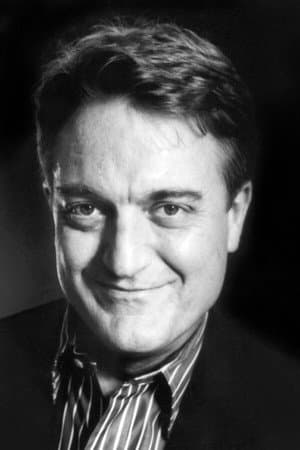
Gerrit Graham, the character actor whose offbeat presence enlivened a string of cult favorites across four decades, has died at 77. No cause of death or date was immediately confirmed by his representatives.
Graham built a career on the margins of stardom, carving out a niche as one of Hollywood's most reliable eccentrics. He was never the leading man, and by his own account he never wanted to be. What he offered instead was something rarer: a face and a voice that could turn a supporting part into the thing audiences remembered long after the credits rolled.
A Cult-Film Mainstay
His filmography reads like a syllabus for midnight-movie devotees. Brian De Palma cast him in "Phantom of the Paradise," the 1974 rock-opera reimagining of the Faust legend set in the music industry. Graham played Beef, the glam-rock heavy whose operatic tantrums and feathered costumes made him a fan favorite. The film flopped on release but became a beloved cult item, and Graham's performance remained one of its signature pleasures.
Four years later he appeared in Louis Malle's "Pretty Baby," a period drama set in early twentieth-century New Orleans that sparked considerable controversy for its subject matter. Working opposite a filmmaker known for his unflinching eye gave Graham a chance to stretch beyond the broad comic register that had made him recognizable.
Then came "Used Cars." Robert Zemeckis directed the 1980 satire of the cutthroat auto-sales business, and Graham played Jeff, the superstitious, perpetually scheming brother of the lot's owner. The role let him lean into the manic energy that had become his trademark, and the film - a critical disappointment that found a second life on cable and home video - became one of his most quoted performances.
More Than a Character Actor
Graham's appeal was never purely visual. He was, by training and temperament, a performer with range. Born in New York City in 1939, he came up through the theater and television, logging guest spots on series throughout the 1960s and 1970s before film work became his steadiest paycheck.
He was also a writer. Graham published a novel, "The Man Who Loved Levittown," in the mid-1980s, and he continued to take television roles well into the 1990s and beyond. His credits spanned genres and budgets - from horror to comedy to drama - and he approached each with the same commitment to finding the odd, specific humanity in whatever part he was handed.
Fellow actors often noted that Graham was the kind of presence who made everyone around him better. He did not compete for the spotlight; he sharpened it.
The Kind of Career Hollywood Rarely Celebrates
There is a particular kind of acting career that resists easy summary - one built not on marquee names but on the accumulation of small, indelible moments. Graham's was that kind. He never headlined a franchise, never won an Academy Award, never became a household name in the way that phrase is usually meant. But ask anyone who grew up watching "Phantom of the Paradise" on late-night television or who can still quote lines from "Used Cars," and they will know exactly who he was.
In an industry that tends to measure success by visibility, Graham measured his own by the work. He took jobs because they interested him, because the people making them interested him, because the part offered something he had not tried before. That approach made him a favorite of directors who valued actors willing to commit fully to the strange and the specific.
He is survived by his family and by a body of work that will keep finding new audiences - the kind of legacy that, for a character actor, may be the most fitting of all.
Funeral arrangements were not immediately announced.
Source: Hollywood Reporter