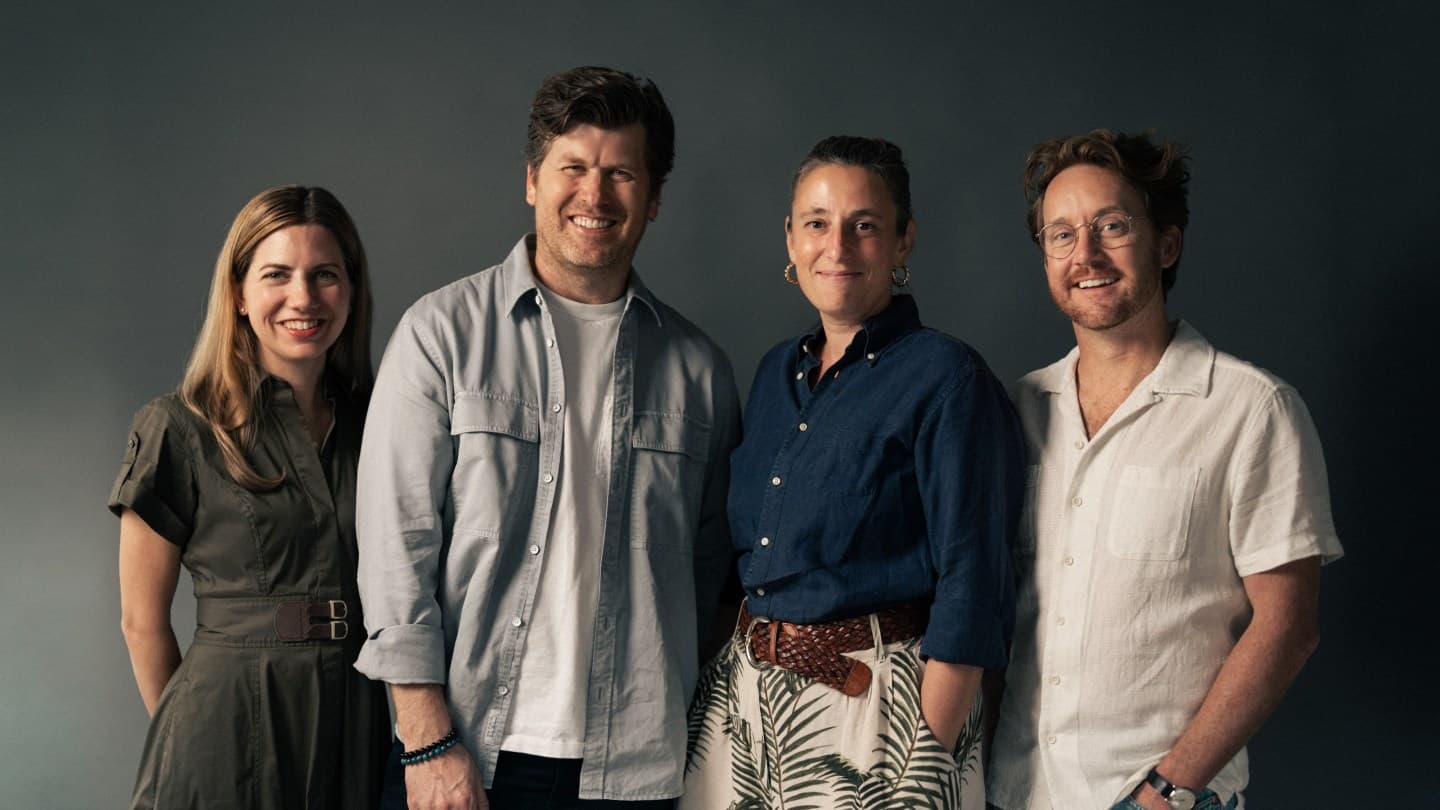
Filmmaking partners Clint Bentley and Greg Kwedar have handed the production and development reins of their Ethos banner to a longtime collaborator, promoting producer Giulia Caruso to head of production and development. The move, confirmed exclusively to Hollywood Buzz News, formalizes a working relationship that stretches back several years and signals the pair's intent to scale up a slate they have so far built with a deliberately small, handpicked crew.
Caruso has been embedded in the Ethos orbit since its earliest days. She produced "Jockey," the 2021 drama that Bentley directed and co-wrote with Kwedar and that earned critical acclaim on the festival circuit. The three then reteamed on "Sing Sing," the prison-set drama Kwedar directed and co-wrote with Bentley, which became one of the most talked-about independent releases of its season and cemented the trio's reputation for making character-driven work on modest budgets.
In her new role, Caruso will oversee the development and physical production of every Ethos project, working alongside Bentley and Kwedar as they move from a two-film operation into something closer to a full-fledged shop. She will be responsible for identifying material, shepherding scripts through development, and managing the day-to-day logistics of shoots that the company has historically kept lean and tightly controlled.
The promotion is unusual in one respect: it puts a producer with deep ties to a specific filmmaking team in charge of that team's entire pipeline, rather than importing an executive from a studio or a larger production company. For Bentley and Kwedar, that appears to be the point. Both have spoken in the past about the value of surrounding themselves with people who understand their process, and Caruso has been present for nearly every stage of it.
The banner's next chapter arrives at a moment of real momentum for its principals. Kwedar and Bentley have become fixtures on the awards and festival circuit, and their movies share a recognizable aesthetic: naturalistic performances, real locations, and an emphasis on communities rather than stars. "Sing Sing" in particular drew attention for casting formerly incarcerated men alongside professional actors, a decision that reflected the filmmakers' interest in process as much as product.
Caruso's elevation also reflects a broader shift in how independent film companies are structured. As streamers tighten their spending and traditional studio specialty arms grow more cautious, successful small banners have increasingly looked inward to promote the people who already know their workflows. Ethos is following that playbook, betting that institutional knowledge is worth more than an outside hire's contacts.
A slate still taking shape
Details of what Ethos will make next remain under wraps. Neither Bentley nor Kwedar has announced a follow-up feature, and the company has not disclosed financing partners or a distribution arrangement. What is clear is that Caruso will have a hand in whatever comes next, from the first draft of a script to the final day of post.
The three collaborators have never made a secret of how closely they work. Bentley and Kwedar share writing duties and frequently trade off directing and producing roles depending on the project, an arrangement that has allowed them to keep budgets down and timelines short. Adding a dedicated head of production and development effectively gives that arrangement a permanent administrative backbone, freeing the two filmmakers to focus on writing and directing while Caruso manages the machinery around them.
For Caruso, the job is a natural extension of work she has already been doing informally. Producers on small films often function as de facto heads of production, juggling casting, scheduling, and budget concerns in addition to their creative input. The difference now is that she will do it across a slate rather than a single title, with the authority to greenlight and shape projects from the ground up.
Whether Ethos can maintain its scrappy identity as it grows is the open question. Independent banners that expand often face pressure to take on bigger budgets and more commercial material, and the track record of filmmaker-led companies scaling up is mixed. But Bentley and Kwedar have shown little appetite for that path so far, and bringing Caruso in-house suggests they intend to grow carefully rather than quickly.
The announcement is unlikely to generate the kind of headlines that follow a casting coup or a nine-figure deal. In the independent world, though, personnel moves like this one matter. They determine which scripts get made, which filmmakers get their first shot, and how much of a movie's budget ends up on screen. Ethos has quietly become one of the more interesting small companies working today, and it now has a clearer organizational structure to match its ambitions.
Caruso, Bentley, and Kwedar are expected to begin developing projects under the new arrangement immediately. No timeline has been set for the company's next release.
Source: Hollywood Reporter