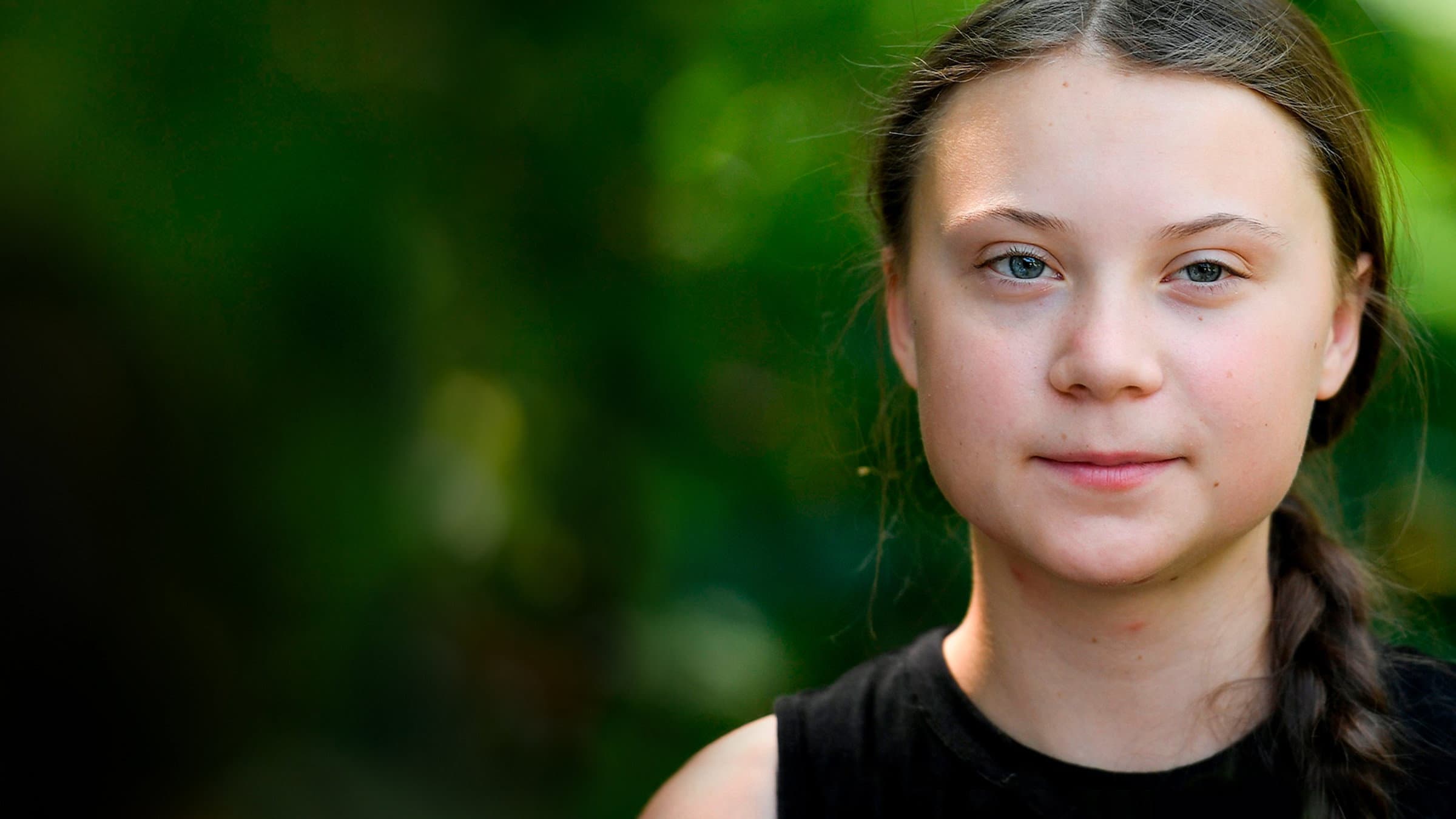
Greta Thunberg arrived at the Zurich Film Festival this week not to promote a film, but to use one as a platform. The Swedish climate campaigner walked the red carpet for the documentary "Greta," a portrait of her rise from a solitary school striker outside the Swedish parliament to a global figure, and then turned the festival's spotlight toward the cause that made her famous.
Her appearance in Zurich reflects a strategy that has defined Thunberg's public life for years: attaching herself to cultural moments that reach audiences she might not otherwise address. Film festivals, with their mix of press, industry professionals and ordinary ticket-buyers, offer exactly that kind of access.
A Documentary Portrait, and a Platform Beyond It
The film at the center of her visit traces her emergence as the face of a youth-driven movement demanding action on climate change. It is, by most accounts, a deliberately intimate look at a young woman who became a symbol faster than she could reasonably be expected to process. Thunberg has never presented herself as comfortable with celebrity, and the documentary format suits a subject who has always insisted the message matters more than the messenger.
That tension was on display in Zurich. Thunberg used the occasion to reiterate arguments she has made consistently: that emissions continue to rise despite decades of pledges, that political leaders treat climate as a public relations problem rather than an existential one, and that young people have no choice but to keep pressing.
Her rallying cry, as festival organizers framed it, was less a single speech than a familiar call to sustained action. She has long rejected the idea that awareness alone accomplishes anything, arguing that pressure must be continuous and uncomfortable.
Why Zurich, and Why Now
The Zurich Film Festival has increasingly positioned itself as a showcase for documentaries and issue-driven cinema alongside its narrative premieres. Hosting Thunberg fits that identity. Festivals have become one of the few remaining venues where a subject can speak at length to an audience already primed to listen, without the compression of a television segment or the hostility of certain online spaces.
There is also a practical dimension. Thunberg's public appearances have grown more selective over time. She avoids events that feel purely celebratory and gravitates toward those where she can deliver a message. A documentary about her own life gives her a legitimate reason to be present and a receptive room once she is there.
The Broader Pattern
Thunberg's festival stop is part of a wider trend in which activist figures move through entertainment spaces rather than traditional political ones. Documentary films have become a favored vehicle for this, offering both a distribution platform and a narrative frame. Streaming services and broadcasters have shown sustained appetite for climate-themed nonfiction, and a film anchored by an internationally recognized subject carries obvious appeal.
Whether such projects change minds is a separate question. Thunberg herself has been skeptical of feel-good environmental storytelling, warning that awareness campaigns can substitute for action. That skepticism did not stop her from participating, which suggests she views the documentary as a tool rather than an end.
What Comes Next
For the festival, Thunberg's visit delivered the kind of attention that raises a program's profile. For Thunberg, it was another stop in a long campaign that shows no sign of slowing. She has consistently framed her work in generational terms, describing herself as part of a cohort that will live with the consequences of decisions made now.
She did not announce new initiatives in Zurich, and she did not need to. Her message has remained remarkably stable across years of appearances: the science is clear, the response is inadequate, and the pressure must continue. The venue changes. The argument does not.
That consistency is both her strength and the source of criticism she faces. Supporters see resolve. Detractors see repetition. In Zurich, surrounded by a film that chronicles her own transformation, Thunberg appeared content to let the record speak and to keep insisting that the work is unfinished.
Source: Hollywood Reporter