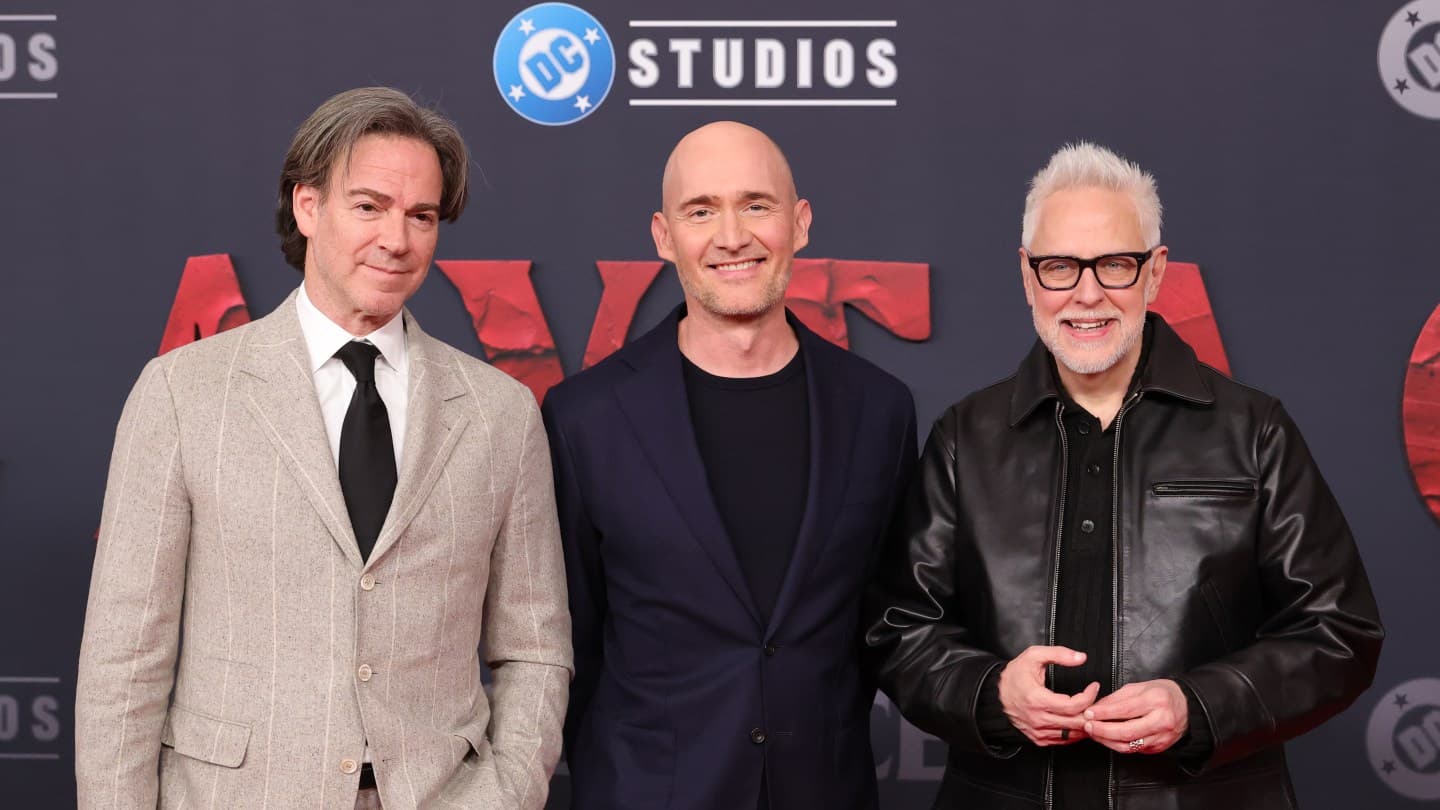
James Gunn and Peter Safran, the co-chiefs of DC Studios, have briefed David Ellison on their long-range blueprint for the comic book film and television operation, according to people familiar with the matter. The sit-down, described as a strategy session rather than a single-project pitch, marks one of the first substantive conversations between the DC leadership team and the new head of the studio's parent company, and it arrives at a moment when the superhero business is being scrutinized more closely than at any point in the past decade.
The meeting was framed around the multiyear plan Gunn and Safran first sketched out when they took over DC Studios, a roadmap that divides the company's characters and franchises into broad chapters spanning film, television, animation and gaming. That structure was designed to end years of disconnected storytelling, in which individual DC movies operated with little regard for one another.
A Relationship Still Being Built
Ellison, whose family built its fortune in software and who has moved aggressively into media and entertainment, inherited oversight of DC when he took the top job at the parent company. His approach to the film and television divisions has been watched closely, since he has publicly signaled an interest in fewer, bigger swings rather than a high volume of releases.
For Gunn and Safran, the priority in the room was less about securing approval for any one title than about demonstrating that their slate is built to survive shifts in corporate ownership and audience taste. People briefed on the conversation said the two executives walked through how each announced project connects to the next, and how the television side is meant to feed theatrical releases rather than compete with them.
Neither DC Studios nor the parent company has commented publicly on the meeting.
Where the Slate Stands
The conversation comes as DC is preparing to release the first full wave of projects conceived under the new regime. Superman, written and directed by Gunn, is the anchor of that effort, and much of the studio's forward planning hinges on how audiences respond to it. Additional films featuring well-known DC characters are in various stages of development, alongside a handful of television series intended to launch on streaming.
Analysts have noted that DC's strategy differs in one important respect from that of its chief rival: rather than treating television as a secondary tier, Gunn and Safran have positioned it as a genuine entry point for storylines that later pay off on the big screen. That approach requires unusual coordination across production teams, and it also requires patience from corporate leadership - the kind of patience that a new boss may or may not be inclined to extend.
That is precisely why the meeting mattered. In Hollywood, a change at the top almost always triggers a re-examination of the slate below it, and executives who cannot articulate a coherent long-term vision in a single sitting often find their plans quietly pared back. Gunn and Safran, by all accounts, came prepared to defend theirs.
The Bigger Picture
The stakes extend beyond DC. The studio is one of the largest content suppliers in the industry, and its performance influences how investors and rival studios think about superhero movies as a category. After a stretch in which several comic book films underperformed at the box office, the tolerance for expensive misfires has narrowed considerably across the business.
Gunn, a filmmaker by trade, has been unusually candid in public about the difficulty of rebuilding a shared universe from a standing start. Safran, a veteran producer with deep relationships across the production community, handles much of the operational side of the job. The pairing was designed to combine creative authorship with production discipline, and both men have described their mandate as long-term.
Whether Ellison shares that timeline remains an open question. Executives who have dealt with him describe a preference for clarity about what a project is expected to deliver and when. A multiyear plan stretching across a decade of releases fits awkwardly with quarterly earnings pressure, even if it is the only realistic way to build a franchise.
For now, the signal from the meeting was continuity rather than rupture. Gunn and Safran remain in place, their slate remains in motion, and the new boss has been walked through the reasoning behind it. What happens next will be determined less by any single conversation than by how the first films in the plan perform when they reach theaters.
DC has not announced any changes to its release calendar following the discussion.
Source: Hollywood Reporter