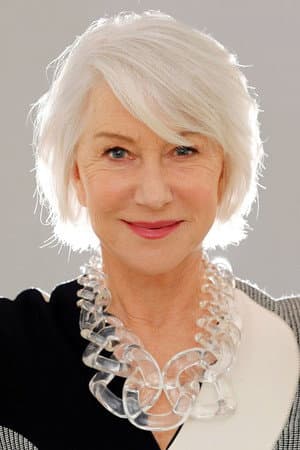
Helen Mirren has singled out Patricia Highsmith, the novelist behind "The Talented Mr. Ripley," as the hardest real-life figure she has ever brought to the screen. In a recent conversation about her career, Mirren described the author as "very abrasive," a characterization that made the role unusually taxing for an actress who has portrayed everyone from queens to heads of state.
Mirren's remarks, first reported by Variety, cut against the usual promotional patter. Playing a real person requires homework; playing one you actively find difficult requires something closer to endurance. Highsmith, who died in 1995, was celebrated for her psychological thrillers and equally notorious for a personality that could charitably be called prickly. Mirren did not soften the assessment.
"The most difficult real person I've played," Mirren said, pointing to Highsmith. She added the author was "very abrasive."
The comments arrive with fresh attention on Highsmith's signature creation. "Ripley," the Netflix adaptation of her 1955 novel "The Talented Mr. Ripley," has kept the author's name in circulation among viewers who may know Tom Ripley's story better than the woman who invented him. Mirren's reflection offers a reminder that behind every enduring fictional con man stands a writer with a complicated life of her own.
Highsmith's biography is not short on material for a portrait that resists flattery. Born in Fort Worth, Texas, in 1921, she was raised largely in New York and showed an early, almost clinical fascination with crime and the minds of those who commit it. Her first novel, "Strangers on a Train," appeared in 1950 and was swiftly adapted by Alfred Hitchcock, an association that cemented her reputation as a chronicler of ordinary people sliding into murder.
The Ripley books, five in total, made her a fixture of American letters despite her complicated relationship with the country of her birth. Highsmith spent much of her adult life in Europe, settling in Switzerland, and her fiction displayed a cool, unsentimental view of human nature that matched her public persona. She was known to be difficult with interviewers, guarded with admirers and, by many accounts, deeply unpleasant to those closest to her.
For an actor, that is both an opportunity and a trap. A sanitized version of Highsmith would be useless; a caricature of her would be worse. Mirren's willingness to name the challenge suggests she approached the part from a place of honesty rather than affection, which is often where the most durable performances come from.
The pairing makes a certain kind of sense. Mirren has built a career on women who wield authority and keep their interior lives largely hidden, from detective Jane Tennison in "Prime Suspect" to her Oscar-winning turn as Queen Elizabeth II in "The Queen." Highsmith, who wielded authority on the page and kept her own interior life fiercely guarded, fits that lineage, even if the two women would likely have had little patience for each other.
There is also a broader truth in Mirren's comment. Actors often speak warmly of the real people they portray, largely because warmth sells. Admitting that a subject was abrasive is a small act of candor, and it hints at the labor behind a performance that asks an audience to spend time with someone they might not like.
Highsmith's cultural stock remains high. The Ripley novels continue to sell, and every new adaptation sends another wave of readers back to her prose. She is, in a sense, permanently in the room whenever a handsome sociopath charms his way across a screen.
Mirren, meanwhile, has shown no interest in slowing down. She moves between blockbusters, prestige television and stage work with the same steady discipline she has applied for decades. Playing a woman as thorny as Highsmith is not the sort of assignment an actor takes for applause; it is the sort she takes because it is hard.
That may be the most useful thing to take from her remark. The difficulty was not incidental to the work. It was the work.
Source: Hollywood Reporter