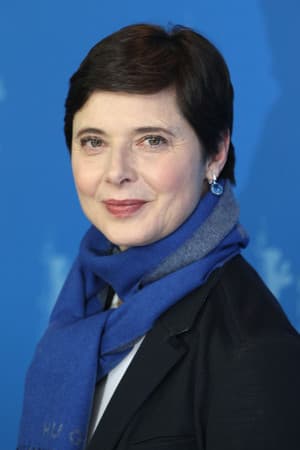
Rossellini on Empty Cinemas & Staying in the U.S.
In this film, Isabella Rossellini discusses empty local cinemas and why she won't leave the U.S. yet despite a very bad political situation.
Advertisement
In this film, Isabella Rossellini discusses empty local cinemas and why she won't leave the U.S. yet despite a very bad political situation.
Isabella Rossellini, the acclaimed actress best known for her iconic role in David Lynch’s Blue Velvet, has opened up about the current state of movie theaters and her complicated feelings about life in the United States. Speaking candidly, the star addressed the phenomenon of "empty local cinemas," while also making clear that, despite what she termed a "very bad" political climate, she has no immediate plans to leave the country.
Rossellini’s comments come at a time when the theatrical experience is facing significant challenges, with many smaller venues struggling to attract audiences. She expressed a palpable sense of loss regarding these vacant seats, lamenting a cultural shift that seems to have moved audiences away from the communal ritual of film viewing. Though she did not offer specific box-office figures or data, her firsthand observations paint a picture of a landscape that has fundamentally changed since her own heyday on the big screen.
The Italian-born actress was quick to contextualize her remarks, however, drawing a clear distinction between her professional concerns and her personal politics. When asked about the broader national mood, Rossellini did not mince words. She described the current political situation in the U.S. as "very bad," a stark assessment that reflects deep unease among many in the creative community. Yet, despite that grim evaluation, she conveyed a sense of rootedness that defies easy expectations.
Rossellini explained that her decision to remain in the United States, at least for the time being, is not born of resignation but of practical and personal considerations. While she acknowledged the appeal of retreating to more familiar or comfortable soil, she indicated that her life, work, and commitments currently anchor her to American shores. Her tone suggested a wary patience - a desire to see how things unfold before making any drastic moves.
Known for her intellectual depth and willingness to engage with complex cultural issues, Rossellini’s perspective carries weight. She has spent decades navigating the intersection of art and commerce, and her observations about the cinema's decline are not those of a detached observer but of someone who has witnessed the industry’s evolution from the inside. The emptiness she describes in local theaters is not merely a matter of seating capacity; it speaks to a broader erosion of shared cultural moments.
Her comments also highlight a persistent tension for artists in an increasingly polarized America. For Rossellini, the decision to stay is a conscious choice to remain engaged in a fight for the soul of the culture, even when the odds feel daunting. She appears to view her presence as a small act of defiance, a way to continue contributing to a medium she loves while the ground shifts beneath her feet.
This isn't the first time Rossellini has expressed concerns about the direction of the country, but her latest remarks feel notably more personal. She did not specify which political issues most trouble her, but her use of the word "very bad" leaves little room for ambiguity regarding her level of alarm. It is a phrase that suggests not just disagreement, but a profound disquiet about the state of governance and social cohesion.
At the same time, the actress’s refusal to flee is a statement in itself. In an era where high-profile figures often threaten to relocate when they are unhappy with the political landscape, Rossellini’s stance is markedly different. She implies that leaving would be an admission of defeat, a surrender of the very public spaces - cinemas included - that she believes are worth fighting for.
For her fans, the news is a double-edged sword. On one hand, it is reassuring to hear that Rossellini will remain visible and active in the American cultural sphere for the foreseeable future. On the other, her candid admission about the state of both the industry and the nation serves as a sobering reminder of how uncertain things have become.
Rossellini’s legacy, of course, transcends any single political moment. From her breakout work with Lynch to a prolific career in European and American cinema, she has always been an artist who engages with the world around her. That engagement now includes a vocal assessment of the health of the art form she helped define.
As for her future, Rossellini remains characteristically pragmatic. She did not announce any imminent projects, but her commitment to staying put suggests there is more work to be done. Whether that work takes the form of new performances, advocacy for cinema preservation, or simply lending her voice to the national conversation, it appears she intends to do it from the United States.
Her acknowledgment of the empty cinemas is, in many ways, a call to action. It is an invitation for audiences to remember what it feels like to sit in a dark room with strangers, sharing a story projected onto a screen. For Rossellini, that experience is not obsolete - it is endangered, and she is not yet ready to abandon it.
In the end, her message is one of conflicted resilience. She sees the problems clearly, both on the silver screen and beyond it, but she does not see leaving as the solution. For now, Isabella Rossellini will remain in the U.S., watching, waiting, and hoping that the seats in local cinemas - and the country's broader political discourse - might once again be filled with something worth staying for.
Source: Hollywood Reporter
Advertisement
Advertisement