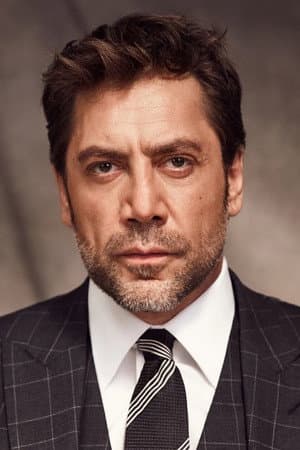
Javier Bardem has spent the better part of a decade being asked about the Bond villain he very nearly played, and his answer has never been a simple yes or no. As the actor tells it, the hesitation that kept him circling the role of Raoul Silva in 2012's "Skyfall" had nothing to do with the script or the franchise's pedigree. It had to do with a single, extremely specific question about the character's relationship to James Bond.
In a wide-ranging conversation about his career, Bardem recalled the moment he first raised the idea with director Sam Mendes. Rather than ask about the villain's backstory or his plan for revenge, Bardem put the matter bluntly: what if Silva wanted to sleep with Bond?
That question, he suggested, was the whole key to the part. Get it wrong, and Silva becomes just another Bond henchman with a grudge and a gadget. Get it right, and every scene between the two men carries a charge that a standard hero-versus-villain confrontation never could.
The Pitch That Changed the Part
Bardem has described the exchange with Mendes as less of a negotiation than a provocation. Silva, in his view, is not motivated by money or power. The character's obsession with Bond is intimate, possessive, and erotic in a way that mainstream spy movies rarely allow themselves to be. If that reading was off the table, Bardem wasn't sure he wanted to be on the table either.
His instinct proved productive. Mendes and the filmmaking team ultimately embraced the ambiguity, and Silva's scenes with Daniel Craig became some of the most talked-about sequences in the entire franchise. Reviewers at the time noted that the two men circle each other less like enemies than like estranged partners - one of the reasons the film's central conflict landed with unusual intensity for a tentpole release.
For a certain generation of filmgoers, the interrogation scene in particular remains a reference point for how far a studio franchise can push subtext without ever spelling it out.
Why Bardem Hesitated at All
The more interesting part of Bardem's recollection is that his hesitation wasn't about the material being beneath him. It was the opposite. He recognized early that if the underlying dynamic was diluted into vague menace, the performance would collapse into caricature - the kind of Bond villain who exists to be defeated rather than remembered.
That concern wasn't unfounded. The Bond franchise has a long history of charismatic antagonists whose screen time amounts to exposition and a slow walk toward a trap. Silva could easily have joined that list. Bardem's insistence on grounding the character in a clear emotional logic is arguably why he didn't.
It also helps that Bardem has never been a conventional leading man. His Oscar-winning turn in "No Country for Old Men" established him as an actor who can make stillness terrifying. Silva required the opposite skill set: flamboyance, theatricality, and an almost seductive charm, all deployed in service of something darker. The role demanded someone unafraid of being genuinely unsettling in a mainstream movie.
Timing, the Franchise, and an Actor's Instincts
Bardem's account also underscores something about how these decisions actually get made. He didn't sign on because the franchise was prestigious or the paycheck was significant. He signed on because he could see a version of the character that interested him, and he was willing to walk away if that version wasn't the one being made.
That kind of leverage is rare for most actors and irrelevant to only the very few. Bardem, at that point in his career, had both the résumé and the temperament to use it. The result was a Bond film that many critics still cite as a high-water mark for the series, and a villain whose menace is inseparable from his desire.
Not that Bardem is precious about any of it. His retelling is funny, self-aware, and slightly mischievous - the tone of a man who knows exactly how the anecdote lands and enjoys watching people react to it. He treats the question as obvious, which is part of what makes the story work.
Nearly fifteen years on, the pitch has aged into something like a piece of Bond trivia. It also doubles as a small lesson in how good performances get built: sometimes a character only makes sense once you ask the question everyone else was too polite, or too cautious, to raise out loud.
Source: Hollywood Reporter