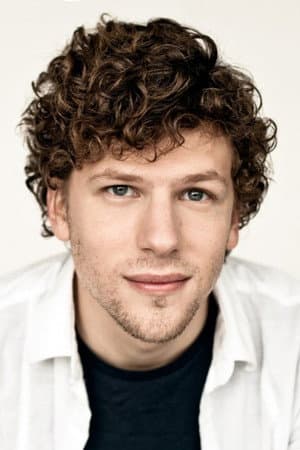
Jesse Eisenberg has spent more than two decades in front of cameras, earned an Academy Award nomination, and built a reputation as one of his generation's more thoughtful screen presences. None of that, it turns out, prevented him from spending a long stretch of his career quietly convinced that his profession was a somewhat ridiculous way to make a living.
In a new interview, the actor and filmmaker opened up about what he described as a past "negative opinion" of acting, a streak of disillusionment that hardened into a blunt critique of the job itself. His assessment, as he recalled it, was not exactly flattering to himself or his colleagues: performers are overpaid, and the work is rooted in vanity.
"They pay us too much, we're vain," Eisenberg said, summarizing the view he once held. The line lands as self-deprecating rather than bitter, but it captures a tension that has followed him for years - the sense of a serious-minded person uneasy with the trappings of a business built on being watched.
A Career Built on Restlessness
For an actor who once questioned the value of the craft, Eisenberg has hardly treated it casually. He broke through as a young performer with a gift for playing fast-talking, hyper-articulate outsiders, most memorably in "The Social Network," which brought him an Oscar nomination for best actor. That role cemented an image of Eisenberg as an intellectual on screen and off, a performer whose characters tend to think faster than the people around them.
He has also steadily moved behind the camera. Eisenberg wrote and directed "When You Finish Saving the World," a family drama that marked his feature directorial debut, and followed it with "A Real Pain," which he wrote, directed, and starred in. The latter drew widespread acclaim and positioned him as a filmmaker with a distinct voice - one preoccupied with family, heritage, and the awkward comedy of people failing to connect.
That trajectory makes his confession about acting's absurdities less a rejection of his career than a window into how he has approached it. The skepticism seems to have been fuel: if the job is vain and overpaid, the response is to treat it as something worth doing well, or at least honestly.
An Ambivalence Shared by Others
Eisenberg is far from alone in voicing discomfort with the economics and ego of stardom. Hollywood has a long tradition of actors publicly wrestling with the gap between the fortunes they earn and the value of what they produce, particularly in an era when pay disparities and streaming residuals have become flashpoints in labor disputes. What distinguishes Eisenberg's version of that unease is how matter-of-factly he frames it - not as a crisis of conscience he has overcome, but as an opinion he simply used to hold.
The phrasing matters. By putting the critique in the past tense, he signals that something shifted, though he did not spell out precisely what. It could be fatherhood, age, the experience of directing, or the slow accumulation of roles that felt worth the discomfort. Whatever the cause, the actor who once dismissed his own profession now appears to have made an uneasy peace with it.
For fans of Eisenberg's work, the revelation is unlikely to come as a shock. His public persona has always carried a whiff of reluctance, a resistance to the glad-handing that celebrity requires. He has spoken before about anxiety, about the strangeness of fame, and about preferring the solitary work of writing to the collaborative clamor of a set. The vanity quote fits neatly into that pattern: a performer who has never seemed entirely comfortable being looked at, and who has said so.
What Comes Next
Eisenberg remains active on both sides of the camera, and his dual role as writer-director-actor has given him a measure of control that pure performing never offered. Directing, in particular, seems to have provided an outlet for the seriousness he once felt acting lacked - a way to engage with ideas rather than simply embody them.
Whether his opinion of acting has fully reversed is an open question. He did not claim to have fallen in love with the job; he described a former belief, plainly and without apology. That honesty may be the most Eisenberg thing about it. In an industry that rewards relentless positivity, he has long been the guy in the room willing to say the uncomfortable part out loud, even when the uncomfortable part is about himself.
The quote will likely circulate as a punchy, shareable confession. But it also reads as a small piece of a larger argument that Eisenberg has been making throughout his career: that the work is worth taking seriously precisely because so much of the surrounding machinery is not. He may have once thought acting was vanity and overpayment. He has spent the years since behaving as though it could be something more.
Source: Hollywood Reporter