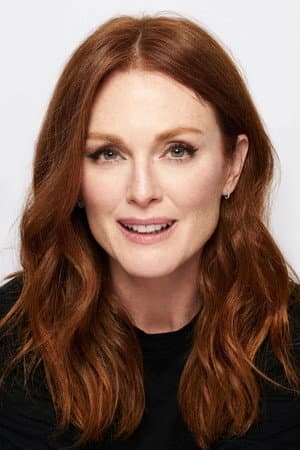
ZURICH - Julianne Moore stepped onto the stage of the Zurich Film Festival's main auditorium on Thursday night to collect its Golden Icon Award, and then did something few Hollywood honorees attempt: she delivered her acceptance remarks in German.
The Oscar-winning actress, who has built a four-decade career on roles that range from the fragile to the ferocious, was honored for lifetime achievement at the Swiss festival, now in its third decade as one of continental Europe's most visible autumn launching pads. The award recognizes performers whose body of work has left a lasting mark on international cinema - a description that fits Moore as comfortably as any of the complicated women she has played.
A Speech in a Borrowed Tongue
Moore, who was born in North Carolina and raised largely in the United States, has no ancestral claim to the language and no publicity obligation to speak it. She chose to anyway, opening her remarks in German before switching back to English for the bulk of her speech.
The gesture landed. Festival audiences in Zurich are accustomed to hearing English from visiting stars; German, even halting German, reads as effort rather than performance. Moore acknowledged as much, telling the crowd that she had practiced and that she hoped they would forgive her accent. The hall responded with applause that reportedly interrupted her more than once.
It was a small thing, perhaps, in an industry where red-carpet diplomacy is routine. But it was also a reminder of why Moore occupies an unusual place in the current landscape: she is a movie star who has never seemed entirely comfortable with the ceremonial half of the job, and that discomfort tends to make her gestures count.
A Career Built on Refusal
Moore's filmography resists easy summary. She broke through in the early 1990s with a run of performances - in "Short Cuts," "Vanya on 42nd Street," "Safe" - that established her as an actor willing to disappear into unease rather than radiate charisma. The blockbuster years followed, with "The Lost World: Jurassic Park" and "Hannibal," but so did "Boogie Nights," "The Big Lebowski," and "Far from Heaven," a trio that in retrospect looks like the definitive statement of her range.
She won the Academy Award for Best Actress for "Still Alice," playing a linguistics professor diagnosed with early-onset Alzheimer's disease - a performance built on subtraction, on watching a mind dismantle itself in real time. She has been nominated four other times. She has also worked steadily in television, most notably in "Game Change," and on the stage, where her reputation is arguably even stronger than on screen.
What the Zurich award acknowledges is not a single triumph but a willingness to keep choosing difficult material. Moore has never been the kind of star whose persona carries a film; she is the kind whose disappearance into a role carries it.
Zurich's Place in the Fall Circuit
The Golden Icon Award has become one of the festival's signature honors, typically given to a performer whose career the programming team wants to place in a longer historical frame. Zurich sits awkwardly in the international calendar - after Venice and Toronto, before the New York Film Festival closes the season - but it has carved out a niche as a place where awards-season positioning and genuine cinephilia overlap.
For Moore, the timing is useful. She remains one of the most reliably employed actresses of her generation, and a festival tribute in late September keeps her name in circulation as the year's awards conversation begins in earnest.
She did not announce new projects from the stage, and festival organizers did not disclose her next production. Moore's remarks focused instead on gratitude - to directors who took chances on her, to crews she has worked with repeatedly, and to audiences who have followed her through material that was not always easy to watch.
She closed, according to those in the room, by returning to German for a final line. It was brief, and by her own admission imperfect. It was also, by every account, received as though it were flawless.
Source: Hollywood Reporter