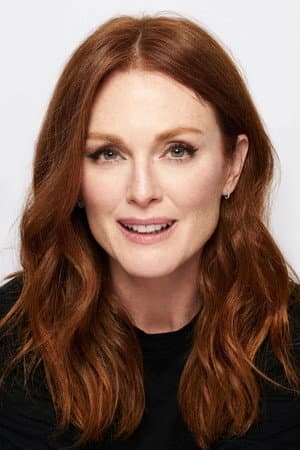
Julianne Moore, one of the most accomplished and versatile actresses of her generation, is set to be honored with the Golden Icon Award at the 2026 Zurich Film Festival. The announcement, made official by festival organizers on Wednesday, confirms that Moore will receive the career achievement prize during the event’s upcoming edition, which runs later this month. The Golden Icon Award is the festival’s highest honor, reserved for figures whose bodies of work have left an indelible mark on international cinema.
Moore’s selection for the award underscores a career that has spanned more than three decades, encompassing independent dramas, studio blockbusters, and boundary-pushing character studies. From her early breakout roles in the 1990s to her recent string of acclaimed performances, the actress has built a reputation for taking on emotionally complex and often difficult characters with unflinching honesty. Festival directors praised Moore not only for her longevity but for her willingness to continually reinvent herself, moving seamlessly between arthouse fare and more mainstream productions without ever losing her artistic credibility.
The Golden Icon Award has a history of recognizing performers who embody the spirit of bold, risk-taking filmmaking. Previous recipients have included luminaries such as Cate Blanchett, Helen Mirren, and Eddie Redmayne, among others. By adding Moore to that list, Zurich continues its tradition of celebrating actors whose influence extends beyond the screen into the very fabric of how stories are told. Moore’s filmography, which includes collaborations with directors like Todd Haynes, David Cronenberg, and Paul Thomas Anderson, makes her a natural fit for an award that prizes fearless choices and emotional depth.
Moore’s most celebrated work has often explored the fragility and resilience of the human psyche. Her Academy Award-winning performance in Still Alice (2014), in which she portrayed a linguistics professor grappling with early-onset Alzheimer’s disease, remains a touchstone in modern acting - a quiet, devastating portrait that earned her the Oscar for Best Actress. That role followed a string of equally fearless performances, including her turns in Boogie Nights, Far from Heaven, and The Hours, the latter of which earned her a Golden Globe. Her ability to inhabit characters with such raw vulnerability has drawn consistent comparisons to the great method actors of the previous generation, yet Moore has always carved out her own distinct path.
Off-screen, Moore has been an outspoken advocate for a number of causes, including women’s health and gun safety, often using her platform to engage in political discourse. She has authored children’s books, served as a UNICEF ambassador, and used her voice in Hollywood to push for greater diversity in storytelling. Festival organizers pointed to that broader cultural engagement as another reason she deserves the honor, noting that her impact extends well beyond the craft itself. She is, in many ways, a public intellectual of the film world - someone who brings the same thoughtfulness to her activism as she does to her performances.
The Zurich Film Festival, which has grown steadily in international prominence since its founding in 2005, will celebrate its 2026 edition amid a robust lineup of premieres and retrospectives. Moore is expected to participate in a public conversation following the award presentation, giving audiences a chance to hear directly about her process, her collaborations, and the lessons she has gathered over a long and storied career. Her appearance in Zurich serves as a reminder of the festival’s ambition to attract the highest tier of global talent while maintaining an intimate, cinephile atmosphere.
For Moore, the honor arrives at a moment when she remains as active as ever. While she has not publicly disclosed her next major project, the actress has shown no signs of slowing down, continually seeking out work that challenges both herself and viewers’ expectations. In a film landscape increasingly dominated by franchises and spectacle, she remains a steady advocate for the power of human-scale drama - stories that hinge not on special effects but on the subtlest gestures of performance.
Her upcoming appearance at the Zurich Film Festival will be a homecoming of sorts, not for the actress, who has deep ties to American independent cinema, but for a kind of filmmaking that the festival has long championed. As part of the event’s program, organizers have also arranged a retrospective of some of Moore’s most notable films, allowing audiences to trace the arc of her development from early indies to her more polished, mature roles. It is a fitting tribute for an artist whose work consistently rewards repeated viewing.
The award ceremony is scheduled to take place during the festival’s second week, with exact dates and venue details to be announced in the coming days. Fans and critics alike will be watching closely, not just for the ceremony itself, but for whatever Moore says about her past choices and future ambitions. At a time when conversations about the actor as auteur are more common than ever, Zurich’s recognition of Moore feels particularly resonant. She is the rare star whose name alone signals a certain level of quality - one who has never been defined by her celebrity but by the depth of her characters.
In the run-up to the festival, Moore’s fellow actors, directors, and collaborators have already begun to share their congratulations, with many crediting her as a formative influence on their own careers. The Zurich Film Festival, for its part, has framed the award as a celebration of artistic persistence. For Moore, it provides another landmark in a career defined not by peaks and valleys but by a steady, luminous ascent. The Golden Icon is not often given; it is earned over time, through choices both bold and brave. Julianne Moore, by any measure, has earned it many times over.
Source: Hollywood Reporter