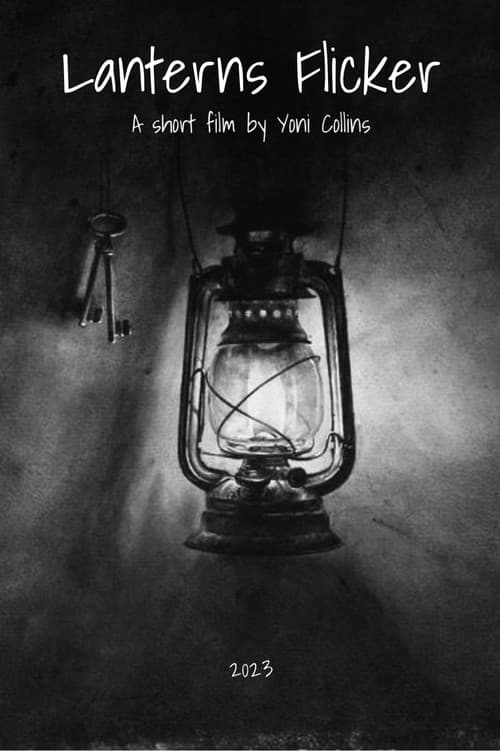
The conversation around "Lanterns" took a sharp turn this week, but not in the direction most viewers expected. Since October 5, when the eighth and final episode of the documentary series became available to stream, fan forums have been consumed by a single question: is Dennis Mackenzie about to trade in his guitar for a yellow power ring? The theory, which posits that the Canadian veteran secretly becomes a member of the Sinestro Corps, has spread across social platforms at a pace that has surprised even longtime observers of the show.
That speculation, however, collides with the actual record. "Lanterns" is not a superhero property. The documentary, directed by Yoni Collins, runs just 14 minutes and was released on June 17, 2023. It follows Mackenzie, a Canadian veteran who served in Afghanistan, as he turns to music to manage his post-traumatic stress disorder and to draw attention to veteran suicide and mental health. The genres attached to the film are documentary, music, and war. There is no sci-fi element, no cosmic mythology, and no reason within the text of the film itself to anticipate a transformation into a comic book villain.
How a Mental Health Documentary Became the Center of a Superhero Theory
The confusion appears to stem from a collision of titles. The word "Lantern" carries heavy associations in pop culture, and the finale episode's viral hashtag, which trended briefly on October 6, pulled in viewers who had never seen Collins's film. Clips from the documentary, in which Mackenzie performs music as part of his recovery, were recirculated without context. In one widely shared excerpt, Mackenzie describes the discipline that music gave him after his service, and commenters began reading the language of willpower and fear as an origin story for a ring-wielder.
That reading does not survive scrutiny. "Lanterns" has a runtime of 14 minutes and a cast consisting entirely of Mackenzie playing himself. It is an English-language Hollywood production, and its stated overview describes a personal account of PTSD and advocacy, not a work of fiction. The film's TMDb rating sits at 0 out of 10, which reflects a near-total absence of votes rather than critical rejection. The rating is best understood as a placeholder, not a verdict.
What the Finale Actually Contains
Episode 8 serves as the closing chapter of Mackenzie's account. It returns to the themes that have driven the series throughout: the difficulty of transitioning from military service, the role of creative work in managing trauma, and the urgency of addressing veteran suicide. Music functions in the film as both a coping mechanism and a public platform, and Mackenzie's stated goal is awareness - reaching other veterans who might be struggling in silence.
No element of the finale introduces a yellow ring, a fear entity, or any narrative device drawn from the Green Lantern comics. Viewers arriving with that expectation have been met with a documentary about one man's recovery, which may explain the surge in confused posts asking whether the episode was mislabeled.
The Real Story Behind the Search Spike
What the theory does reveal is something more prosaic: search interest in "Lanterns" has climbed sharply over the past week, and much of that traffic appears to be first-time viewers. A small film with a modest footprint has, almost by accident, found an audience far beyond its original release. Whether that audience stays once the superhero frame collapses is an open question. Collins's film does not offer the payoff that trend-driven viewers were promised, but it does offer something the rumors never could: a real veteran talking about survival in his own voice.
For Mackenzie, the attention is likely beside the point. The film was made to raise awareness of veteran suicide and mental health, and by that measure, any increase in viewers - even ones who arrived expecting a cosmic war - is not nothing.
"Lanterns" is available to stream now. It runs 14 minutes. Those still waiting for a yellow ring should probably stop waiting.
Source: Filmibeat