Documentary filmmaker Laura Poitras is turning her lens toward a subject that feels closer to science fiction than current events, and she is pulling no punches about the darkness she sees. In a new interview, the Oscar-winning director behind Citizenfour described her upcoming ICE documentary, They're Here, as a portrayal of a "nightmare" unfolding in the United States, framing the project as a desperate response to the country's migration enforcement policies.
Poitras, known for her unflinching examinations of surveillance and state power, did not mince words when discussing the impetus for the film. She characterized the current situation as a waking horror, suggesting that the realities faced by immigrants under detention and deportation efforts have surpassed rational political discourse. The director’s comments signal that They're Here will not be a neutral observation but a pointed, urgent indictment of the systems she has spent years documenting. Her stated vision is one of crisis, where the everyday brutality of the enforcement apparatus is something she feels compelled to capture with the same urgency she brought to whistleblower Edward Snowden’s story.
The title itself carries a deliberate ambiguity, hinting at a perception of invasive authority rather than extraterrestrial life. Poitras has often used her work to reframe official narratives, and this project appears to continue that thread, suggesting that the average American may not fully grasp the scale or intent of what is happening in their name. By choosing the pronoun "they're," she appears to create a linguistic distance that underscores the dehumanization she argues is central to the system’s operation. It is a poetic but pointed choice for a director who believes the country has tipped into a state of emergency.
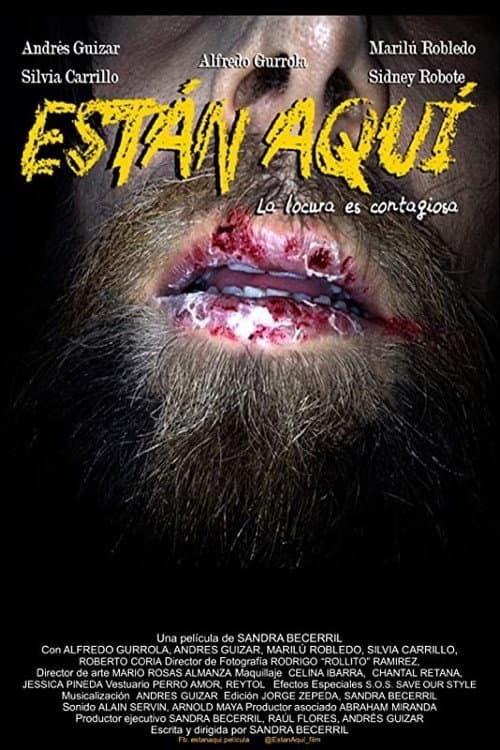
However, the project's history adds a layer of complexity. The verified metadata for They're Here lists a 2014 release date and credits Sandra Becerril as director, with a cast including Roberto Coria, Silvia Carrillo, and Andrés Guizar. That earlier film, described as a Spanish-language feature about a man named Andres who believes aliens have taken over the Earth and locks his family in the basement, holds a modest 5/10 rating on TMDb. It shares the same title as Poitras's new documentary but appears to be a separate, earlier production with a purely fictional, genre-driven plot. That earlier work was a domestic thriller, not a non-fiction exposé, and it originated from a different creative team.
The disconnect between that 2014 film and Poitras’s new documentary is striking, yet it underscores how the filmmaker is repurposing a familiar phrase for a new and urgent context. Where the earlier They're Here used invasion as a metaphor for paranoia within a family unit, Poitras’s version appears to use it as a literal descriptor for an enforcement regime she considers alien and hostile. The coincidence of titles is likely not lost on her, as she strips the idea of "invasion" from the realm of fantasy and plants it squarely in the landscape of immigration policy. It is a narrative reclamation that fits her signature style of making abstract political failures feel viscerally personal.
For Poitras, the work is not merely about documenting policy but about capturing the psychological toll of it. She has indicated that the film will focus on the human cost, moving beyond statistics to show the faces of those caught in the machinery. Describing the U.S. situation as a "nightmare" is not hyperbole for her; it is a diagnostic. She has built a career on the belief that cinema can pierce through propaganda, and this new piece is clearly positioned as an intervention in a national conversation that she sees as dangerously detached from reality. The pressure she feels is evident, as she speaks about the project in terms of compulsion rather than choice.
The announcement is already generating buzz within Hollywood circles, where Poitras is respected for her willingness to tackle controversial subjects with rigor and artistry. Citizenfour won the Academy Award for Best Documentary Feature in 2015, cementing her reputation as a filmmaker who can translate complex, high-stakes scenarios into gripping, human stories. That pedigree gives her new work immediate credibility, even before a distribution deal or festival premiere is announced. Industry insiders will be watching closely to see how she balances the raw, desperate vision she describes with the narrative structure audiences have come to expect from her.
While no release date or additional plot details have been confirmed for Poitras’s They're Here, the director’s comments have already set expectations for a confrontational and emotionally charged viewing experience. She seems intent on ensuring the film doesn’t allow viewers to look away, a stance that mirrors her previous work’s focus on consequence and accountability. As the nation heads into another election cycle, the documentary could land with significant political weight, especially given Poitras’s track record of influencing public discourse.
For now, the only certainty is that Poitras is treating this subject as a personal emergency. Her phrasing suggests a filmmaker who feels the clock is ticking, and she is using her platform to sound an alarm. Whether audiences will embrace that urgency or recoil from its bluntness remains to be seen, but one thing is clear: Poitras is not interested in a comfortable, detached look at immigration in America. She is promising a nightmare, and she intends to make viewers feel it.
Source: Hollywood Reporter