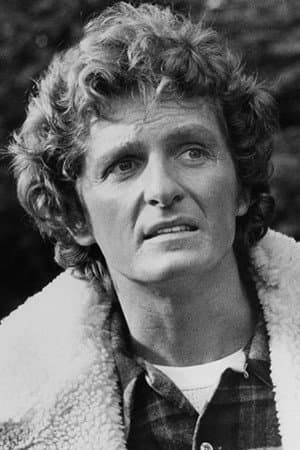
Marjoe Gortner, who spent his childhood as a traveling Pentecostal evangelist, walked away from the pulpit to expose the trade he had been raised in, and then reinvented himself as a working actor in disaster spectacles and prime-time soap operas, died on October 4, 2026. He was 82.
No other details were immediately available.
Gortner packed several lifetimes into one career, and the strangest part is that the chronology runs backwards from what most biographies look like. He was famous before he was old enough to vote, quit the business that made him famous, made a documentary about having quit it, and then spent the next two decades as a jobbing Hollywood actor in earthquake movies, prison pictures, and a long run on one of the most-watched dramas of the 1980s.
A childhood on the sawdust trail
Born in 1944, Gortner was pushed into revival work as a small child by parents who saw both a calling and a living. By his teens he was a headliner on the tent-and-tabernacle circuit, a boy preacher with a polished delivery and a sense of showmanship that drew crowds across the South and Southwest. He was, by his own later account, very good at it - and increasingly certain that much of what he was doing was performance rather than ministry.
That certainty became the defining decision of his life. In the early 1970s he agreed to let filmmakers record him as he worked one final revival tour, and the resulting 1972 documentary, Marjoe, laid bare the mechanics of the operation: the advance planning, the financial calculations, the deliberate manipulation of congregants' emotions. The film won the Academy Award for Best Documentary Feature, and it turned its subject into something he had not been before - a national curiosity, and a man widely credited with pulling back the curtain on an industry that preferred to stay behind it.
The timing was fortunate. Gortner was in his late twenties, had no obvious professional training, and had just publicly torched the only career he had ever known. Hollywood, which has always had a weakness for genuine originals, came calling.
From the pulpit to the backlot
He made his feature debut in 1973's Bobbie Jo and the Outlaw alongside Lynda Carter, and quickly settled into the kind of steady character work that sustains a long screen life. Producers cast him for a certain coiled intensity - a man who looked like he might have seen things - and he rarely lacked for employment. He appeared in the 1976 television film The Keegans, in the Burt Reynolds crime drama Stunts, and in the 1978 prison picture The Jericho Mile.
His biggest commercial exposure came in 1974's Earthquake, the Universal disaster epic built around Sensurround, a bass-heavy theatrical gimmick designed to shake the seats. Gortner played a motorcycle stunt rider whose story threads through the film's depiction of a Los Angeles flattened by a massive temblor. Critics were not kind to the movie, but audiences showed up in enormous numbers, and the role put his face in front of a far larger crowd than any revival tent ever had.
To younger viewers, though, Gortner was most familiar as a television regular. From 1986 to 1988 he played Richard Channing's scheming associate - a character whose name and function varied by season - on CBS's Falcon Crest, the wine-country saga that ran for nine seasons and made a weekly ritual out of family betrayal. Other credits across the decade included the 1979 thriller When You Comin' Back, Red Ryder? and the 1981 horror film Mausoleum.
His private life occasionally generated its own headlines. He was married three times, including a brief union with the actress Candy Clark; a tabloid-era scuffle at a Los Angeles restaurant, in which he was accused of punching a gossip columnist, kept his name in the papers for a stretch in the late 1970s.
But it was the documentary that continued to follow him. In 2003 he told a journalist he had never quite settled the question of whether the film had freed him or trapped him, describing the revival circuits he grew up in as a machine that ran on other people's hope. "I was in the business of making people feel something," he said, recalling those years. "The trouble was figuring out what was real."
He resisted repeated invitations to return to preaching, even as televangelism scandals in the 1980s made his earlier testimony seem prescient. And he never fully escaped the association: obituaries will note, as they must, that a man who spent his boyhood saving souls spent his adulthood best known for proving that some of it was a show.
Gortner is survived by the family members listed in subsequent announcements. Funeral arrangements were not disclosed.
Source: Hollywood Reporter