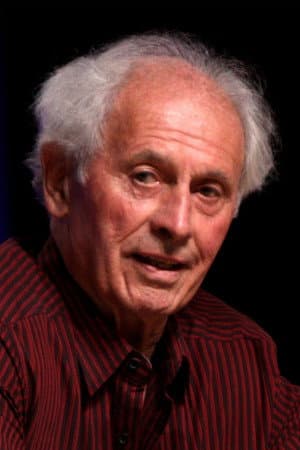
Veteran character actor Michael Forest, whose career spanned more than six decades and included memorable turns in Roger Corman productions and a celebrated guest appearance on “Star Trek,” died at 97. No further details about the circumstances of his death were immediately available.
Forest’s passing removes another thread from the rapidly thinning fabric of Hollywood’s postwar generation - the working actors who filled the margins of drive-in pictures, television Westerns, and science fiction allegories with a professionalism that often outshone the material. He was never a marquee name. But for viewers of a certain vintage, his face is indelible: square-jawed, imposing, often cast as an authority figure or an alien whose moral certainty would be tested by the episode’s final act.
A Career Built on Versatility and Volume
Born in 1929, Forest came of age as the studio system was beginning to crack and independent production was on the rise. He found steady work in the fertile low-budget ecosystem of the 1950s and 1960s, where a reliable actor who could hit his mark and deliver exposition without complaint was worth more than a thousand method-trained hopefuls.
Roger Corman, the prolific director and producer whose quick-turnaround films became a training ground for a generation of filmmakers, cast Forest in multiple projects. Corman’s sets were famously fast and frugal, requiring actors to bring their own gravity to roles that might otherwise have been forgettable. Forest fit that bill. He understood that in a Corman picture, the performance had to land in one or two takes, and anything less than total commitment would show on screen.
While the specific titles of his Corman collaborations are not being confirmed here, the association alone placed Forest within a repertory company of sorts - a rotating cadre of performers who populated Corman’s various genres, from gangster pictures to gothic horror to post-apocalyptic satire. Forest’s physical presence made him a natural for roles demanding authority, whether as a military officer, a lawman, or a spacefaring commander.
The ‘Star Trek’ Episode That Became a Fan Touchstone
For many, Forest is best remembered for his guest appearance on the original “Star Trek.” He played Apollo, a powerful alien who arrives on a planet and demands that the crew of the Enterprise worship him. The episode, titled “Who Mourns for Adonais?,” is one of the more philosophically ambitious hours of the series, pitting Captain Kirk’s humanism against a god who has lost his worshippers.
Forest played Apollo with a mixture of regal bearing and wounded pride. The role required him to project godlike authority while also revealing the character’s underlying loneliness. It was a tricky balancing act, and Forest’s performance has endured in fan circles precisely because he treated the material seriously. He did not condescend to it. In a series known for its rubber-forehead aliens, Forest’s Apollo felt genuinely otherworldly - and, crucially, genuinely tragic.
The episode aired during the show’s second season, a period when “Star Trek” was beginning to embrace more overtly mythological and allegorical storytelling. Forest’s performance became one of the more frequently cited guest turns from that era, and he remained a fixture on the convention circuit for decades, signing autographs and answering questions about what it was like to face off against William Shatner’s Kirk.
A Working Actor to the End
Beyond Corman and “Star Trek,” Forest’s filmography is a sprawling testament to the economics of mid-century Hollywood. He appeared in Westerns, war pictures, and adventure serials - the kind of programming that filled afternoon television blocks and Saturday matinees. He worked steadily into the 1990s and beyond, though his later roles were smaller and often went uncredited.
Forest was also a voice actor, lending his resonant baritone to animated projects and English-language dubs of foreign films. That work kept him busy long after on-camera opportunities for actors of his age had dried up. He was, in the truest sense, a jobbing actor - someone who found satisfaction in the craft itself rather than in fame or fortune.
A Quiet Legacy
Michael Forest never received an Academy Award nomination. He never starred in a blockbuster that defined a generation. But his career tells a story about how Hollywood actually worked for most of its history: a vast, unglamorous machine powered by people who showed up, knew their lines, and made the story work. He was a supporting player in the most literal sense, and the industry could not have functioned without him.
He is survived by a body of work that spans the better part of a century in entertainment. For fans of “Star Trek,” he will always be Apollo. For students of B-movies, he will be a familiar face in the margins. For everyone else, he is a reminder that the credits scroll for a reason - and that every name on screen represents a life spent in service of the story.
Source: Hollywood Reporter