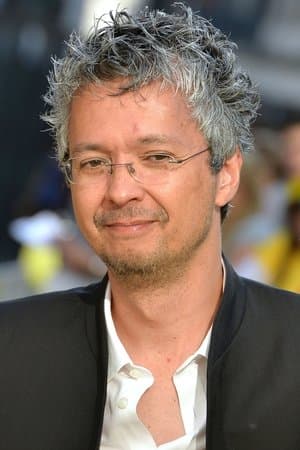
Pierre Coffin, the filmmaker and voice actor best known for steering the “Despicable Me” franchise and giving life to the Minions themselves, has found new representation. The French animator has signed with WME, Hollywood Buzz News has learned, in a move that signals the next phase of a career already defined by one of the most successful animated properties of the past two decades.
Coffin is not a household name in the way his yellow, gibberish-spouting creations are, but his fingerprints are on nearly every major beat of the franchise. He directed the first two “Despicable Me” films alongside Chris Renaud, then went on to co-direct the spinoff “Minions” and its sequel, “Minions: The Rise of Gru.” He also provided the voices for Kevin, Stuart, Bob and the rest of the Minion horde, a role that requires him to perform in a made-up language of his own design - a blend of French, English, Spanish and Italian that he has described as intuitive rather than scripted.
That dual role - director and vocal performer - has made Coffin a rare figure in animation. He is not simply a hired hand on a studio tentpole; he is the architect of its tone. The Minions’ slapstick rhythms, their nonsensical catchphrases and their chaotic group dynamic all flow from his sensibility. When the first “Minions” film opened in 2015, it went on to become one of the highest-grossing animated releases of all time, a testament to how thoroughly the characters had escaped their supporting role in the “Despicable Me” series.
A Franchise Built on Voices and Vision
Coffin’s path to animation was not a straight line. Born in France, he studied at the École Nationale Supérieure des Arts Décoratifs in Paris before moving into commercial and short-film work. His early short “Pings” and the acclaimed “Gary’s Fall” helped establish a visual style that leaned on exaggerated character design and silent-comedy timing. That background made him a natural fit when Illumination Entertainment was assembling its first feature, “Despicable Me,” in the late 2000s.
The rest is animated history. The franchise has spawned multiple sequels, a theme-park attraction, merchandise lines and a cultural ubiquity that few modern cartoon characters can match. Coffin has been at the center of it, even as he has largely avoided the spotlight that typically accompanies that level of success. He is known in the industry as a craftsman first, a performer second and a celebrity a distant third.
What the Signing Signals
WME’s acquisition of Coffin as a client is notable for a few reasons. For one, it puts a top-tier talent agency behind a filmmaker whose work is deeply tied to a single studio, Illumination, and its parent company, Universal. That relationship is not exclusive on Coffin’s end, and representation at WME opens the door to projects outside the Minion universe - whether that means live-action, television or original animated features.
For another, it reflects the shifting economics of animation talent. Directors who can also perform, write and design are increasingly valuable in a market where studios are hungry for franchise-starters. Coffin fits that mold almost perfectly. He is not just a director for hire; he is a creator whose name carries weight with both executives and audiences, even if that name is less recognizable than his characters.
The timing is also worth noting. The animation industry is in a period of transition, with streaming platforms scaling back original film slates and theatrical studios leaning harder into known properties. In that climate, a proven franchise architect is a safe bet. WME is presumably betting that Coffin can either extend the Minion brand further - a third “Minions” film has been in various stages of development - or launch something new with the same commercial instincts.
Coffin has not announced any specific upcoming projects. His deal with WME is representation only, and no details about future films or collaborations have been confirmed. But the signing suggests he is preparing for a next act, one that may or may not involve the small, yellow, overall-clad characters he helped make immortal.
For now, the Minions remain his calling card. And in Hollywood, a calling card that has grossed billions is never a bad thing to have in your pocket.
Source: Hollywood Reporter