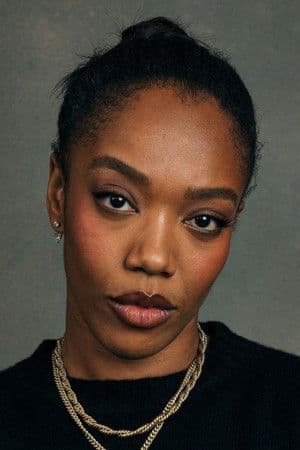
Naomi Ackie has never been one for a tidy career narrative, and her latest round of press is proof. In a wide-ranging conversation that touched on the machinery of celebrity, her time inside a galaxy far, far away, and a small purchase she made for reasons that have nothing to do with red carpets, the British actress came across less like a studio asset and more like someone determined to keep her bearings.
Ackie, who broke through to global audiences with her portrayal of Whitney Houston in the 2022 biopic "Whitney Houston: I Wanna Dance with Somebody," has spent the years since navigating a level of attention that few performers her age experience. That navigation is at the center of what she describes as the "Hollywood machine" - a phrase she uses not as an insult but as a description of an ecosystem with its own weather.
The "Hollywood Machine," Explained
According to Ackie, the machine is neither purely benevolent nor purely sinister. It is a system that rewards momentum, punishes hesitation, and asks its participants to project certainty even when they feel none. She has spoken before about the whiplash of going from respected character actor to face of a major awards-season campaign, and her current comments extend that theme.
The machine, as she frames it, includes the press circuit, the audition room, the social media apparatus, and the informal network of gatekeepers who decide which careers get accelerated. Ackie has said she tries to treat it as a set of working conditions rather than a measure of her worth. That distinction matters, she suggests, because the alternative is letting external validation dictate how she chooses roles.
It is a familiar refrain from actors of her generation, but Ackie's version carries a specific edge. She has been candid about the ways a high-profile project can reshape how strangers treat you, and about the odd loneliness of being surrounded by handlers while feeling entirely on your own. Her approach is not to reject the machine but to keep one hand on the controls.
A 'Star Wars' Detour That Still Resonates
For many viewers, Ackie's most widely seen role remains Jannah in "Star Wars: The Rise of Skywalker," the 2019 conclusion to the sequel trilogy. Her character arrived late in the saga, a former stormtrooper who had abandoned the First Order and led a band of fellow deserters. The part was small relative to the film's scale, but the franchise's reach is another category entirely.
Ackie has described the experience with a mix of gratitude and honesty. Being inside "Star Wars" means joining a fandom that predates you, outlasts you, and holds strong opinions about everything. She has talked about the surreal quality of walking onto sets that exist in the collective imagination of multiple generations, and about the strange experience of having your work dissected by people who have been debating this universe since before you were born.
She has not, notably, treated the role as a calling card to be leveraged endlessly. Instead she has folded it into a broader body of work that includes indie projects and prestige television. That refusal to be defined by the biggest thing on her resume is itself a statement about how she views the industry.
The Crank Radio and the Case for Preparedness
Then there is the crank radio - a detail so specific and unexpected that it has become the headline's most memorable hook. Ackie has spoken about buying a hand-cranked radio, the kind that generates its own power and works when the grid does not. It is not a prop, not a sponsor tie-in, and not a bit.
Her reasoning, as she has described it, is grounded in a general instinct toward preparedness and self-sufficiency. The purchase sits in amusing contrast to the glamour of her professional life: here is an actress who has walked the biggest franchise red carpets on earth, and she is also thinking about what happens when the electricity goes out.
The crank radio reads as a small act of resistance against the passivity that fame can encourage. It is a reminder that the person navigating the machine is still a person, with ordinary concerns and a desire to be able to function without a team of people making it happen. Ackie seems to find something clarifying in that.
Whether the radio ever gets used in an emergency is beside the point. What it signals is a temperament: pragmatic, slightly wary, and determined to keep her footing. In an industry that specializes in making people feel indispensable and replaceable in the same breath, that is not a small thing.
Source: Hollywood Reporter