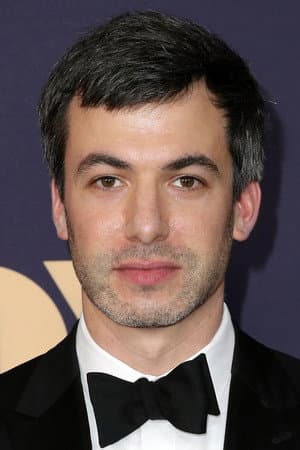
Nathan Fielder says he has lost touch with Elizabeth Holmes and her husband, Billy Evans, and that the couple has not watched "You Can See Everything," the documentary series that examined the rise and collapse of Theranos. In public remarks, Fielder attributed the silence to a breakdown in communication between his production team and the Holmes-Evans household.
The filmmaker's comments mark the latest twist in a peculiar media saga that has trailed Holmes since her fraud conviction. "You Can See Everything" - originally conceived under a different working title - was billed as a documentary about a figure whose story had already been dissected by journalists, podcasters, and scripted dramatizations. Fielder's involvement signaled an attempt to approach the material with his signature deadpan curiosity, but the final product evidently did not reach the two people at its center.
Communication "Broke Down," Fielder Says
According to Fielder, the lines of contact that once existed between his team and the couple have gone quiet. He characterized the situation bluntly, saying communication broke down, and noted that neither Holmes nor Evans has sat down to watch the series. The remark raises the question of whether the couple was ever shown advance footage or asked for a response before release. Fielder did not elaborate on whether a private screening was offered or declined.
Holmes has kept a low profile since her release from prison, and her representatives have not issued a statement about the series or Fielder's remarks. Evans, who married Holmes after her legal troubles intensified, has similarly avoided press attention. The absence of a response is consistent with the couple's broader strategy of limiting public commentary.
A Subject Who Was Never Fully On Board
Holmes was never a conventional documentary participant. Her legal saga unfolded across courtrooms in California, where she faced charges tied to claims about Theranos' blood-testing technology. Jurors convicted her on multiple counts of fraud, and the case became a shorthand for Silicon Valley overreach. Through it all, Holmes maintained that she believed in the company's mission and had not intended to deceive investors or patients.
That posture complicates any filmmaker's task. A subject who disputes the central narrative of the story being told is unlikely to cooperate enthusiastically, and Holmes had already been the focus of extensive reporting, a best-selling book, and a high-profile television adaptation starring Amanda Seyfried. By the time Fielder's project arrived, the public had a well-worn image of Holmes - black turtleneck, unblinking gaze, a voice pitched unnaturally low - and little appetite for another retelling unless it offered something new.
Fielder's approach, steeped in awkward humor and meta-commentary, promised exactly that kind of novelty. But the format also invited skepticism from viewers who questioned whether a comedian-documentarian was the right person to handle a story with real victims, including patients who received inaccurate test results.
What the Silence Means
The fact that Holmes and Evans have not watched the series is notable but hardly shocking. Defendants and convicted figures frequently avoid documentaries about themselves, whether out of legal caution, personal discomfort, or a simple refusal to lend legitimacy to a project they do not control. Holmes, in particular, has shown an instinct for managing her own narrative - publishing a memoir-length account of her perspective and giving carefully chosen interviews.
Fielder's disclosure that communication broke down suggests that whatever access or dialogue existed earlier in production has ended. It also leaves the series as a one-sided portrait by default, at least from the couple's vantage point. Whether Holmes will ever respond publicly remains unclear; she has other priorities, including appeals and rebuilding a life outside prison.
A Story That Keeps Refracting
The exchange says as much about the media ecosystem around Holmes as it does about her. Her story has been retold so many times that each new version must justify its existence, and a subject who refuses to engage makes that justification harder. Fielder, for his part, has built a career on finding comedy and unease in the gap between what people say and what they do. That gap is now literal: a filmmaker discussing a couple who will not watch what he made.
For audiences, the practical takeaway is simple. "You Can See Everything" exists, its creator says the couple at its center has not seen it, and the couple has not disputed that characterization. Whether Holmes eventually breaks her silence - or whether Evans does - is a question only they can answer. Until then, the documentary stands as another chapter in a saga that refuses to end quietly.
Source: Hollywood Reporter