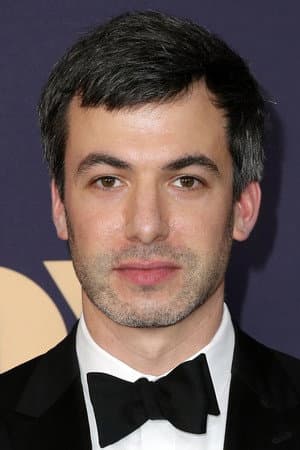
Nathan Fielder has spent the better part of a decade building a reputation as television's most pleasantly unsettling prankster, so the arrival of a full trailer for his Elizabeth Holmes project lands somewhere between punchline and provocation. The comedians' comedian, whose deadpan experiments have made him a cult hero, is now turning his attention to one of the most scrutinized figures of the past decade.
Released this week, the extended preview leans hard into the absurdity that has become Fielder's trademark. Where true-crime documentaries typically build dread through archival footage and ominous music cues, this trailer suggests an approach closer to deadpan satire. The result is a strange, frequently funny look at a story most audiences assumed they had already heard everything about.
A Story That Refuses to Stay Buried
Elizabeth Holmes once stood as a Silicon Valley wunderkind, the founder of a blood-testing startup that promised to reinvent diagnostics. That promise collapsed in spectacular fashion, and the fallout has already produced documentaries, podcasts, a miniseries, and a mountain of commentary. So why return to it now?
The trailer seems to argue that the well hasn't run dry. Rather than re-litigating the timeline of the company's rise and fall, the footage focuses on tone and persona, capturing the odd gravity of a founder whose worldview became a kind of mythology. The preview lingers on the way certainty can be performed, and on the strange cult of personality that surrounded her. That emphasis sets it apart from the more conventional retellings that have dominated screens.
For Fielder, this is the latest entry in a career built on questioning the authenticity of everything. His signature has always been the uncomfortable pause, that moment when an ordinary interaction curdles into something revealing. It's an approach that translates surprisingly well to a subject whose own story hinged on what she said versus what actually existed.
Fielder's Method Meets a Silicon Valley Myth
What the trailer makes clear is that this is not an investigative exposé in the traditional sense. The saga has been reported exhaustively, and the legal proceedings are matters of public record. Fielder's contribution appears to be about interpretation: how the public consumed the story, why audiences remain fascinated, and what the whole episode says about a culture that rewards confidence over substance.
That's a tricky balance to strike. There is a real risk in treating a fraud case as material for comedy, particularly when real employees and patients were affected. But the trailer doesn't seem to treat the subject lightly in terms of consequence. It aims its humor at the ecosystem that produced the myth in the first place, and at the language of disruption that allowed it to flourish.
The preview also hints at Fielder's willingness to insert himself into the story, a hallmark of his previous work. This isn't a dispassionate narrator presenting facts. It's a host who may become part of the question. That device can be self-indulgent in the wrong hands, but it's also what has made his projects stand out. The trailer's framing invites you to wonder whether the film is about the founder or about the appetite for narratives that made her inevitable.
The Timing Feels Deliberate
There's a broader cultural reason this project feels of the moment. The past several years have produced an ongoing reckoning with the figures who promised a brighter future in exchange for unquestioning faith. Every cycle seems to generate a new story of a charismatic leader undone by the gap between vision and reality. Fielder's film arrives into a climate where audiences have grown skeptical of the rhetoric of progress.
Where most documentaries on such subjects aim to inform, this one seems to aim at discomfort and revelation through humor. That distinction matters. Information has already saturated the market; interpretation has not.
What to Expect When It Lands
The full trailer suggests a tone that is seductive, strange, and willing to make the viewer complicit. If the finished film lives up to the preview, it may frustrate people expecting a standard recap of events. It may also endear Fielder to an audience that has followed his unpredictable path for years. For anyone fascinated by how hype is manufactured and then dismantled, the project looks very hard to ignore.
There is still much we don't know about how the larger work will hold together. But the trailer does its job: it makes the case that there is more to mine here, and that the right guide into the story isn't a news anchor. It's someone willing to stare at the awkward silence and let it speak.
Source: Hollywood Reporter