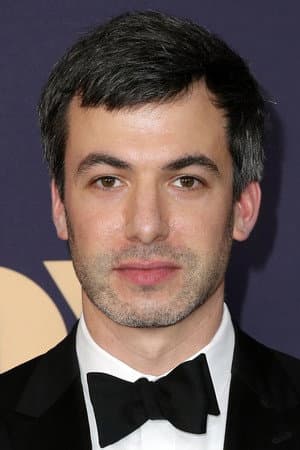
The air inside Alice Tully Hall on Thursday night felt less like a film festival screening and more like a group therapy session that had accidentally been booked into a comedy club. Nathan Fielder, the Canadian comedian and prank auteur behind "Nathan for You" and "The Rehearsal," brought his latest project - a documentary about disgraced Theranos founder Elizabeth Holmes - to the New York Film Festival, and the audience responded with a mixture of gasps, nervous laughter, and the kind of audible squirming that only a Fielder production can provoke. The film, which has been shrouded in the usual Fielder-esque mystery, reportedly blends archival footage, new interviews, and the comedian's signature deadpan interventions into the lives of real people. What emerged over its runtime was less a conventional true-crime retelling than a funhouse-mirror reflection on how Holmes became a cultural icon in the first place.
The Screening Itself
Fielder, who attended the screening in person, introduced the film with characteristic understatement. According to multiple accounts from attendees, he told the crowd that he had spent "a really long time" trying to figure out what the project was actually about, and that he was still not entirely sure. That admission set the tone for what followed. The documentary, which runs just over ninety minutes, opens with Holmes's infamous 2014 TEDMED talk, then gradually pulls apart the mythology surrounding her - not through the usual talking-head condemnations, but through a series of uncomfortable, often absurd encounters that Fielder orchestrates with former Theranos employees, investors, and at least one person who claims to have briefly dated Holmes in the mid-2000s.
What struck many in the room was how funny it was. Not in a cruel, laughing-at-the-wreckage way, but in the way that Fielder's best work always is: a slow-dawning recognition that the systems we trust - venture capital, journalism, celebrity culture - are themselves built on performance. The audience laughed hardest at a sequence in which Fielder attempts to recreate Holmes's famous deep-voice register with a vocal coach, only to be told that he sounds "like a man doing a bad impression of a man doing a bad impression." The moment landed because it was, in its own strange way, a critique of how Holmes's persona was always a copy of a copy of an idea of a genius.
The Q&A That Followed
After the credits rolled, Fielder sat down for a moderated conversation that quickly devolved into the most entertaining Q&A of the festival so far. He was joined by two of the film's subjects - a former Theranos lab technician and a Palo Alto investor who lost money in the company - neither of whom seemed entirely comfortable with how they had been portrayed. The investor, in particular, pushed back on Fielder's line of questioning during the film, telling the audience, "I thought I was agreeing to a podcast. I did not know this would be in a movie." Fielder responded with a long pause, then said, "That's actually very on-brand for the movie."
The moderator tried to steer toward serious questions about Holmes's legacy and the ongoing cultural fascination with her, but the room kept drifting toward the meta. One audience member asked Fielder whether he considered himself complicit in the very attention economy that made Holmes possible. Fielder tilted his head and answered, "I think everyone in this room is complicit. That's not a cop-out. That's the point." It was the closest he came to a thesis statement all night.
Why It Matters Beyond the Festival
The documentary arrives at a moment when the Holmes story has already been exhaustively covered - by podcasts, documentaries, a scripted miniseries, and a forthcoming feature film. What Fielder adds is not new information but a new frame: the idea that Holmes's rise was not an aberration but a logical extension of a culture that rewards confidence over competence and narrative over fact. By inserting himself into the story, Fielder forces viewers to confront their own appetite for the kind of spectacle Holmes provided. The NYFF audience seemed to understand this, even as they laughed. The laughter was not a release; it was a recognition.
Whether the film will land the same way outside a festival crowd - one primed for Fielder's particular brand of discomfort - remains an open question. The documentary has not yet announced a distributor or release date, and Fielder declined to speculate during the Q&A. But for one night in Lincoln Center, the room belonged to him, and to the ghost of a woman who convinced the world she had invented a machine that never worked. The final image of the film, which I will not spoil here, is a quiet one: a close-up of a hand, a pause, and then a cut to black. It is the least Fielder-esque moment in the entire project, and that is precisely why it works.
Nathan Fielder has never been interested in easy answers. With this documentary, he has found a subject who refused to give any - and he has made a film that refuses them too. That is not a criticism. It is the highest compliment this particular filmmaker could receive.
Source: Hollywood Reporter