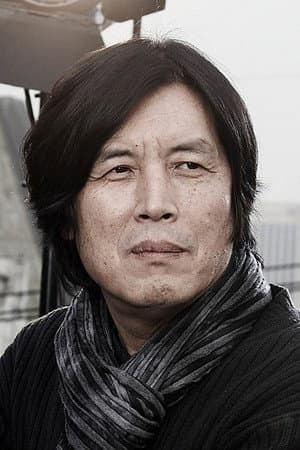
Netflix has secured the global streaming rights to the films of Lee Chang-dong, the South Korean auteur whose slow-burning dramas have long been catnip for critics but stubbornly hard to find for wide international audiences. The deal, announced this week, arrives at a strategically loaded moment: the filmmaker's latest feature, "Possible Love," is in the thick of an awards campaign that is only now shifting into its most aggressive phase.
For Netflix, the acquisition is less a programming play than a positioning move. The streamer has spent the past several years building a library of prestige Asian cinema, but Lee's catalogue has been a conspicuous gap - his films have circulated largely through repertory screenings, region-locked discs and the occasional festival retrospective. Bringing them under one global roof gives subscribers outside South Korea their first real chance to watch the arc of a career that has defined a certain strain of contemporary Korean art cinema.
Lee's reputation rests on a filmography that is small by commercial standards and enormous by critical ones. He began as a novelist before turning to screenwriting, and that literary instinct never left his work. His films tend to move at their own tempo, patient and observant, more interested in the interior weather of their characters than in plot mechanics. Even when he works in recognizable genres - the road movie, the mystery, the revenge narrative - he bends them toward something quieter and more unsettled. That sensibility has earned him a devoted following among cinephiles and a long-running relationship with the Cannes Film Festival, where he has been a fixture for decades.
The Netflix deal matters partly because Lee's films have never been especially easy to marathon. Some are available in scattered territories; others are effectively invisible without a festival ticket or a well-stocked library. A consolidated, subtitled, globally accessible home for the body of work changes the calculus for anyone who has read about Lee for years but never actually sat through one of his films.
That audience is about to get much larger. "Possible Love" has emerged as one of the season's more intriguing awards contenders, and the campaign around it has visibly intensified in recent weeks - the kind of slow build that often precedes a serious push in the months ahead. Awards strategists have long noted that a director's back catalogue can function as a second campaign: voters and tastemakers who discover a current film often go looking for what came before. Netflix now owns that search result.
The timing is not accidental. Streaming a filmmaker's entire catalogue while a new film is on the circuit lets a platform shape the narrative around an artist rather than a single title. It also gives awards voters an easy way to catch up without hunting down out-of-print editions or flying to a retrospective. Whether that translates into trophies is another matter, but it removes a practical obstacle that has dogged Lee's stateside profile for years.
There is a commercial logic here, too. International cinema has become one of Netflix's more reliable differentiators as rival services lean harder into franchise fare. Acquiring a director of Lee's stature signals an ongoing commitment to the kind of film that rarely tops a box-office chart but reliably generates cultural conversation - and, not incidentally, awards-season attention. It is the same instinct that has led the company to court auteurs across Asia and Europe, sometimes as producers, sometimes as distributors, sometimes simply as the place where the work finally lives.
For Lee, the arrangement offers something an auteur of his generation rarely gets: reach without compromise. His films are not being recut or repackaged; they are being made available. That distinction matters to a filmmaker whose work has always resisted easy summarization, and to an audience that has learned to expect a certain integrity from him.
What remains to be seen is how the campaign for "Possible Love" unfolds now that Netflix is both a streaming partner and, by extension, a promotional engine. The company has become adept at converting critical momentum into awards traction, and Lee's name carries a weight with voters that few international directors can match. If the catalogue release succeeds in bringing new viewers to his earlier work, the effect could ripple forward into the current race.
For now, the headline is straightforward: one of the most respected filmmakers in the world is finally getting a global digital home. In an era when so much cinema disappears into licensing limbo, that is not nothing. And if it helps "Possible Love" along its awards path, Netflix will happily take credit for both.
Source: Hollywood Reporter