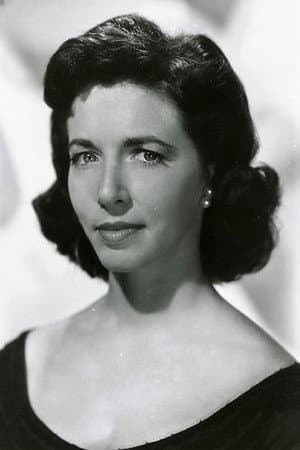
Peggy Webber Dies at 100: Radio Legend & Hitchcock Film
A tribute film chronicling Peggy Webber’s life, from Orson Welles’ radio dramas to Hitchcock’s movies, marking her passing at 100.
Advertisement
A tribute film chronicling Peggy Webber’s life, from Orson Welles’ radio dramas to Hitchcock’s movies, marking her passing at 100.
Peggy Webber, a versatile actress whose career spanned the golden age of radio and included work with Orson Welles and Alfred Hitchcock, has died at the age of 100. Her passing marks the end of an era for a performer who could shift seamlessly between the intimate demands of the microphone and the stark realities of the film set.
Webber, best known for her role in the 1956 Hitchcock thriller The Wrong Man, was a fixture in the world of broadcast drama long before she appeared on screen. Her voice, capable of conveying both steely resolve and fragile vulnerability, made her a sought-after talent during radio's peak, a time when actors had to summon entire worlds through tone and inflection alone.
A Voice That Defined an Era
Born in the early 1920s, Webber came of age professionally just as radio was becoming America's dominant form of home entertainment. She quickly established herself as a reliable and compelling presence in the medium, working across genres from crime serials to romantic melodramas. Her ability to perform live, often without the luxury of retakes, earned her a reputation for steely professionalism among her peers.
Her connection to Orson Welles proved particularly formative. Webber joined the ranks of actors who worked with the legendary director and actor during his most fertile period, contributing to the kind of ambitious, experimental audio productions that Welles championed. Those experiences helped shape her approach to performance, emphasizing clarity, immediacy, and emotional truth over theatrical excess.
From Airwaves to the Big Screen
While radio provided her first major success, Webber's transition to film and television was a natural progression. Her work with Hitchcock on The Wrong Man placed her in a very different kind of spotlight. The film, a stark docudrama based on a real case of mistaken identity, featured Webber in a supporting role that contrasted sharply with the showier parts she had played on the air. Her performance was characteristically understated, a quality the director often prized in his actors.
Beyond that high-profile collaboration, Webber amassed a substantial body of screen work throughout the 1950s and 1960s, appearing in a range of Hollywood productions and early television anthology series. She navigated the changing landscape of the entertainment industry with adaptability, moving from the soundstage to the small screen as the industry itself evolved.
A Unique Dual Legacy
What set Webber apart was her rare ability to excel in two fundamentally different performance modes. Radio demanded she make listeners see with their ears; film required her to make viewers hear with their eyes. She mastered both, a feat that few actors of any generation achieve. In an era when stars often specialized, Webber's fluidity across media made her an invaluable asset to directors and producers who valued range.
Her later years saw her largely out of the public eye, but her contributions remained a point of reference for historians of classic radio and Hollywood's mid-century output. She outlived most of her contemporaries, serving as a living link to a period of creative ferment that included the Mercury Theatre, the Hollywood studio system, and the dawn of television.
Remembering a Prolific Career
Details of Webber's personal life were kept largely private, but her professional footprint is well documented. Her filmography, while not vast, includes work that remains studied by cinephiles, particularly her efforts alongside Hitchcock, a director whose collaborators are often the subject of intense scrutiny. For radio enthusiasts, she remains a beloved figure, her performances preserved on recordings that continue to be shared and appreciated.
The news of her death, confirmed at age 100, brings a quiet close to a remarkable life in the arts. In an industry that often celebrates the loud and the flashy, Webber's legacy stands as a testament to the power of steady, intelligent craft. She was a professional's professional, a woman who worked with the giants of her time yet never sought the limelight for its own sake. Her quiet dignity, both on air and on screen, leaves an unmistakable mark on the history of American entertainment.
Source: Hollywood Reporter
Advertisement
Advertisement