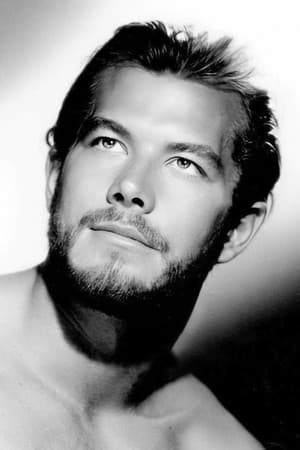
Richard Harrison, the American actor who became a familiar face in European genre cinema during the 1960s and 1970s, has died at the age of 90. The news was confirmed by family members, though no cause of death or additional details were immediately released.
Harrison built a career that straddled two of the most distinctive popular cycles of mid-century Italian film production: the sword-and-sandal epics that revived the peplum genre, and the spaghetti Westerns that turned the sun-baked landscapes of Spain and Italy into a global export. He was never the biggest name in either category, but he was one of the most persistent, appearing in dozens of productions across roughly two decades of steady work.
Born in Salt Lake City, Harrison found his way to Italy in the early 1960s, at a moment when local producers were hungry for American and American-looking faces to anchor films aimed at international markets. His athletic build and square-jawed presence made him a natural fit for the muscular heroes of the peplum boom, and he quickly became a regular in productions that mixed mythological adventure with low-budget spectacle.
A Working Actor in Two Booms
The sword-and-sandal wave gave Harrison his first taste of leading roles. He appeared in a string of titles that traded on the genre's formula of heroic strength, exotic settings, and loosely historical plots. These films were often shot quickly and cheaply, but they played well in drive-ins and second-run theaters across the United States and Europe, and they gave Harrison the kind of visibility that a young actor in Hollywood might have taken years to earn.
When the peplum cycle began to fade, Harrison pivoted to the Western. The spaghetti Western, pioneered by filmmakers who saw the commercial potential in reworking American frontier mythology through a European lens, was entering its peak years. Harrison stepped into that current and remained there for much of the 1960s and into the 1970s, appearing in Westerns that ranged from straightforward revenge stories to more eccentric entries in the genre.
He worked alongside a rotating cast of familiar European genre players and under directors who were, in many cases, operating under Anglicized pseudonyms. That practice was common in an era when Italian productions sought to obscure their origins in hopes of broader distribution. Harrison, by contrast, kept his own name, and his American background gave him a certain authenticity in a filmmaking tradition that was constantly borrowing from American culture.
A Career Beyond the Two Genres
Harrison's filmography was not limited to swords and six-shooters. Like many actors of his generation working in the European industry, he took roles across a wide spectrum of popular genres, including adventure films, war pictures, and spy thrillers. The flexibility was partly a matter of economics - steady work was steady work - but it also reflected the reality of a film industry that was, for a time, producing an enormous volume of genre entertainment for worldwide consumption.
He was also among the actors who made the transition to the later, more eclectic phase of Italian popular cinema, when Westerns gave way to crime films, political thrillers, and other forms. Harrison's presence in these productions was rarely the selling point, but his reliability made him a useful asset for producers who needed a credible lead on a tight schedule.
In later years, Harrison remained a figure of interest to genre enthusiasts. His work was rediscovered by fans of cult cinema, and he occasionally appeared at festivals and conventions where the spaghetti Western and peplum eras were celebrated. He was known for being forthright about the realities of low-budget filmmaking, describing the work with a mixture of affection and clear-eyed pragmatism.
A Legacy in Genre Cinema
Harrison's death closes a chapter in a very specific kind of film history. The actors who populated the peplum and spaghetti Western cycles were not always household names, but they were essential to the texture of those films. They provided the faces that audiences around the world associated with a distinctly Italian approach to genre storytelling - an approach that influenced filmmakers from Sergio Leone to Quentin Tarantino and beyond.
He is survived by family members and by a body of work that, while uneven, stands as a record of an era when European popular cinema operated on a scale and with a reach that is difficult to imagine today. For fans of those films, Richard Harrison will remain a recognizable presence: the American who went to Italy and became part of its most exportable cinematic traditions.
Source: Hollywood Reporter