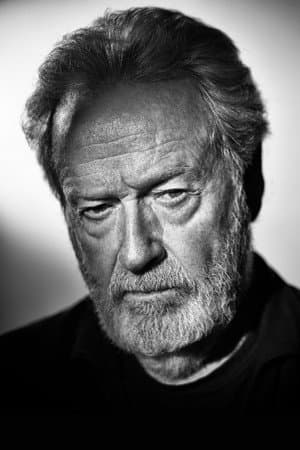
Ridley Scott is rarely one to sit still, and during a recent conversation about his enduring science-fiction legacy, the director offered a fresh hint about where the Alien franchise is headed next. While the filmmaker did not confirm a production start date or a studio greenlight, his comments suggest the long-gestating sequel to Alien: Covenant remains a live possibility in his mind. Scott, who returned to the franchise as a producer and director for the 2012 prequel Prometheus and its 2017 follow-up, has repeatedly expressed a desire to continue the storyline that was left on a cliffhanger involving the synthetic David and his terrifying experiments.
The new remarks arrive amid a broader reflection on his career, with Scott also voicing a rare note of professional regret. Specifically, he lamented the fact that he no longer controls the rights to Blade Runner, the 1982 neo-noir classic that has since become a touchstone of the genre. That project, though beloved by critics and audiences over time, was a commercial struggle upon release, and the rights eventually slipped through his fingers - a situation he now views as a missed opportunity for future storytelling. His tone suggested a wistfulness rather than anger, acknowledging the complex business realities that often dictate who gets to continue a cinematic universe.
The Alien Sequel Question
Scott’s latest update on the Alien: Covenant follow-up arrives after years of stops and starts. The sequel was reportedly in development for a time, with script ideas floated and a potential title mentioned, but the project stalled as Disney’s acquisition of 20th Century Fox reshaped the franchise’s future. Instead, the studio pivoted to the 2024 film Alien: Romulus, directed by Fede Álvarez, which served as a standalone story set between the original Alien and Aliens. That film performed well enough to warrant its own sequel, which is currently in the works with Álvarez attached to direct.
Still, Scott has never fully abandoned his own narrative thread. He has said in interviews that David’s story - both his philosophical ambitions and his morally unhinged pursuit of creation - was far from finished. The director’s new hint appears to reinforce that idea, though he stopped short of providing concrete details about a script or a production timeline. For fans who have followed the Prometheus and Covenant arcs, the update is encouraging but familiar: Scott has spoken about this before, and the gap between intention and reality has been wide.
A Rare Admission of Regret
The Blade Runner comment, however, marks a more unusual moment of candor. Scott has defended the film for decades, often pointing to its slow-burn theatrical reception as a misread by contemporary audiences. Yet in this latest exchange, he acknowledged the practical consequence of losing the rights: he simply cannot return to that world, no matter how much he might want to explore its themes further. The director did not elaborate on what a new Blade Runner film from him would have looked like, but he has previously mentioned ideas about the replicant concept and its implications for identity and memory.
That regret carries extra weight because the Blade Runner universe has flourished without him. A sequel, Blade Runner 2049, directed by Denis Villeneuve, earned critical acclaim in 2017, and a live-action television series is currently in development for a streaming platform. Scott has been gracious about those projects, but his recent comments suggest a lingering sense of what might have been. Losing the rights, he implied, was a business decision he made at the time, one that he now views with a measure of hindsight-driven disappointment.
The Director’s Busy Present
Despite the nostalgia, Scott remains one of the most active filmmakers in the industry, with a slate that shows no signs of slowing down. Known for films as varied as Thelma & Louise, Gladiator, and The Martian, he has consistently balanced prestige dramas with large-scale spectacle. His most recent efforts include a Gladiator sequel and a historical epic, both of which kept him in the public eye. At 88 years old, he shows no interest in retiring, and he has stated that he prefers to keep working until he physically cannot.
That work ethic extends to his ongoing interest in science fiction. While the Alien sequel remains unconfirmed, Scott’s remarks ensure the topic stays alive in the public conversation. For now, audiences can only speculate on whether the next Alien film will be his or someone else’s. Either way, the director’s dual focus - on unfinished business and on past losses - makes for a compelling narrative of its own, one that Hollywood will be watching closely.
Source: Hollywood Reporter