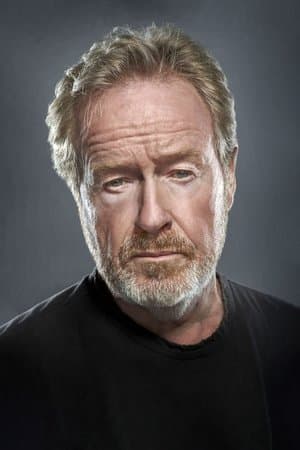
Veteran filmmaker Ridley Scott has built a career spanning more than five decades by trusting his own instincts, and he is not about to change that approach now. During a recent conversation with director and cinematographer Jimmy Chin, Scott offered a piece of advice that doubles as a window into his notoriously independent working style: ignore the noise.
The exchange, which surfaced as part of a wider discussion between the two filmmakers, captured Scott at his blunt best. Asked to share wisdom with Chin, whose credits include the Oscar-winning documentary "Free Solo" and the survival drama "Nyad," Scott did not reach for technical guidance or thoughts on framing. Instead, he boiled his philosophy down to a single directive: "Don't listen to anybody."
The line lands with particular weight coming from Scott, whose career has been defined by a willingness to follow his own vision through studio pressure, critical pushback and the sheer logistical chaos of large-scale production. From "Alien" in 1979 to "Gladiator" more than two decades later, he has repeatedly demonstrated that a strong directorial point of view can outlast whatever notes arrive from the outside.
A philosophy forged across five decades
Scott's advice carries more nuance than its brevity suggests. Throughout his filmography, he has been known to shoot enormous amounts of coverage, operate multiple cameras simultaneously and make major creative calls on set without extended deliberation. The approach has produced both triumphs and misfires, but it has never produced a Ridley Scott film that felt anonymous.
That independent streak has occasionally put him at odds with the industry apparatus around him. In the streaming era, he has been outspoken about the value of the theatrical experience and about the ways algorithms and data-driven thinking can flatten creative risk. His willingness to say so publicly reflects the same instinct he was passing along to Chin.
For a filmmaker like Chin, whose work often involves extreme environments and small crews, the advice may seem to come from a different world. Chin built his reputation documenting climbing and adventure, often making split-second decisions in conditions where a large studio apparatus cannot follow. Yet the underlying principle translates directly: the person behind the camera has to be the one who decides what the story needs.
Generational exchange between two risk-takers
There is a pleasing symmetry to the pairing. Scott came up through advertising and built a visual language that reshaped science fiction and historical epic alike. Chin came up through the mountains, carrying cameras up rock faces where the margin for error is measured in millimeters. Different worlds, same requirement: conviction under pressure.
Younger directors have long sought out Scott for guidance, and he has generally been generous with his time even when his answers are characteristically terse. He has spoken in the past about the importance of preparation, storyboarding and knowing exactly what he wants before arriving on set, all of which make the freedom to disregard outside voices possible rather than reckless.
That distinction matters. "Don't listen to anybody" is not a call for chaos or for refusing collaboration. It is a call for a director to develop enough internal clarity that external opinions become optional rather than destabilizing. Scott has described filmmaking as a craft of constant problem-solving, and a director who knows the intended result can absorb suggestions without being steered by them.
Chin, for his part, has moved steadily from documentary work into narrative features, a transition that brings its own chorus of advisers, executives and well-meaning voices. Hearing a director of Scott's stature reduce the job to a single sentence may have been the most useful thing he took from the conversation.
For audiences, the practical takeaway is simple. Scott remains an active filmmaker who shows no interest in softening his approach, and the next generation of directors appears eager to hear how he has managed it. If the advice he gave Chin sounds defiant, that is because it is meant to. In an industry that rewards consensus, Scott has spent his career proving that the alternative can work.
Source: Hollywood Reporter